You may think this is a silly title but it is for real. In a recent blog discussion, the following was posted about scientific research:
“a revolutionary new scientific breakthrough that will provide the world with a cheap abundant source of sustainable non-polluting energy… [that] requires no fuel, can be generated anywhere, is completely scalable and can be used to power microchips as well as homes… [is suitable to be published in] borderline papers [that] other publishers won’t touch.” You can find the discussion here.
If Einstein lived today, he would not be able to publish anything in any “good” academic journal. Chances are, he would end up as your next cab driver; after all, universities prefer academicians who publish in big-name journals and those who don’t do so are kicked out one way or another. What they publish matters little but where they publish matters a lot. However, there is a problem or two.
Bad Science or Clueless Reviewers?
Why do scientist and universities consider gigantic revolutionary ideas that are too advanced for the reviewers of “best journals” to understand, and therefore they don’t accept, be “bad science” that can only be published in “junk” journals?
This is a particularly dangerous dilemma when it comes to research in the medical field. Most recent research in several critical areas of human health fly against the trade winds of the accepted wisdom and are not possible to publish. Such papers all publish in low-end journals or what is now understood to be predatory journals. I published three academic articles in predatory journals (without knowing that they were predatory see here, here, and here) and so the immediate reaction is that “aha! It must be junk science.” But it is not junk.
This article in not about me but it connects to my findings. One of the findings I had (I am not the originator of this finding by the way) is that salt is necessary for your health. Apparently the “salt debate” has been going on for several decades. You can find some of the debates ongoing here and here and here and here and why there is a debate is here (my article in a predatory journal) and many more (1-7). Studies (however good or bad they are) find mixed results in general. Here is a study from one of the top journals stating that while salt did increase BP by a few points (more on that in a minute), over all it did not cause people to get sick and no long-term negative health effects were found. The key point here is that while BP changed as a result of dietary sodium change by a few points (8-11), as our daily range of BP change within 39 points (from 100 to 139 systolic variations) is considered to be totally normal, does it have any significance to have a couple of points of change? Is that significant enough to even mention let alone modify salt intake of an entire nation as per the AHA and even children, as per the USDA?
And while this paper is not about sodium, it is an important subject to bring up since it is one of those topics that fly against the winds right into the arms of the biggest supporters of the old salt theory: the editors of most major journals. After all, most of the “salt is bad for you” theories were written by them! Chances of publishing a worthy academic research article that debates their findings is zero. They have not yet received their Nobel Prizes so all studies against their findings must be kept beaten in the bush.
The next problem I find is this constant need for clinical trials. Try a clinical trial with salt, for example. Here is a great explanation why that is not possible from one point of you (I have another):
“…there is another reason, too, besides expense, that a large trial is so unlikely: it simply may not be feasible. That’s because it turns out to be quite difficult to randomly assign clinical trial participants to a particular diet — any diet — and then have them stick with it over a long period of time.
People who volunteer to enroll in a low-salt-diet trial are probably more likely than most, after all, to be concerned about their salt intake. So some fraction of study participants assigned to the comparison group — the people told to eat a normal amount of salt, rather than to follow the intervention diet — may go ahead and choose to eat a low-salt diet on their own anyway. Meanwhile, some fraction of those study participants who are assigned to the low-salt group may fall off the wagon, despite their best intentions, tempted by the abundance of high-salt foods around us all.
In other words, a trial that tests the effects of a low-salt diet would likely suffer from the same flaw that almost all diet trials face. By the time a few months of the trial have gone by, members of the treatment group aren’t eating all that differently than members of the comparison group. And that makes it difficult indeed for a statistician to estimate whether the intervention diet is really any better than a normal person’s diet.” Source.
My personal explanation is a bit different why clinical trials are impossible to do: salt is a necessary mineral in our body and we must eat it to live. Salt is a critical element of our electrolyte, which flows in every body part and organ we own. As much as a small salt pinch changes this electrolyte and with that the entire body. Providing placebo instead of salt is not possible.
Placebo options are: low salt (full of potassium, a second key element in electrolyte and hence modifies the experiment and a placebo should not be doing that); “sugar pill,” which literally is a pill filled with sugar, can also not be used because of how it affects electrolyte in a very bad way “…serum Na+ falls by 1.4 mM for every 100-mg/dL increase in glucose, due to glucose-induced H2O efflux from cells”(12); “wheat pill” can also not be used since wheat turns into glucose and then we are at the sugar pill dilemma; “water pill” changes electrolyte, however little. Not to mention, that people can really tell if they eat unsalted food or salted one and hence a double-blinded study is clearly impossible. Furthermore, since the human body must have salt, we cannot keep a group completely “without salt” since they may get hurt and that is unethical.
Thus no legitimate ethical board will approve an experiment in which sodium is tested in a double-blind or even a placebo experiment. So then the researcher is reduced to observational studies. Observational studies are not clinical trials and thus no “good journal” will want to publish the results. Reviews of literature and recalculating statistics is also not welcomed. For example, my study on dietary sodium is such review of the hundreds of published papers showing that since normal daily variation in systolic blood pressure is 39 points, we cannot distinctly state that a 2-point increase in systolic BP after eating an increased sodium diet really truly is the result of the increased sodium. Could it have been caused by hunger? Breathing? A heart beat? Weather? Mood? Perhaps some sweet? Thirst? Too little water? Too much water? Cold? Hot? Traffic on the road? I could go on with endless questions that no researcher ever asked and no journal of high quality ever notices was missing to accept a truly professional research—yet they are published. When I pointed this deficiency out and sent my paper to the Lancet, one of the top journals in the field, their response “not a priority.” Really? Misleading millions of people is not a priority to correct by publishing it?
Junky Article or Irresponsible Journal?
Thus if then a paper, like mine, appears in a junky journal, does that make my paper junky or the good journal irresponsible?
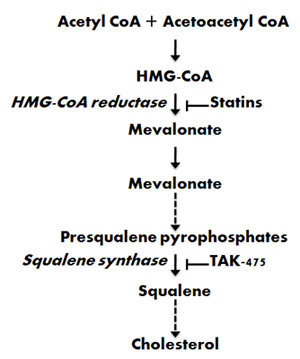
Unfortunately, the war on academic publishing does not start and stop with my salt statistics; it has been going on for about 70 years about fat and cholesterol. Many excellent papers on cholesterol, fat, sugar and salt cannot be published in “good journals” because big pharma stands to lose billions of dollars if the truth is published. Are these articles sub-par because they MUST be published in a junk journal to be heard?
Some very famous researchers, in fact, refuse to publish in top journals because of the much junk they publish. Randy Schekman, a Nobel Laureate, refuses to publish in the top journals. He wrote in “How journals like Nature, Cell and Science are damaging science”:
“I am a scientist. Mine is a professional world that achieves great things for humanity. But it is disfigured by inappropriate incentives. The prevailing structures of personal reputation and career advancement mean the biggest rewards often follow the flashiest work, not the best. Those of us who follow these incentives are being entirely rational – I have followed them myself – but we do not always best serve our profession’s interests, let alone those of humanity and society.
We all know what distorting incentives have done to finance and banking. The incentives my colleagues face are not huge bonuses, but the professional rewards that accompany publication in prestigious journals – chiefly Nature, Cell and Science.”
What Dr. Schekman said is that publishing in a “good journal” can lead to published papers that are junk; thus by deduction, having to publish in a junk journal is not the only way to publish a junk paper. It may be a genius paper that no one wants to publish and you may later find the original researcher receiving a Nobel Prize for that discovery.
Consider Einstein’s story. While he wrote a lot of papers, most appeared in journals that were not peer-reviewed at all–thus by modern interpretation those journals were “junk” journals to the point that he was not even accepted as an academician and had to earn a living as a patent office clerk. Even the one paper that he submitted to a journal with peer review received a negative review. He published his paper elsewhere with no review. Did his sub-par articles suddenly become no longer sub-par? You bet.
In medical research, a paper that reports research findings that are in the best interest of the people but against pharmaceuticals, cannot be published anywhere other than “low-class” journals or predatory or just simply published online as a blog (like this one). The interesting thing is that some of the findings are so amazing that they make the news, save lives and do away with medicines and yet cannot be published by a reputable paper no matter how many thousands/millions of people are happily healthy and medicine-free as a result of the “junk paper”.
I think we should stop suggesting to publish in “better” journals because “better journals” do not publish anything outside of conformity. Anything genuine, new and against the tides, will have to be published in low-level journals and just fight an underground battle until they can come out from under the rug with a big bang!
Additional Sources:
- Chrysant GS, Bakir S, & Oparil S (Dietary salt reduction in hypertension—What is the evidence and why is it still controversial? Progress in Cardiovascular Diseases 42(1):23-38.
- DiNicolantonio JJ & Lucan SC (2014) The wrong white crystals: not salt but sugar as aetiological in hypertension and cardiometabolic disease. Open Heart 1(1):e000167.
- Dong J, Li Y, Yang Z, & Luo J (2010) Low Dietary Sodium Intake Increases the Death Risk in Peritoneal Dialysis. Clinical Journal of the American Society of Nephrology : CJASN 5(2):240-247.
- Frisoli TM, Schmieder RE, Grodzicki T, & Messerli FH (Salt and Hypertension: Is Salt Dietary Reduction Worth the Effort? The American Journal of Medicine 125(5):433-439.
- Giuliani C & Peri A (2014) Effects of Hyponatremia on the Brain. Journal of Clinical Medicine 3(4):1163-1177.
- Nichols H (2015) More than salt, sugars may contribute to high blood pressure.
- Stanton AA (2016) Are Statistics Misleading Sodium Reduction Benefits? Journal of Medical Diagnostic Methods 5(1).
- Whittle J, et al. (2014) A Randomized Trial of Peer-Delivered Self-Management Support for Hypertension. American Journal of Hypertension 27(11):1416-1423.
- Blaustein MP, et al. (2012) How NaCl raises blood pressure: a new paradigm for the pathogenesis of salt-dependent hypertension. American Journal of Physiology – Heart and Circulatory Physiology 302(5):H1031-H1049.
- Aburto NJ, et al. (2013) Effect of lower sodium intake on health: systematic review and meta-analyses. BMJ 346.
- Cook NR, Appel LJ, & Whelton PK (2014) Lower Levels of Sodium Intake and Reduced Cardiovascular Risk. Circulation 129(9):981-989.
- Longo DL, et al. (2013) Harrison’s Manual of Medicine 18th Edition (McGraw Hill Medical, New York).
Your comments are welcome, as always,
Angela