A Revolutionary Researcher; Will She Drive Your Next Cab?

You may think this is a silly title but it is for real. In a recent blog discussion, the following was posted about scientific research:

“a revolutionary new scientific breakthrough that will provide the world with a cheap abundant source of sustainable non-polluting energy… [that] requires no fuel, can be generated anywhere, is completely scalable and can be used to power microchips as well as homes… [is suitable to be published in] borderline papers [that] other publishers won’t touch.” You can find the discussion here.

If Einstein lived today, he would not be able to publish anything in any “good” academic journal. Chances are, he would end up as your next cab driver; after all, universities prefer academicians who publish in big-name journals and those who don’t do so are kicked out one way or another. What they publish matters little but where they publish matters a lot. However, there is a problem or two.

Bad Science or Clueless Reviewers?

Why do scientist and universities consider gigantic revolutionary ideas that are too advanced for the reviewers of “best journals” to understand, and therefore they don’t accept, be “bad science” that can only be published in “junk” journals?

This is a particularly dangerous dilemma when it comes to research in the medical field. Most recent research in several critical areas of human health fly against the trade winds of the accepted wisdom and are not possible to publish. Such papers all publish in low-end journals or what is now understood to be predatory journals. I published three academic articles in predatory journals (without knowing that they were predatory see here, here, and here) and so the immediate reaction is that “aha! It must be junk science.” But it is not junk.

This article in not about me but it connects to my findings. One of the findings I had (I am not the originator of this finding by the way) is that salt is necessary for your health. Apparently the “salt debate” has been going on for several decades. You can find some of the debates ongoing here and here and here and here and why there is a debate is here (my article in a predatory journal) and many more (1-7). Studies (however good or bad they are) find mixed results in general. Here is a study from one of the top journals stating that while salt did increase BP by a few points (more on that in a minute), over all it did not cause people to get sick and no long-term negative health effects were found. The key point here is that while BP changed as a result of dietary sodium change by a few points (8-11), as our daily range of BP change within 39 points (from 100 to 139 systolic variations) is considered to be totally normal, does it have any significance to have a couple of points of change? Is that significant enough to even mention let alone modify salt intake of an entire nation as per the AHA and even children, as per the USDA?

And while this paper is not about sodium, it is an important subject to bring up since it is one of those topics that fly against the winds right into the arms of the biggest supporters of the old salt theory: the editors of most major journals. After all, most of the “salt is bad for you” theories were written by them! Chances of publishing a worthy academic research article that debates their findings is zero. They have not yet received their Nobel Prizes so all studies against their findings must be kept beaten in the bush.

The next problem I find is this constant need for clinical trials. Try a clinical trial with salt, for example. Here is a great explanation why that is not possible from one point of you (I have another):

“…there is another reason, too, besides expense, that a large trial is so unlikely: it simply may not be feasible. That’s because it turns out to be quite difficult to randomly assign clinical trial participants to a particular diet — any diet — and then have them stick with it over a long period of time.

People who volunteer to enroll in a low-salt-diet trial are probably more likely than most, after all, to be concerned about their salt intake. So some fraction of study participants assigned to the comparison group — the people told to eat a normal amount of salt, rather than to follow the intervention diet — may go ahead and choose to eat a low-salt diet on their own anyway. Meanwhile, some fraction of those study participants who are assigned to the low-salt group may fall off the wagon, despite their best intentions, tempted by the abundance of high-salt foods around us all.

In other words, a trial that tests the effects of a low-salt diet would likely suffer from the same flaw that almost all diet trials face. By the time a few months of the trial have gone by, members of the treatment group aren’t eating all that differently than members of the comparison group. And that makes it difficult indeed for a statistician to estimate whether the intervention diet is really any better than a normal person’s diet.” Source.

My personal explanation is a bit different why clinical trials are impossible to do: salt is a necessary mineral in our body and we must eat it to live. Salt is a critical element of our electrolyte, which flows in every body part and organ we own. As much as a small salt pinch changes this electrolyte and with that the entire body. Providing placebo instead of salt is not possible.

Placebo options are: low salt (full of potassium, a second key element in electrolyte and hence modifies the experiment and a placebo should not be doing that); “sugar pill,” which literally is a pill filled with sugar, can also not be used because of how it affects electrolyte in a very bad way “…serum Na+ falls by 1.4 mM for every 100-mg/dL increase in glucose, due to glucose-induced H2O efflux from cells”(12); “wheat pill” can also not be used since wheat turns into glucose and then we are at the sugar pill dilemma; “water pill” changes electrolyte, however little. Not to mention, that people can really tell if they eat unsalted food or salted one and hence a double-blinded study is clearly impossible. Furthermore, since the human body must have salt, we cannot keep a group completely “without salt” since they may get hurt and that is unethical.

Thus no legitimate ethical board will approve an experiment in which sodium is tested in a double-blind or even a placebo experiment. So then the researcher is reduced to observational studies. Observational studies are not clinical trials and thus no “good journal” will want to publish the results. Reviews of literature and recalculating statistics is also not welcomed. For example, my study on dietary sodium is such review of the hundreds of published papers showing that since normal daily variation in systolic blood pressure is 39 points, we cannot distinctly state that a 2-point increase in systolic BP after eating an increased sodium diet really truly is the result of the increased sodium. Could it have been caused by hunger? Breathing? A heart beat? Weather? Mood? Perhaps some sweet? Thirst? Too little water? Too much water? Cold? Hot? Traffic on the road? I could go on with endless questions that no researcher ever asked and no journal of high quality ever notices was missing to accept a truly professional research—yet they are published. When I pointed this deficiency out and sent my paper to the Lancet, one of the top journals in the field, their response “not a priority.” Really? Misleading millions of people is not a priority to correct by publishing it?

Junky Article or Irresponsible Journal?

Thus if then a paper, like mine, appears in a junky journal, does that make my paper junky or the good journal irresponsible?

Unfortunately, the war on academic publishing does not start and stop with my salt statistics; it has been going on for about 70 years about fat and cholesterol. Many excellent papers on cholesterol, fat, sugar and salt cannot be published in “good journals” because big pharma stands to lose billions of dollars if the truth is published. Are these articles sub-par because they MUST be published in a junk journal to be heard?

Some very famous researchers, in fact, refuse to publish in top journals because of the much junk they publish. Randy Schekman, a Nobel Laureate, refuses to publish in the top journals. He wrote in “How journals like Nature, Cell and Science are damaging science”:

“I am a scientist. Mine is a professional world that achieves great things for humanity. But it is disfigured by inappropriate incentives. The prevailing structures of personal reputation and career advancement mean the biggest rewards often follow the flashiest work, not the best. Those of us who follow these incentives are being entirely rational – I have followed them myself – but we do not always best serve our profession’s interests, let alone those of humanity and society.

We all know what distorting incentives have done to finance and banking. The incentives my colleagues face are not huge bonuses, but the professional rewards that accompany publication in prestigious journals – chiefly Nature, Cell and Science.”

What Dr. Schekman said is that publishing in a “good journal” can lead to published papers that are junk; thus by deduction, having to publish in a junk journal is not the only way to publish a junk paper.  It may be a genius paper that no one wants to publish and you may later find the original researcher receiving a Nobel Prize for that discovery.

Consider Einstein’s story. While he wrote a lot of papers, most appeared in journals that were not peer-reviewed at all–thus by modern interpretation those journals were “junk” journals to the point that he was not even accepted as an academician and had to earn a living as a patent office clerk. Even the one paper that he submitted to a journal with peer review received a negative review.  He published his paper elsewhere with no review.  Did his sub-par articles suddenly become no longer sub-par? You bet.

In medical research, a paper that reports research findings that are in the best interest of the people but against pharmaceuticals, cannot be published anywhere other than “low-class” journals or predatory or just simply published online as a blog (like this one). The interesting thing is that some of the findings are so amazing that they make the news, save lives and do away with medicines and yet cannot be published by a reputable paper no matter how many thousands/millions of people are happily healthy and medicine-free as a result of the “junk paper”.

I think we should stop suggesting to publish in “better” journals because “better journals” do not publish anything outside of conformity. Anything genuine, new and against the tides, will have to be published in low-level journals and just fight an underground battle until they can come out from under the rug with a big bang!

Additional Sources:

  1. Chrysant GS, Bakir S, & Oparil S (Dietary salt reduction in hypertension—What is the evidence and why is it still controversial? Progress in Cardiovascular Diseases 42(1):23-38.
  2. DiNicolantonio JJ & Lucan SC (2014) The wrong white crystals: not salt but sugar as aetiological in hypertension and cardiometabolic disease. Open Heart 1(1):e000167.
  3. Dong J, Li Y, Yang Z, & Luo J (2010) Low Dietary Sodium Intake Increases the Death Risk in Peritoneal Dialysis. Clinical Journal of the American Society of Nephrology : CJASN 5(2):240-247.
  4. Frisoli TM, Schmieder RE, Grodzicki T, & Messerli FH (Salt and Hypertension: Is Salt Dietary Reduction Worth the Effort? The American Journal of Medicine 125(5):433-439.
  5. Giuliani C & Peri A (2014) Effects of Hyponatremia on the Brain. Journal of Clinical Medicine 3(4):1163-1177.
  6. Nichols H (2015) More than salt, sugars may contribute to high blood pressure.
  7. Stanton AA (2016) Are Statistics Misleading Sodium Reduction Benefits? Journal of Medical Diagnostic Methods 5(1).
  8. Whittle J, et al. (2014) A Randomized Trial of Peer-Delivered Self-Management Support for Hypertension. American Journal of Hypertension 27(11):1416-1423.
  9. Blaustein MP, et al. (2012) How NaCl raises blood pressure: a new paradigm for the pathogenesis of salt-dependent hypertension. American Journal of Physiology – Heart and Circulatory Physiology 302(5):H1031-H1049.
  10. Aburto NJ, et al. (2013) Effect of lower sodium intake on health: systematic review and meta-analyses. BMJ 346.
  11. Cook NR, Appel LJ, & Whelton PK (2014) Lower Levels of Sodium Intake and Reduced Cardiovascular Risk. Circulation 129(9):981-989.
  12. Longo DL, et al. (2013) Harrison’s Manual of Medicine 18th Edition (McGraw Hill Medical, New York).

Your comments are welcome, as always,

Angela

Posted in Big Pharma, Healthcare, Interesting reading, Must Read, This & That, Thoughts | Tagged , , , , , , , , , , , , , , , , , , , , , , , | 4 Comments

Milk, Fats, Cholesterol, Salt & Good Bye Migraines

PRESS RELEASE

And Then Some

On the site HormonesMatter where I am a scientist blogger, an article I wrote just published that you may want to read even if you are not a migraineur. It contains a TV video in which my migraine treatment Stanton Migraine Protocol® is mentioned. Indeed, the person talking is one of my migraine group members who tried everything for her migraines that medicine offers, including a surgically implanted neuronal stimulator, but nothing worked until she started on the Stanton Migraine Protocol® instead of medicines.

Here is the TV news that is not possible to embed:  TV News

Now this TV News may confuse you since this is pretty much an advertisement for a dairy farm and its raw milk. Raw milk is not legal in the US everywhere and maybe not at all in other countries. So instead of focusing on raw milk, focus on what is in milk that is important for migraineurs and for your health even if you never had a migraine.

I have published a couple of articles on migraines here and here and one more that published recently here  and one more debunking the low-salt hypothesis here, which has joined a flurry of activity in news and journal articles all over the world about how salt is better for you than what we were told; see here and here and here and a major one here that proves that the more salt you eat, the less likely it is that you end up with a cardiac disease.  So salt we already know is not only not bad for you, it is essential for you and you need to eat as much as your body tells you to eat! It is not something your body can make but it takes up a large percentage of your body that is being used and needs replacement.

So let’s talk about two other very important elements in milk: fat and cholesterol. We have been told since the middle of the 20th Century that fat is bad for us and cholesterol causes heart attacks and none of that is true. The reduced fat and low cholesterol mania created a whole world full of obese and type 2 diabetic people who are on medicines, such as statins, to reduce their cholesterol further.

While statins do reduce cholesterol, the question is this: why do we need our cholesterol reduced?

The answer is always, without a blink: it causes heart attacks, it builds plaques up in your arteries, and it is bad for you. Of course cholesterol does not build up in our arteries–it tries to repair our torn/damaged arteries. Why do they get damaged and torn? Read it here.  Cholesterol is made by our liver because cholesterol is good for us! Cholesterol has many functions, of which the most important is its brain cells’ (axons) insulation and repair of the damage from the much voltage use. There are many scientific articles on this to which the general public has no access so here is an article that explains what happens when we start taking statins to stop cholesterol from being made: memory loss. In case you want the official FDA warning on memory loss, muscle loss, etc., as a result of taking cholesterol reducing drugs, read that at the authority, the FDA label updates on statins!

Now that I have proved my points on cholesterol, let’s get to a critical point: fat. Everyone says that cholesterol is made of fat: NOT TRUE! First let’s see a cholesterol molecule:

By the way this includes both good and bad cholesterol (hint: cholesterol is cholesterol and there is no such as good or bad).

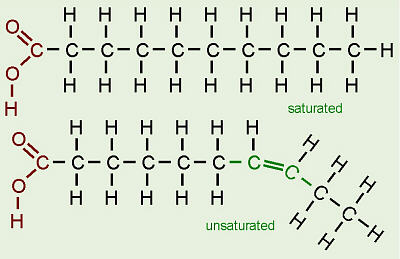
Now let’s show you a fat molecule:

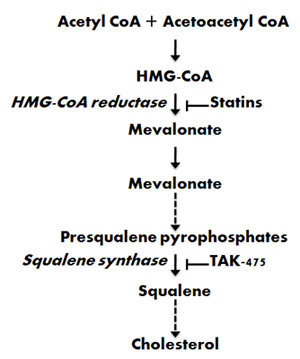
Any similarity? No? You are right. None. So how is cholesterol made? If you ask this question, the answer is always: from fat of course. But actually that is also not true. Here is how cholesterol is made by our liver:

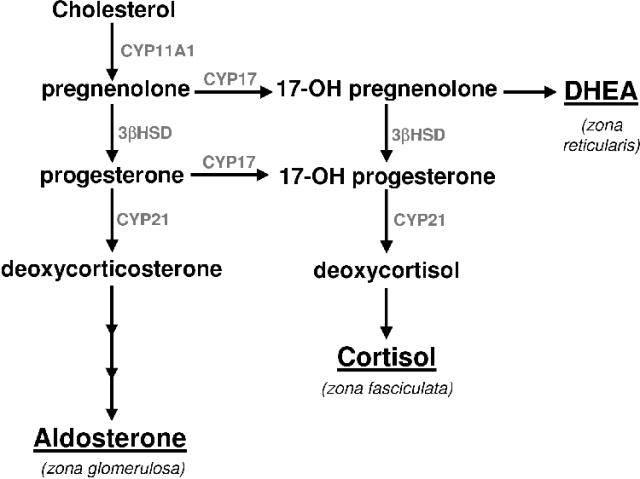
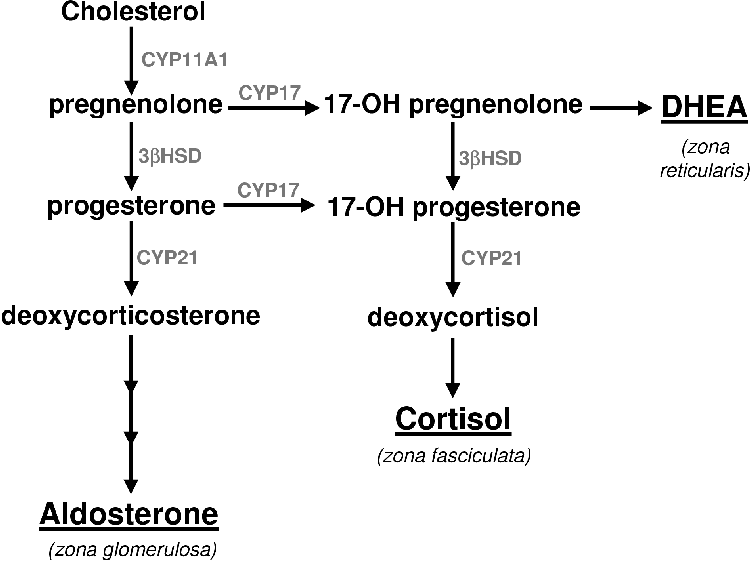
So… show me fat please? Note that cholesterol is made from Acetyl CoA and Acetoacetyl CoA. Neither is fat–in fact, one is carbohydrate. Note where statins cut cholesterol making off. Note what happens if we don’t have cholesterol as a result of statins:

So if you take statins, you stop making Aldosterone, Cortisol, Progesterone, and also DHEA. It doesn’t show on this picture but you also stop making Coenzyme Q10 (CoQ10), which is vital for mitochondrial health and is used to create all the energy you can use! It is not shown here because it is a different branch of cholesterol making (past where the statins cut off) but there was no room for it I guess (the picture is not made by me).

Now we are talking about trouble!!! Now you are not only low is salt and fat and damage your heart, you are also stopping all vital human body functions. No wonder that statins cause mental problems, muscle problems, energy problems, and you name it other problems.

Why is cholesterol the villain? Because saying that it is bad for you helps the pharmaceutical industry make billions of dollars on you getting sick. First, statins are the #1 best sellers among legal drugs in the world plus, since you become sick, they can sell then other drugs. You know what? Have some whole milk and dump your statins! Be happy, be healthy, start making your vital hormones and do not believe that fat makes cholesterol, do not believe that fat or cholesterol are bad for you and believe in what your body is telling you.

One more thing: stop sugar! Sugar causes triglycerides! Triglycerides are indeed bad for you!

Questions are welcome, as usual.

Angela

Posted in Big Pharma, FDA, Healthcare, Interesting reading, Must Read, Press Release, Thoughts | Tagged , , , , , , , , , , , , , , , , , , , , , , , , , , , , | 8 Comments

Migraines versus Headaches–a video

Migraine is definitely not just a headache!

Many of you know that I am a scientist and some of you may also know that I am also a migraineur. I should say I was a  migraineur since I no longer get migraines unless I ignore my discovery based on which I created the Stanton Migraine Protocol® and ignore my signs and what I do and when.

While my final discovery was in 2013, it took several years to fully understand and complete it.  I wrote about migraine cause, prevention and treatment in my book that published its first edition in 2014, and published a few academic articles about it. Find the first one here, another here, another here and one more to come soon here but I do not yet have the date of publish on that one.

Migraine is a horrific condition that luckily I found a solution for several years ago. I have been migraine free now for over 5 years. You may not know that I have been helping migraineurs for over 2 years now. Several thousand migraineurs are now able to prevent or stop their migraines using the  Stanton Migraine Protocol®  all over the world without using any medicines and typically they all also stop whatever medicines they take since once the treatment works, there is no more need for migraine prevention medicines.

Many people still think that migraine is a headache.

It is not.

A new member joined my migraine group and shared a YouTube video of 3 of her migraine attacks. I am posting the video with her permission.

This is not a happy video but I would like to call your attention to how serious migraines are and how little they have in common with headaches.

This little video demonstrates what a few common migraine types look like (you can imagine what they may feel like) and there are many more types–some significantly more serious than the ones in this video.

So do not ask a migraineur: “Have you taken an Aspirin?”

Do not think you have a migraine if you have a headache, no matter how bad.

Do not consider if your spouse or a friend is having a migraine a nuance: it can even be dangerous to her or his life!

If you know a migraineur, treat them with care and help them! Do not offer any sugary drinks!

Most importantly, tell them that there is a solution and send them to me!

Comments are welcomed, as always.

Angela

Posted in Healthcare, Interesting reading, Must Read, This & That, Videos | Tagged , , , , , , , , , | Leave a comment

FDA ruling on Quinolones! FINALLY!!!

The FDA MADE A DECISION!

I have been working on this for almost 2 years! Some great news to share with quinolone sufferers: Finally! The FDA made a decision after almost 2 years since my original citizen petition was filed against quinolones (as did many other people’s petitions against this) class to put a warning on the label and NOT recommend the use of any of the drugs in that class for simple diseases like UTI, sinus infection and alike.

I received a response from them about a year ago that you can read here stating that they were “unable to decide“… whatever that means. Glad they finally were able to decide! It is about time!

The drugs in this class are:

  • ciprofloxacin (CIPRO, CILOXAN)
  • enoxacin (PENETREX)
  • levofloxacin (LEVAQUIN)
  • moxifloxacin (AVELOX)
  • norfloxacin (NOROXIN, CHIBROXIN)
  • ofloxacin(FLOXIN, OCUFLOX)

Please REFUSE any of these in the future since doctors like to override FDA regulations! I personally have these drugs on my “allergic to” list. I recommend you do the same.

Here is the FDA message:

Fluoroquinolone Antibacterial Drugs: Drug Safety Communication – FDA Advises Restricting Use for Certain Uncomplicated Infections
AUDIENCE: Internal Medicine, Family Practice, Pharmacy, Patient
ISSUE: FDA is advising that the serious side effects associated with fluoroquinolone antibacterial drugs generally outweigh the benefits for patients with sinusitis, bronchitis, and uncomplicated urinary tract infections who have other treatment options. For patients with these conditions, fluoroquinolones should be reserved for those who do not have alternative treatment options.

An FDA safety review has shown that fluoroquinolones when used systemically (i.e. tablets, capsules, and injectable) are associated with disabling and potentially permanent serious side effects that can occur together. These side effects can involve the tendons, muscles, joints, nerves, and central nervous system.

As a result, FDA is requiring the drug labels and Medication Guides for all fluoroquinolone antibacterial drugs to be updated to reflect this new safety information. FDA is continuing to investigate safety issues with fluoroquinolones and will update the public with additional information if it becomes available.

See the FDA Drug Safety Communication for a list of currently available FDA approved fluoroquinolones for systemic use.

BACKGROUND: The safety issues described in the Drug Safety Communication were also discussed at an FDA Advisory Committee meeting in November 2015.

RECOMMENDATION: Patients should contact your health care professional immediately if you experience any serious side effects while taking your fluoroquinolone medicine. Some signs and symptoms of serious side effects include tendon, joint and muscle pain, a “pins and needles” tingling or pricking sensation, confusion, and hallucinations. Patients should talk with your health care professional if you have any questions or concerns.

Health care professionals should stop systemic fluoroquinolone treatment immediately if a patient reports serious side effects, and switch to a non-fluoroquinolone antibacterial drug to complete the patient’s treatment course.

Healthcare professionals and patients are encouraged to report adverse events or side effects related to the use of these products to the FDA’s MedWatch Safety Information and

Adverse Event Reporting Program:

Complete and submit the report Online: www.fda.gov/MedWatch/report

Download form or call 1-800-332-1088 to request a reporting form, then complete and return to the address on the pre-addressed form, or submit by fax to 1-800-FDA-0178

Read the MedWatch safety alert, including links to the FDA Drug Safety Communication and previous MedWatch alerts ***here*** (see update below).

The fight is not over yet; there is much more to do. But step 1 is mission accomplished! Now that the FDA admitted that there is a problem, research toward helping the injured can go on!

***Updated on 3/31/2018 since the FDA moved the link to the warnings letter (perhaps removed it) so, instead, I include here a link to the BLACK BOX label of Ciprofloxacin here. This is the actual prescription label now that all healthcare provider receivesThis is what it looks like and all other quinolones must have the same label.

Cipro black box label

Cipro black box label

Questions are welcomed, as always and they are moderated for appropriateness!

Angela

Posted in Big Pharma, Drugs of Shame, FDA, Healthcare, Must Read | Tagged , , , , , , , , , , , , , , , , , | 17 Comments

HealthyMama Magazine on a Fiery Subject

PRESS RELEASE

I was asked to put together a commentary on a rather controversial subject: salt (particularly Himalayan salt) in a magazine that is only available by app store (for all kinds of devices) but you need the app. There is a subscription fee I believe but minimal–the magazine if full of recipes and food ideas in general.

Here is the link to the app, in which my commentary is on pages 14 through 18. It is titled “The Truth about Himalayan Salt” which was taken from my article on LinkedIn with the editor’s comments added and her personal experience as well. A similar article I wrote and which is on Hormonesmatter.com was a fire-cracking article with lots of emotion in comments. That article went viral hope this will too! Enjoy!

Comments are welcome,

Angela

Posted in Healthcare, Interesting reading, Must Read, Press Release, Thoughts | Tagged , , , , , , , , , , | 8 Comments

Are You Eating Grains?

PRESS RELEASE

I have just released an article titled Those Evil Grains: Gluten Free Versus Grain Free that you really should read. It will shock you to know that eating gluten free can be worse for your health than eating with gluten, provided you are not a Celiac. However, eating grain free can be a life saver! While all gluten containing grains are obviously grains, even those grains that contain no gluten harm you by other things. Rice, for example, has sulfur! How many of you say that you are allergic to or avoid sulfur while munching on rice? How many of you need to take vitamins and mineral supplements because the proteins found in corn prevent absorption of crucial vitamins and minerals?

CONFUSING NAMES

Did you think that buckwheat was wheat or grain? Wrong.. some names simply make no sense. How about seeds, like sunflower seeds that are called “oil grains”? Do you think they are grain? Or is that just a term used to define a commodity on the stock market even if it has nothing to do with grains?

What about quinoa? Do you think it is grain? It is not. It is a super food high in many nutrients but if you watch your waistline, don’t go near it…

Read the article and see how it may change your life!

Comments are welcome as always!

Angela

Posted in Healthcare, Interesting reading, Press Release | Tagged , , , , , , , , , , , | Leave a comment

Migraine Prodromes! You Think You Know Everything! Do You?

PRESS RELEASE

My latest academic journal article is published (pre-pub status). It defines what prodromes mean to migraines. In general academic literature, prior to my publication, prodromes simply precede migraines but for no apparent reason. The only exception is aura migraine that seems to be better understood. However, other prodromes are not understood and several prodromes are completely unknown by the scientific community.

In my latest academic journal published article Functional Prodrome in Migraines I redefine prodromes by showing their functions and purpose. My understanding of their functions comes from working with thousands of migraineurs in a Facebook group. While the group’s purpose for the migraineur members is to learn how to become migraine free, their talk with me helped my understanding greatly of the various prodrome types and what those prodromes mean. Many very important prodromes that migraineurs have are completely unknown to the scientific community. I suppose it takes a migraineur to understand what questions to ask and though I am a scientist, I am also a migraineur. That certainly helps!

Understanding what kind of prodromes other migraineurs had in addition to the kinds I had (migraineurs are pretty much alike–all migraineurs seem to be siblings in more ways than one!) in turn helped me identify the best migraine prevention methods without the use of any medicines. A couple of previous academic journal articles I published explain various elements of migraine.

One of my academic journal articles explains Migraine Cause and Treatment with some revolutionary details based on scientific understanding of the cell and what it needs for energy to be able to function in a migraine brain. Migraine brain is anatomically very different from the brain of a non-migraineur.

Another academic journal article of mine is connected to migraines but it is primarily a critique of how statistics is used. Cardiology is its main avenue to bring the problems to the surface. It discusses the problems of statistics used in the connection of increased dietary salt and the “related” blood pressure increase: Are Statistics Misleading Sodium Reduction Benefits? This article is very critical of nearly all research publications associated with salt and its connection to blood pressure. It is amazing to see how many scientists don’t fully understand the statistic results they receive and jump into conclusions that are completely erroneous.

I hope you enjoy reading all three of my academic articles (the language I kept is simpler than typical academic papers full of acronyms and jargon) and learn more about migraines. Then visit my Stanton Migraine Protocol® website and read the many testimonials.

Migraine is not a disease but a condition representing a brain in energy crisis. No amount of medicines will solve the problem of an energy crisis but understanding what energy crisis means will help us knowing how to fix it. Proper energy provided the right way aborts and prevents all migraines without any medicines. The goal is to learn to recognize migraines prior to their start. Few migraineurs know how to recognize functional prodromes before migraine starts without training.

Please read all three articles and contact me with any questions you have.

Comments are welcome!

Angela

Posted in Healthcare, Must Read, Press Release | Tagged , , , , , , , , , , , | 9 Comments

The New Fad: Alternating Carbs-Fat Diet! BAD!

There is a new fad out there that alternates between fat and carbs burning diets with cheat days. Let me try to post the video here that is trying to do a great explanation about what it is. Below the video I posted a long response but there is no guarantee that such will remain… so I post it in the open as well. In case that does not work, here is the link to the video as well.

There are some major errors in the explanation provided. The explanation certainly sounds good. So let me explain some of the problems:

1) We cannot burn fat for energy unless we are in ketosis. To get into ketosis (the low carbs phase only lower carbs) takes several days to weeks.

2) One of the things that happen while converting into the fat burning mode is that all glucose storage gets emptied. This increases glucose in the blood for a few days until it can leave since insulin at that point is not using glucose but is starting to modulate ketones (it cannot do both). This has been tested by me several times as I was coming in and out of ketosis on purpose to see what happens to glucose. Each time glucose went up (not unreasonably up but out of the normal range). So glucose is floating in your blood, creating the suspicion of insulin resistance in your body, since glucose has not picked it up. This is a bad sign and is best to go through this only very seldom.

3) After your body emptied all glucose, it turns into a fat burning machine. Fat burning is called ketogenic mode of fuel burning (I am not using the diet word since it is really not meant for diet albeit many people use it for that. It coincidentally burns all fat your body does not need–the ones that are around your organs, such as visceral fat–and the fat you eat).

4) Your body actually does not need carbs–look into the diets of those aboriginals living in Nordic locations living off fatty sea food such as whales and walrus blubber. Once the body is a fat burning body, it burns only fat.

5) Low carbs diets (under 50 grams but over some “magic gram” to be calculated based on body mass and caloric goal) the body goes into starvation mode and hence leptin ( hormone) slows the metabolic process so that your body can get through the starving period and survive on less food. If you are only reducing carbs and do nothing else, indeed, you will start gaining weight from a single grape. Your metabolism is tinkered with the wrong way. Watch this video by Dr. Lustig to understand the role of leptin and what it does as it reduces your metabolism and why.

6) If you have your body calibrated (by a specialist) to ideal carbs intake such that you remain in ketosis (fat burning) your metabolism does not slow down. It becomes a different metabolism. Ask an Inuit how often they go the gym to work out and when they had their last Starbucks latte… They may have them now but they sure did not 50 years ago. At that time they were healthy.. not so much today with the arrival of carbs! The Inuit only ate fatty meat and nothing else. They used salty water to cook soups and gave the lean meats to their dogs…

7) Because it is such an incredibly difficult task for the body to get into the state of ketosis where you burn fat instead of sugar, and because it alters what your insulin does, a so-called “cheat day” knocks you out of ketosis completely–recall it takes several days to weeks of getting back into ketosis… so a single cheat day means several days to several weeks of getting back!

8) On a cheat day, insulin has to change over and start recepting glucose instead of fat… great! It takes 2-3 days to several weeks for it to be able to do that. So now your body is getting the message that you have insulin resistance; again! So when is your next cheat day? If the following week or month, you are teetering between two metabolic processes with neither getting a chance of working–now we are talking metabolic problems!

9) If you keep on repeating this regularly, you may just end up with insulin resistance! For those who don’t realize, that is called type 2 diabetes.

In conclusion, if you want a weight loss diet, go for a weight loss diet. If you want to change how your body functions and how your body uses energy, get on the ketogenic diet and STAY there for a longer period of time. Do not go in and out. That will land you in the world of diabetes even if you ate no sugar in your entire life.

My Experience

I have been doing a lot of studying up on these various diets, not for the sake of losing weight but for their therapeutic purposes. Ketogenic diet is tested now for seizures, MS, Parkinson’s, autism, and a lot of brain damage conditions because glucose damages neuron’s myelin (insulation) and fat is needed to repair it.

However, fat can not be used in our metabolic processes unless we get into ketosis… so ketogenic diets, while they are low carbs diets, they are used as medicinal options for treating diseases and is not primarily used for diets albeit if done right you will lose weight. However, unless you are calibrated by a professional to know how much carbs and protein and fat you should consume, you may indeed mess up your metabolism. So don’t do it alone! Talk to an expert.

Protein

One additional important thing the author of the video is not talking about: protein. If you increase your protein, you are doing a tremendous disservice to your ambition in both endurance sports and in diet. That is because the body converts proteins to glucose via a process called gluconeogenesis. This is a very difficult process and causes what is called the “stinky diet” because of the enzyme the liver creates in processing all that protein.

So going low carbs will not get you anywhere healthy or thin unless you also lower your protein and increase your fat intake. If you increase your protein while lowering your carbs, your body will convert protein to carbs and then later your muscles are the next food item–self cannibalism. That is the nature of gluconeogenesis.

So if you want to lose fat, lose fat the right way and talk to an expert to find out what is YOUR best way of losing fat. Everybody is different, plus you may have health conditions that reduce your options.

And lastly and most importantly, if you have diabetes 2 or 1 or 1.5, do not attempt low carbs diets without the aid of a doctor who monitors your health and insulin levels. Both carbs and fat digestion needs insulin. Thus having limited (type 2) or not having any (types 1 and 1.5) and stopping carbs does not mean you can live without insulin in the fat burning world and you may get hurt! You still need insulin only different amount. So before you jump, discuss with your healthcare provider and don’t be surprised if they have no idea what you are talking about.

Although ketogenic diet is over 2000 years old, modern medicines kicked it out-of-the-way (no pharma money in eating fat) so they replaced it with voltage gated calcium blocking medicines, that kill children… one just died last week, a daughter of a friend of a friend.

This is serious stuff and not for “everyday” challenge of your body.

Comments are welcome as always!

Angela

Posted in Healthcare, Must Read, Thoughts, Videos | Tagged , , , , , , , , , , , , , , | 11 Comments

It is published today!

PRESS RELEASE

Finally, it is officially published today. The html link is now working to my latest academic published article. It debunks all (I mean ALL) research of the past that “proved” that increased salt in diet increases blood pressure and that reduced salt diets provide any benefit.

The findings are all based on several major statistical oops and total cluelessness.

So if you were put on low salt diet or have always believed that salt is bad for you, read the article and show it to your doctor. Then switch doctors! Look for one who knows what she/he is doing.

Comments are welcome, as always.

Angela

Posted in Healthcare, Press Release | 2 Comments

Published: Are Statistics Misleading Sodium Reduction Benefits?

Salt Increases BP? Really? So does when I am hungry, or angry, or forgot to take a deep breath!

My article (only a one-pager) on blood pressure and salt is finally out in print in a medical academic journal (abstract, entire paper). Why do we believe that salt has any significant influence on our blood pressure? This article debunks the myth and shows how easy it is to misunderstand (and misuse) statistics! I did not attack any single paper but I attacked all papers that in any way claim any significance.

Wrong Research Hurts People!

The paper is short but you will finally understand why research so far has been conducted wrong. The problem of misused and misunderstood statistics like this has misled entire nations! Now millions (billions perhaps) of people are placed on reduced salt diet with possible dire consequences because of the improper experimental and statistical methods.

However, I was able to show that the finding are not only wrong but even if they are right they are inconsequential and insignificant. We get a bigger blood pressure change when we take a deep breath or when we think of our next meal or are hungry. The findings are ridiculous.

Enjoy the fun I had with criticizing all research on the connection of sodium and blood pressure!

Comments are welcome, as always!

Angela

Posted in Healthcare, Must Read, Press Release, Thoughts | Tagged , , , , , , , , , , | 5 Comments