Antidepressants for Anxiety? Why?

I spend a lot of time talking to migraine and fibromyalgia sufferers from all over the world, talking to them via email or Facebook or blog–some even phone. I consistently find–particularly in the Unites States–that anxiety related conditions are treated with antidepressants. This was very clear to me when I was a migraine sufferer and my migraine specialist wanted to place me on a serotonin preventive as she explained it is for depression but seems to work for many people with migraines.

This sent me to research the subject and of course it ended up in a book with a solution for migraine, finding the cause–which by the way shows that migraines have nothing to do with depression. I am very happy that I turned away from the serotonin preventive and in fact turned away from all migraine medications since they were all some form of triptans, which are serotonin.

As now my book on migraine is quite successful and many people are cured completely without any medications, I can stop and look why exactly are triptans offered for migraine when originally they are antidepressants. Is there a logical connection anywhere that I missed when I attended my doctoral classes on the brain? Have I missed the brain anatomy to such large degree that I cannot tell regions of anxiety and regions of depression apart? What exactly does the research community have available to make the statement that antidepressants will work on anxiety? And on those occasions when they actually do work–as sometimes they do–why do they work? And why don’t they work other times?

In this article I compare brain anatomy by pictures available on the Internet–I will be citing all publications and provide links so you can follow and read. Let me start by a couple of pictures of depression so you can see where in the brain the light areas are, which represent areas that were affected by depression when they did not light up.
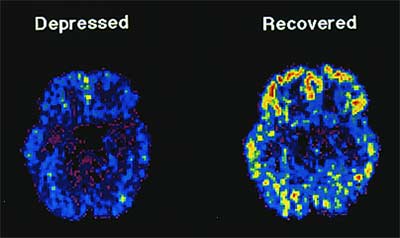
PET scan depression

PET scan depression

This picture was taken from the website linked above. Here you can see on the PET-scan that the areas affected by depression are on the outskirts of the brain, following the serotonin pathways.
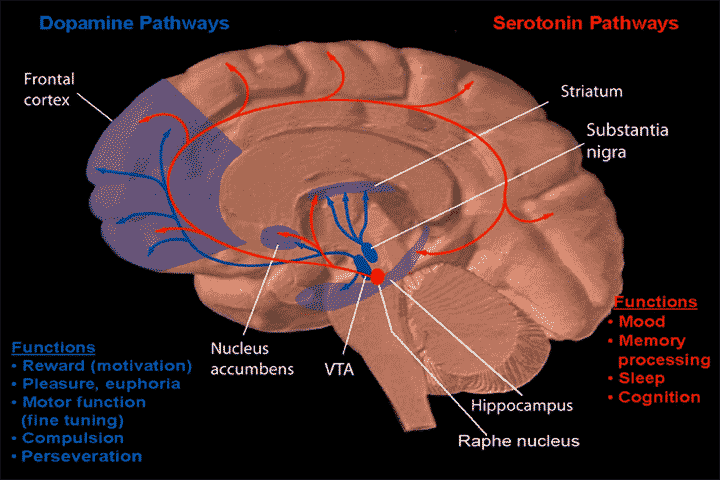
serotonin pathways

serotonin pathways

The above picture was taken from the link marked under “serotonin pathways” above. Dopamine is also included on this particular picture. The picture is excellent because it explains what functions dopamine and serotonin have and what they are responsible for. Note that neither indicates any connection to anxiety. In fact, in terms of anatomy, the areas responsible for anxiety are not even highlighted on any of these two pictures!

The questions necessarily arise: where are the anxiety sensitivity regions on the map? And if they are not connected to the depression part of the brain, why are anti-depression medications prescribed for anxiety?

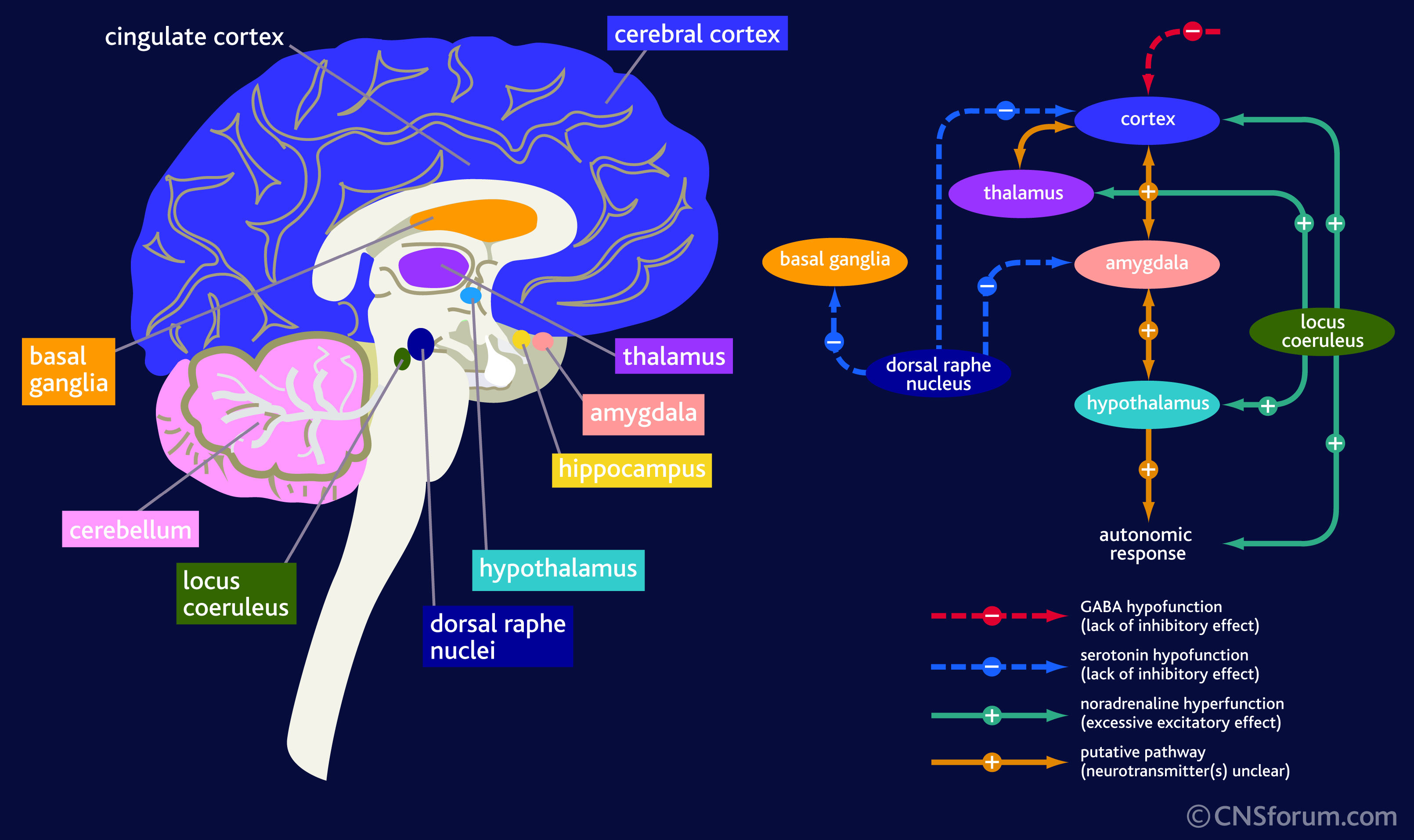
The areas of the brain in anxiety disorder are well discussed in this article and the picture below shows a good description of the anatomy and the flow direction of anxiety response, part of the same article, here I post separately in case you don’t want to read the above article linked to:
anxiety disorder picture

anxiety disorder picture

The picture above has 2 parts. On the left it shows of the many colors of various brain parts. One tiny green dot called the Locus Coeruleus is responsible for anxiety, which is an extension of the limbic system of the brain (often referred to incorrectly as the reptilian brain). Note that this particular part of the brain is separate from those that are affected by depression.

On the right there is an important table. It shows the path that anxiety takes as it manifests itself. It starts in the Locus Coeruleus and then heads into the cortex (blue), the thalamus (purple),  to the hypothalamus (light blue) and through the cortex also to the amygdala from which it passes to the hypothalamus and then to response. It also goes to a a couple of other places drawn in blue, one of which has a return arrow to the amygdala, considered to be the most important region of anxiety manifestation.

The first thing to note it that there is some connection to the serotonin pathway but also note that the connection is one directional in all except on small 3rd removed from the dorsal raphne nucleus! Meaning stimulus of anxiety will enter into the serotonergic pathway but serotonin will not enter the anxiety pathways much at all it is so removed!

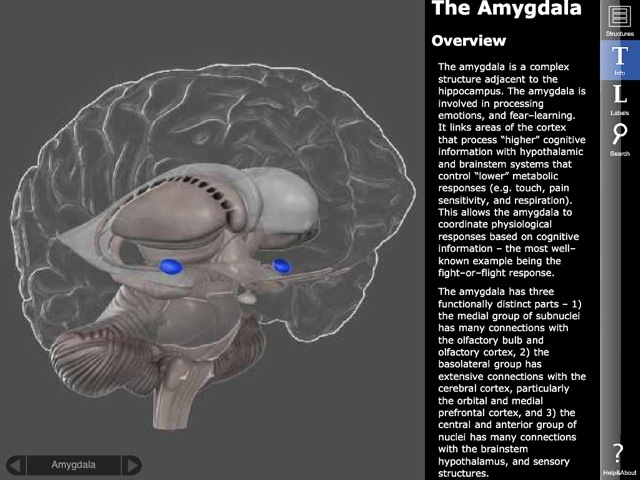
Anxiety is the dysfunction of a completely different hormone (neurotransmitter in the brain) called Noradrenaline (in common parlance that is adrenaline). Another picture where on a 3D image the area affected is better visible
anxiety in the amygdala

anxiety in the amygdala

On this picture above you can also read some of the descriptions about the importance of the amygdala in anxiety–marked with the two blue areas.

These pictures and analysis show that there really is no connection of significance between depression and anxiety. Most people I know who have anxiety (including me) are very happy people. There is no reason to give anti depression drugs when neither are they depressed not are they having problems with the part of the brain that needs serotonin. Why do doctors prescribe serotonin? The pharmaceuticals push the drugs. Now the FDA even approved psychotropic medications with serotonin for children as young as 8 years old, whose brains are  not even developed. The damage these drugs will cause in the brains of children is unimaginable! We are creating a whole new generation of brain-damaged people!

I noted at the beginning that sometimes serotonin does work for pains, such as migraine, where depression is not present but anxiety is. How is that possible? If you read my book–noted above–you will see that the cause of migraine is the lack of voltage in certain parts of the brain. It just so happens that in a large number of cases that brain region is associated with neurons that cannot function and those are neurons that normally manufacture serotonin. If then we provide serotonin to the brain, the pain will go away since the brain now sees serotonin and it cares little about an area that is not working. Serotonin did not cure the migraine; only it temporarily filled in the gap for those neurons that would normally make serotonin and now they cannot.

Other times when the serotonin drugs don’t work, it is because the areas affected by the migraine are not located in the anatomical area where serotonin is normally made and so adding extra serotonin is not helpful. Thus the pain remains.

In conclusion: giving serotonin and SSRI drugs to a whole variety of unrelated illnesses (migraine, fibromyalgia, bipolar, anxiety, dementia, ADD, ADHD, etc.,) obviously could not be useful for treatment. Most often these drugs are prescribed off-label, which I have already complained about since that is experimenting with humans without consent.

Many doctors tell me that they do not like to prescribe anti anxiety drugs, benzodiazepines, because they are addictive and affect memory. But they forget (or shamefully perhaps don’t know) that serotonin drugs cause even more dependence, some cannot ever be stopped, and that they cause serious brain fog and memory problems and sometimes death by serotonin syndrome (toxicity).

Atypical benzodiazepine receptor ligands

I wanted to spend a moment on explaining something about Benzodiazepines that confuses most doctors–especially “atypical benzodiazepine receptor ligands.” I have been told by several psychiatrists that ligands like Ambien or Lunesta or others are not benzos and therefore they are acceptable to prescribe when they disagree with the prescription of benzodiazepines otherwise. In this section I would like to provide an explanation about what “atypical benzodiazepine receptor ligands” are and how they work because they are listed under benzodiazepines for a good reason!

The term “atypical” is probably clear; “receptor ligand” is the part that confuses many doctors because these refer to a chemical behavior that combined with the word “atypical” may suggest that these drugs are not benzos. Indeed they are not in terms of molecular structure but does that mean anything relevant? Atypical benzodiazepine ligands are listed under benzos! So how does that happen if they don’t work like benzos? 

Let me quote two sentences out of a scientific research article that can be found at the NIH PubMed website if you have an account. The title of this article: Sleep pharmacology of typical and atypical ligands of benzodiazepine receptors. Not surprisingly, the following is stated in the abstract and proved all through the paper: “The results of these experiments indicate a heterogeneity in the mechanism of action of benzodiazepine and non-benzodiazepine ligands of benzodiazepine receptors, because they affect differently the various components of sleep. It is not necessary to invoke a heterogeneity of the central benzodiazepine receptors (the BZ1-BZ2 theory) in order to account for these differences, but they can be explained by the concept of spare receptors.

So let me translate a bit so you understand what these two sentences actually mean and why they are important. In the nervous system, the neurons work by using their receptors to take in various neurotransmitters. Some of these receptors only handle one particular compound (like Oxytocin) while others, such as serotonin accept just about any molecule that is snug enough, even if not a perfect fit. When a receptor accepts a molecule of any kind, given that it is a receptor for serotonin for example, even it is has accepted a sand molecule, it activates serotonin release or blocking because the sand attached to a serotonin receptor. In other words what matters is where it connects and not what connects. This is important because of what ligands are.

Ligands are imitators and impersonators of the molecular world. Use a ligand to sleep instead of a benzo and you sleep just as well. The receptors have connected to different molecules, one to a Valium for example and in the other instance to an Ambien, but the outcome is the same: the benzodiazepne receptor was activated by the ligand and hence the brain works as if it received benzo. Doctors who believe that atypical benzodiazepine receptor ligands don’t act like benzos are mislead by the definition that simply describes their molecular structure and not what they do. They act as benzos and thus they behave and become benzos.

Do you still believe Benzodiazepines are worse than Serotonin drugs? 

What is the reason for the exchange from good benzodiazepine to bad serotonin or SSRI drugs? Is it that the pharmaceuticals pay more perhaps if you prescribe those? Or are doctors not educated right? I believe that SSRIs do more damage than good. I have yet to meet a single person for whom it worked and I know thousands who take it, or used to take it. I know hundreds who are trying to quit it and are having a really difficult time. I know many who ended up with serotonin syndrome (toxic levels of serotonin) and one I knew even died. I find it amazing how clueless our medical doctors can be and still prescribe serotonin in any shape or form!

It is time we all stood up and told them that we know better! We must take our health into our hands! If we want to live to a ripe old age and have a great retirement, we better tell our doctors to stop and listen because we know the truth! No more serotonin in any form please unless it is truly indicated in “clinical depression.” In no other condition can serotonin in any shape or form be prescribed for us! And I have yet to meet a person who has the real clinical depression because chances are they are not out doing their shopping or chatting on the internet. I believe that a very large percent of the people receiving serotonin today have no clinical depression if they have depression at all!

Comments are welcome!

Angela

Posted in Interesting reading, Migraine-Blog, Must Read, This & That, Thoughts | Tagged , , , , , , , , , , , , , , | 14 Comments

The Medications We Take; the Scam!

This is a video trailer that was sent to me by a friend who is a documentary film maker. The video itself is 45 minutes long; the trailer is just 3 minutes but very powerful. Well worth your time to watch!

The most powerful thing about it is that everything it says is true. In fact one of the psychotropic medications shown was one of the medications that killed my mom. The reason why I am posting this trailer is that I manage a migraine group of Facebook and participated in other migraine groups as well. Every time the opportunity of taking a pill comes up, instead of taking good care of the body, people rather opt for the pill.

Why are we obsessed with the pills? What is it that wants us to take pills on top of pills every day instead of simply stopping to eat sugar or sugar substitutes? Are we such weak people that we even need to take our salt in a pill rather than in our food or as a pinch if we must? Are we taking Vitamin D3 instead of going to the sun? Are we taking calcium supplements instead of drinking milk?

Why are we obsessed with pills? What exactly do these pills do to us? Some of these questions are answered in the 3-minute trailer. I suppose if you purchase the 45-minute version, it will give you even more detailed information–I do not have that copy.

I sure hope this 3-minute video will help you change your mind and make progress toward quitting pills and will encourage you to take your health into your own hands. Most importantly I hope this video will help you see the light at the end of the tunnel!

Comments are welcome,

Angela

Posted in Must Read, This & That, Thoughts, Videos | Tagged , , , , , , | Leave a comment

Are You Thirsty All The Time?

Most medical practitioners will tell you that if you are thirsty all the time it means you may have diabetes. While diabetes does come with that first sign, something much simpler is also happening that no one is ever talking about!

Let’s look at the biochemical nature of thirst; shall we? I will not get into chemical equations, have no worries. I just merely want to visit the cell level. When a cell doesn’t get water inside of it or lacks water on its outside, we feel thirsty. So the medical industry tells you “go ahead, drink some water.” But we have a problem. Each cell has openings (gates) that are closed unless something will open them.

The little video below shows you how the gate opens and closes. I call these gates “mouths” of the cells for simplicity. A cell must be able to open its mouth to get water in. The opening requires sodium and chloride (salt in common knowledge) since sodium (Na+) and chloride (Cl-) are opposites in charge in ionic form (they are in ionic form in the body). Opposites attract so in order for them to get closer, they send a shock of electricity through the cell, which opens the gates (mouths). When the gate is opened, sodium can go in (chloride stays out) and potassium also goes in. Hence the name: sodium-potassium gate–or pump. The video below is not created by me but is linked from Youtube.


If the gates cannot open, you can drink as much water as you wish but they will not be able to quench your thirst; water will not be able to enter the cells. Thus you can drink until the cows come home and you will remain thirsty!

As the video above shows, when you are thirsty, you first need to have enough salt in you to break down into sodium and chloride to open the gates and also enough potassium. Potassium is a diuretic, so it is needed to release the toxic used water from the cell whereas sodium grabs fresh water as it enters the cell. When the cell is in balance this way, it can refresh its water as it needs to and so you will not feel thirsty.

Thus if you know you are not diabetic but you are thirsty all the time, instead of grabbing a glass of water, grab a little salty something AND a glass of water. Particularly if you are in a very hot region or exercise a lot, you evaporate sweat water and salt with your body’s cooling system as it cools itself. You need to replace water AND salt, not just water. Drinking too much water without salt can harm you in what is called water toxicity! Be aware that soft drinks, teas, coffees, and alcohol are not hydrating and are not equal to water! When thirsty, have some salt and water. And by water I mean WATER!

Which salt should you eat? I have several articles on salt in this blog and if you page back to the types of salts I wrote about, you will learn that white salt is what you want and purified kind–I know, there are all kinds of advertisements and articles on natural sea salts but of course, everyone wants to sell something. In just one sentence: every salt on earth is sea salt, and that includes your table salt to the Himalayan salt coming from the top of the mountain. All are sea salts. The difference is how much gunk they carry. Natural unpurified salts carry a lot of trace minerals that many sellers are proud of but in reality most are radio-active so be careful! Read the article and see the list of radioactive ingredients in the Himalayan salt at the link provided. Other salts have the same with varying degrees. Table salt is purified specifically to get rid of the radio-active materials.

So thirsty? Have some salt and then water. 

Comments are welcome.

Angela

Posted in Migraine-Blog, Must Read, This & That, Thoughts, Videos | Tagged , , , , , , , , , , , , , | 5 Comments

Are You Always Craving Sweets? Sugar Substitutes & the BIG Secret!

I cannot tell you how often I hear “I have a sweet tooth” or “I crave sugar all the time” or “I cannot stop eating sweets” or “I eat sweets when I am depressed” etc. Why do we have sweet tooth? Have you ever given that a thought? What does that mean? Does it mean anything? Indeed it does! So listen up!

I am starting with sugar substitutes and then move to sugar:

Are you eating sugar substitutes because you don’t want to gain weight, or because you have type 2 diabetes (T2D) and you crave sweets? Sugar substitutes can actually create T2D. Did you know that?

I read many books and articles on the subject of sugar being bad for you but most forget to explain 2 important things.

1) Insulin is released from the taste (smell, sight, and thought) of sweet and not sugar. Thus taking in sugar substitutes, because they are sweet, release insulin just like real sugar

2) Insulin resistance (same as T2D) develops from the insulin floating in your blood looking for sugar to deposit. Your body ignores insulin since because there is way too much to be put into the cells and they cannot handle it.

The job of insulin is to take the sugar in your food and deliver it to cells or convert it to fat, deposit it for later use in the body for energy. When the tongue tastes sweet, the body releases insulin immediately in search of finding the sugar and convert it for later use as energy. The problem is that since it doesn’t find any sugar if you eat naturals or sugar substitutes, sugar rash, excess insulin, as described above, kicks in plus you are hit with sugar cravings since your body thought it was getting sugar but it didn’t!

If you eat no carbs, no vegetables with carbs like potatoes, no fruits, your brain sees no sugar at all and it kicks in the sugar crave. If you eat/drink sugar substitutes, the more of those you eat, the more your craving for sugar will increase since your body is getting loads and loads of insulin that is takign the glucose from your blood, causing a sugar crash. So you need more glucose, which never comes!

This also kicks in the starvation mode by the brain so you will stop being active–it is not your choice; the brain is the control center here. The brain orders you to be resting because it has no sugar to keep your temperature constant, your heart beat constant, etc. The brain puts you into starvation mode, which reduces metabolic rate and that can lead to obesity. Smaller amount of foods will convert into energy in your body slower.

Now about the real sugar:

OK you say, I will now stop eating fake sugar and start eating the real one! But we have a problem. Table sugar is 50% fructose and 50% glucose. Fructose is found in fruits. Fructose is acceptable in small amounts for you as long as you eat it with fiber because it diverts it from the liver, where it is converted into ethanol (alcohol) and then triglycerides. causing non-alcoholic fatty liver disease (NAFLD)–fructose is very unhealthy. Fiber is essential for the bacteria in your gut. If you are not eating fiber but drink fruit juice for example, the fructose just hits the liver full force, creating NAFLD. It is also problem for your gut since now there is no food for the bacteria (fiber) so they die off or the kind of bacteria that is not beneficial will increase, causing SIBO or candidas. So what do we now do? Definitely don’t eat probiotics (bacteria)!

You can eat good bacteria forever. If you don’t eat insoluble fiber, they will not survive. Insoluble fiber is the most difficult food to eat since they are hard and tough and are indigestible. Insoluble fiber is soft-bark and our digestive tract is not made to digest it. Another form of fiber is soluble fiber. Most fiber supplements are soluble fiber. They are “prebiotic” since they support bacterial growth though not fermentation, which is the most essential for us, humans.

So what kind of sugar should we eat? And is it something we should eat at all? There is no consensus on how much refined sugar or fructose without fiber (like fruit juice or peeled fruit) one can eat. Given that they end up in the liver as ethanol causing harm over your lifetime and build up (ethanol does not leave, most of it collects and stays there), my personal recommendation is NONE.

I too am addicted to sugar just like everyone else and am slowly cutting it out of my diet. But I dumped already all foods with added sugar. For any sweet cravings, I eat a piece of fruit with skin and high fiber–raspberries are great for that–or vegetables–carrots are great. I no longer eat processed food, no sweets of any kind, I don’t eat bread or crackers for the sweeteners they put into them. I drink no soft drinks at all, no alcohol at all (alcohol is fermented sugar!). I avoid anything added sugar like the plague. I go at least 10 feet distance away from any artificial sweeteners! I recommend you do the same!

Comments are welcome!

Angela

Posted in Migraine-Blog, Must Read, This & That, Thoughts, Videos | Tagged , , , , , , , , , , | 8 Comments

Clueless Doctors Robin Williams’ Style. Rest in Peace!

The power of medicines and what you don’t know can and will hurt you. Cluelessness has no end. No one can say it better than Robin Williams did.

Robin Williams on medicines


Posted in Introduction, Migraine-Blog, Videos | Tagged , , , , , | Leave a comment

What Salt Are You Eating?

All About Salt

Salt, sea salt, table salt, Himalayan salt, Celtic sea salt, pink salt, gray salt, brown salt, etc. Do you know which is what and which you should be eating? The question is for real.

Quick: how many of you think that there is a difference between salt and sea salt?

The question is an important one and I want to spend a little time talking about the various salts–though I already talked about the importance of salt before, I did not say which salt and why. I know that many people today buy “sea salt” and a lot of people are now starting to get Himalayan salt, Celtic salt, Mediterranean sun evaporated sea water salt that is still moist and others just eat table salt. Is there a difference? Which is better for you and why?

In previous blogs I discussed that salt is made of 2 elements: sodium and chloride, with the chemical formula being NaCl where NA is a positive ion and Cl is a negative one. Together they keep our cells healthy when water is added, because they create voltage that helps the cell open its pumps and gates (its mouths if you will) to exchange nutrients and expel toxins.

So in reality, the salt your body needs is just that: sodium and chloride and nothing else.

All Salts are Sea Salts

Let me first answer the question if there is any difference between salt and sea salt: no. All salt on this planet is sea salt. Why the difference in name? It is a fad and some smart companies realized that if they put the word “sea” in front of “salt” people will buy more and they were probably right. People tell me all the time that sea salt is better in general and healthier than salt not realizing that the common table salt is also sea salt. It could be mined from the top of the Himalayan mountains. At one point that cave on the top of that mountain was under the sea and it is sea salt. So let me repeat all salts are sea salts.

So then what is the big fuss about the different colors, textures, naturally evaporated and still most, etc. Well, it is a dirty little secret. Hard to find out what is actually contained in a particular salt when it is not white since by nature pure sea salt is white and each crystal is transparent like glass. So if your salt has any color other than white and it is not transparent, it has something in it but what? Few salt manufacturers detail what is in their salts.

Take for example Celtic sea salt. I searched and the most informative site on the web still does not tell one what those magical vital 82 trace minerals are in the salt but it explains that they evaporate the water gently and leave a bit of moisture behind so the salt remains moist. They also explain that its color of the underlying grayish brown is the mud from the sea floor. So there is mud in your salt–this is why they must keep it moist else you would need a hammer to break your salt up. That is one problem. The other is what that mud contains. I am not sure if you know what falls to create the mud on the bottom of the sea floor and without being very blunt, let me just say I am glad fish and other creatures do not use toilet paper or coffins.

The minerals are secret though. However, a friend in the UK found a link of the trace minerals in the Himalayan salt and that I can link to and show you what may be in Celtic and other salts that are not white and pure. The Natural Pink Himalayan Rock Salt has an amazing list of trace minerals–and remember “rock” salt is still sea salt that has been out of the sea for long enough to have become rock-like from the pressure (indeed, it is fossilized salt):

Element Symbol Analysis Type
Hydrogen H 0.30 g/kg
Lithium Li 0.40 g/kg
Beryllium Be <0.01 ppm
Boron B <0.001 ppm
Carbon C <0.001 ppm
Nitrogen N 0.024 ppm
Oxygen O 1.20 g/kg
Flouride F- <0.1 g/kg
Sodium Na+ 382.61 g/kg
Magnesium Mg 0.16 g/kg
Aluminum Al 0.661 ppm
Silicon Si <0.1 g/kg
Phosphorus P <0.10 ppm
Sulfur S 12.4 g/kg
Chloride Cl- 590.93 g/kg
Potassium K+ 3.5 g/kg
Calcium Ca 4.05 g/kg
Scandium Sc <0.0001 ppm
Titanium Ti <0.001 ppm
Vanadium V 0.06 ppm
Chromium Cr 0.05 ppm
Manganese Mn 0.27 ppm
Iron Fe 38.9 ppm
Cobalt Co 0.60 ppm
Nickel Ni 0.13 ppm
Copper Cu 0.56 ppm
Zinc Zn 2.38 ppm
Gallium Ga <0.001 ppm
Germanium Ge <0.001 ppm
Arsenic As <0.01 ppm
Selenium Se 0.05 ppm
Bromine Br 2.1 ppm
Rubidium Rb <0.04 ppm
Strontium Sr <0.014 g/kg
Ytterbium Y <0.001 ppm
Zirconium Zr <0.001 ppm
Niobium Nb <0.001 ppm
Molybdenum Mo <0.01 ppm
Technetium Tc N/A unstable isotope
Ruthenium Ru <0.001 ppm
Rhodium Rh <0.001 ppm
Palladium Pd <0.001 ppm
Silver Ag 0.031 ppm
Cadmium Cd <0.01 ppm
Indium In <0.001 ppm
Tin Sn <0.01 ppm
Antimony Sb <0.01 ppm
Tellurium Te <0.001 ppm
Iodine I <0.1 g/kg
Cesium Cs <0.001 ppm
Barium Ba 1.96 ppm
Lanthanum La <0.001 ppm
Cerium Ce <0.001 ppm
Praseodymium Pr <0.001 ppm
Neodymium Nd <0.001 ppm
Promethium Pm N/A unstable isotope
Samarium Sm <0.001 ppm
Europium Eu < 3.0 ppm
Gadolinium Gd <0.001 ppm
Terbium Tb <0.001 ppm
Dysprosium Dy <4.0 ppm
Holmium Ho <0.001 ppm
Erbium Er <0.001 ppm
Thulium Tm <0.001 ppm
Ytterbium Yb <0.001 ppm
Lutetium Lu <0.001 ppm
Hafnium Hf <0.001 ppm
Tantalum Ta 1.1 ppm
Wolfram W <0.001 ppm
Rhenium Re <2.5 ppm
Osmium Os <0.001 ppm
Iridium Ir <2.0 ppm
Platinum Pt <0.47 ppm
Gold Au <1.0 ppm
Mercury Hg <0.03 ppm
Thallium Ti <0.06 ppm
Lead Pb <0.10 ppm
Bismuth Bi <0.10 ppm
Polonium Po <0.001 ppm
Astatine At <0.001 ppm
Francium Fr <1.0 ppm
Radium Ra <0.001 ppm
Actinium Ac <0.001 ppm
Thorium Th <0.001 ppm
Protactinium Pa <0.001 ppm
Uranium U <0.001 ppm
Neptunium Np <0.001 ppm
Plutonium Pu <0.001 ppm

This table is copied from the site linked to above under the salt itself. I don’t know how familiar you are with some of these elements but let me grab just a few. Of course these are trace, meaning very tiny, so their effects are also minimal per serving–in the table noted per kg salt consumption. Still over many years of use or your lifetime, eating salt of this kind many times a day, some of these elements build up and hurt you.

Plutonium: are you planning to build a nuclear reactor?

Iridium, Radium, Neptunium, Uranium, Protactinium, Thorium, Actinium, Francium, and I could continue are all radio-active elements, some more than others.

Ingesting radioactive elements is dangerous. It is particularly dangerous if you are not consuming iodine in the right quantity to help your thyroid clear the radiation from your body.

You recall I also wrote an article on the importance of iodine in salt if you still have thyroid and if you are not suffering from Hashimoto’s or Grave’s diseases, in which case iodine can hurt you. Note that there is a trace level of iodine in this particular salt as is in all sea salt because of the fact that dead organic matter collects on solid objects in seas and oceans and many sea organic beings, kelp, etc., do have iodine in them as well. But the amount falling on the on salt crystals (they are not crystals in water but molecules) and remaining there is very tiny.

Your entire body and not just the thyroid needs iodine. The NIH (National Institute of Health) in the US recommends the following iodine levels:

Minimum Iodine Necessary

Life Stage

Recommended Amount
Birth to 6 months 110 mcg
Infants 7-12 months 130 mcg
Children 1-8 years 90 mcg
Children 9-13 years 120 mcg
Teens 14-18 years 150 mcg
Adults 150 mcg
Pregnant teens and women 220 mcg
Breastfeeding teens and women 290 mcg

Upper Limits on Iodine

Life Stage                                            Upper Limit

Birth to 12 months:                      Not established

Children 1-3 years:                       200 mcg

Children  4-8 years:                     300 mcg

Children 9-13 years:                    600 mcg

Teens 14-18 years:                       900 mcg

Adults:                                         1,100 mcg

(table updated on 3/24/2018 to reflect new guidelines, which now contain upper limits).

On the mineral list of the Himalayan Pink Rock Salt above you can see that the amount is less than (<) 0.01g/kg which is less than 10,000 mcg per kg.  1 kg is 35 oz approximately. Based on the US recommended daily sodium recommendation (after significant calculation and conversion between metrics), the daily amount ingested from Himalayan Pink Rock Salt is less than 5.7 mcg which is a very small fraction of what one needs. Check out the entire page on NIH why iodine is important even in brain development!

You may recall the earthquake in Japan followed by the tsunami that wiped out the nuclear facility there. The first item sold out in stores after the nuclear explosions was iodine. Iodine can help clean your system from toxins, even radioactive ones. It can save your life.

So with all this I ask why would anyone eat salt that is not purified like table salt is? Most people tell me that in the purification process everything is taken out of the salt and so it has no additional things in it! Precisely! That is the good thing about it! Just add iodine!

So next time you evaluate what salt you should eat, take iodized salt that is white and each crystal is clear like glass! That is the purest salt you can get. If you want to eat iron, eat spinach and red meat. If you want to eat radiation, visit Chernobyl.

Comments are welcomes as always, and are moderated for appropriateness.

Angela

Last updated: 3/24/2018
by: Angela A Stanton, Ph.D.

Posted in Healthcare, Interesting reading, Must Read, nutrition, This & That, Thoughts | Tagged , , , , , , , , , , , , , , , , , , | 32 Comments

Salt and Your Heart; Do You Really Need to Lower Your Salt?

The latest fad of “heart healthy diet” made many people, who always had healthy diets, cut salt out of their diets–also many young children. The ones to whom the advertising campaign is aimed at, remain just as stubborn in eating whatever they want to eat and are not changing their habits. There is a question though: does salt intake directly connect to increased blood pressure? And if so how? And does reducing salt help or hurt our heart and brain or body in general. I expect you know my answer simply by how I formed the questions. I do not wish to attack those who believe low salt is heart healthy. Rather I would like to explain what heart health and diet in combination mean in terms of the human body and brain.

Since I am not a heart expert, I tell you a story of importance to guide you through my thought process. I provide my story, since I know that real well and it shocked my doctors quite a bit. Under no condition do I recommend that you drop everything and start eating salt or change your dietary habits; I merely would like to enlighten you, the reader, since if you are reading this, you have an opinion and curiosity already.

About 4 years ago I had a ton of migraines; I have had migraines for over 20 years. Otherwise I was very healthy in almost every way except for a late age asthma and the migraines. I was neither fat nor thin, had normal/low blood pressure of 110/70 to 117/78, borderline cholesterol. My family history on my mother’s side is full of hypertension and just about everyone died in or had at least one heart attack. So I thought my fate was sealed in spite of my healthy condition. But the migraines kept coming and I was referred to a migraine specialist who wanted to put me on a preventive medication, which would have been an off-label drug since it was initially created for depression. But I was not depressed plus I was told I would never be able to stop that drug in my life: it was a serotonin drug.

Being a scientist in the field of neuroscience, at that point I said “no thanks” and decided to look into this migraine business on my own–I had no salt in my mind at that time.

Of course if you look at research on migraines, nearly 100% starts with where the pain is rather than what may be the cause; perhaps because we have no easy access to see what is happening in the brain, unlike a broken arm. So my method was to look at the brain from within (in theory) based on molecular biology books I already had at home, to understand what a neuron’s requirements are for existing. Of course I learned all that in college but who pays attention? Right? We all know that the brain uses sugar for its energy but few people have asked how the neuron “opens it mouth” shall we say for simplicity to get those sugars for energy. What are the environmental requirements to the neuron to be able to energize itself? This is where I started.

To cut to the chase, I discovered a critical information that everyone in the field knows but it seems to go unnoticed or irrelevant by many. It is also complicated by the fact that not everyone has migraines given the same lack of good environment. So it is hard to say that my neurons cannot open their mouths because they don’t get enough salt at the same time as your neurons have no problem opening their mouths even though you don’t eat salt either. I now understand that migraine is genetic and a switch must turn on to activate a “migraine brain.” And the migraine brain is vastly different from the brain of a non-migraineur. The differences are greatly highlighted in my book that is sold everywhere; here I give you my publisher’s website to look inside or buy; it is available in paperback as well as digital.

Once it downed on me that the neurons in my head need to create their voltage in order to work and for that voltage they need salt, I had a life-changing moment. I hated salt all my life and I would not put it on or into nearly anything. I also drank water just as decoration and not specifically paying attention to why I did what I did. After this epiphany of salt need, I decided to give it a try. I told my doctor who nearly fainted because as you have all heard it “too much salt is bad for you.” He told me that my blood pressure will go up, it is not a good idea, etc. But if you ever had a migraine, you are ready eat rocks if people tell you they will work so I did not give a damn and started my salt increase even though I knew damned well that I have a genetic predisposition to heart problems and hypertension.

I started my morning with a pinch of salt every day with a glass of water and throughout the day I would ensure that I added extra salt to everything. For water drinking I purchased a water buzzing app on my cell phone that I set to buzz me every time I needed to drink water. Within the first months I was migraine free, by the second month migraine fog free, and after that completely migraine free.

I ate salt according to my migraine and even ate at the “very bad for your heart” M word junk food place because I knew it was high in salt. I also was told to check my blood pressure regularly and visited my doctor as well. For his and my biggest surprise, my blood pressure did not change at all; it is still around 110/70-117/78, yet on some days I eat 2-3 times the daily recommended salt while other days less.

So what is going on here? I was supposed to have an increased blood pressure–in fact I wanted to have a bit increased blood pressure since having low blood pressure can make one dizzy upon quick standing up and perhaps not so well nourished by blood through the 400 miles of blood vessels of the brain (Scientific American MIN, July/August 2014 “Out for Blood” by Elizabeth M. C. Hillman). But no matter how much salt I ate, my blood pressure did not change and my cholesterol actually dropped. I had not had as much as a cold for 3 years now, my skin got about 10 years younger, and I suddenly had a lot more energy. So where does it come from that too much salt (I mean eating 2-3 teaspoon of salt when 1 is the daily max is clearly too much) is bad for us?

I am not sure who first stated this “too much salt is bad for you” argument but it is sweeping the world in civilized countries like wildfire and the number of migraine cases are increasing exponentially as a result. So what is the connection and why did I not get hypertension in spite of the salt amount I ate?

The answer is very simple: in order for your brain (or heart or lung or any cell) to open their “mouths” to feed, they need to have salt in ionic form as sodium chloride, in which sodium is NA+ and chloride is Cl- where the +/- signs represent the polarity of the ion. Sodium is inside the cell and chloride outside and with the polarity differences they attract each other through the walls of the cell, thereby providing the opportunity to the cell walls to open their mouths (sodium-potassium pumps is the official word) to take in potassium and water and spit out used toxic water. Not having voltage meant cells could not open their pumps and not having enough salt meant also not having enough sodium in the cells. Sodium retains water and this is a key important property for the body. 

Since my migraines disappeared and many of my book-readers’ migraines are also gone, the question can now be addressed: how come my blood pressure did not go up (nor do my migraine book readers’ blood pressures since many contact me) and how come I am getting heart healthier with all this salt than I was without it before?! This is counter to all wisdom of today’s doctors, who will place people on sodium restricted diets rather than do the right thing: drink more water and eat more potassium if you have high blood pressure.

The reason why so many people have heart troubles as a result of too much salt is that they eat salt disproportionately to what their bodies need and they eat salt alone without enough water.  If you are the type of person who puts salt and pepper on every food you get before you even taste it, there is a good chance that you will end up with a heart problem, even if you do not eat junk food.

The key to eating salt and retain heart health is to eat exactly as much salt as what your body needs to be healthy. For each individual this level is different, and each day may be different for the same individual since the level of salt one needs is dependent on many external and internal (to the body) factors: exercise, temperature, stress, illness, etc. A couch potato in a 78F temperature room sitting all day will use up way less salt than the same person sitting with friends talking or exercising, however small exercise that is. Furthermore, salt alone is bad because salt will take water wherever it can find it and will hold onto it with its life! So it is not enough to just eat salt but you must drink a lot of water as well. If you eat as much salt as your body needs and you drink as much water also as your body needs (over 70% of our body is made of this salty water), your blood pressure will not change for the worst but in fact for the better if at all. The additional benefits: lower cholesterol, younger skin, less time on the toilet since salt retains water, so you don’t have to run every time you drink water, much more energy, and stronger immune system to fight simple illnesses like a cold.

Collective benefits suggest that it is well worth taking salt in correct amount relative to the needs of each individual under serious consideration!

So is too much salt bad for you? It depends: if you drink water correspondingly with the amount of salt and potassium, no, there is no such as too much salt. If you only salt everything and finish your meal with a beer or wine, yep, too much salt will get you!

Comments are welcomed.

Angela

Posted in Interesting reading, Migraine-Blog, Must Read, This & That, Thoughts | Tagged , , , , , , , , , , , , , , , , | 8 Comments

Off-Label Prescription Use Should Be Illegal!

I am a scientist and used to run experiments with drugs on volunteers. I had to go through application after application and the approval process for a single short experiment can take over a year. Why am I bringing this up? According to the Agency for Healthcare Research and Quality 1 out of 5 prescriptions today are written by the clinician for off-label use. Off-label use is using a drug for a condition without FDA approval. This makes it equivalent to research on humans with drugs without their consent.

The FDA says it is legal. Can it be legal? Should it be legal?

Clinical doctors do not practice scientific research; they treat sick people with medications created for the illnesses they have. So how is that possible that clinical doctors can prescribe a drug that was created for illness X to see if it will treat illness Y without the approval of the FDA; without rigorous research that drug created for illness X will also benefit illness Y; and without the patient’s written or even verbal consent!? 

I am not quite sure how the medical industry is getting away with this activity of using sick people as guinea pigs without their consent. I find it not only irresponsible and dangerous but downright clueless. Clinical doctors are not trained to do research thus when they prescribed Sumatriptan to adolescents off-label for migraine, after a year of doing so, the FDA came out with not permitting it for the following reasons

“• We did not agree trial SUMA3005 (acute adolescent efficacy study) demonstrated efficacy.
• We provided draft labeling recommendations that needed to be agreed to prior to approval of the supplement.
• We expressed concern that an insufficient number of subjects were exposed for 1 year in trial SUMA3006 (long term trial).
• We requested additional information on the nasal mucosa examinations performed in trial SUMA3006.
• We requested the sponsor provide a safety update for the NDA.” (page 5 of linked document)

Now this is a document from 2003 and since then this drug may or may not be approved for adolescents but that is not the point.

The critical point is that the drug was experimented with on adolescents for 1 whole year as off-label drug and then found to not meet the requirements. This is a huge oops when it comes to medicines in general, since if 1 out of every 5 prescription is for off-label use, than 20% of all drugs in the US are experimented on people without their consent, and without FDA approval.

I really would like to know why this is legal. I actually want to take it a step further and make it illegal! We the people are not guinea pigs or lab rats. We chose to have medications that are proven to treat our specific illnesses if such medications exist. I do not want to have one more doctor in my life tell me “oh but it seems to work for this other condition.” I have heard that before many times. No more.

I recommend you also tell your doctor NO for off-label prescription. It is better to have no medication than something that may make you sick in some other way on top of your already existing illness! If the doctor is not saying whether a drug is prescribed to you off-label or not, do yourself a favor and ask!

Amended after crucial finds. Did you know that you can report if you have an unlisted adverse side effect from a drug? It need not be off-label but any drug, both prescribed and over the counter. The link to consumer reporting is here. Such reporting has lead to a near exponential growth of additional side effects that were originally not listed on drugs at the time of FDA approval. You can see the growth through 2013 via this link and see how much your reporting matters!

Comments are welcomed!

Angela

Posted in Interesting reading, Migraine-Blog, Must Read, This & That, Thoughts | Tagged , , , , , , , , , , , , , , , , , , , , , , | 7 Comments

Iodine in Salt and Why You Need It!

In the previous article I posted on salt, I only mentioned salt and the fads of sea salt versus table salt, and whether “natural” is better than “table salt.” I also posted a link and a drawing created by ScienceforKids that gives a visual explanation of what it looks like on a chemical level and a picture of what sodium looks like from Wikipedia. But there is the famous iodine! It confuses people since many do not know what it does and what it is. To make it more complicated there is iodide, iodate, iodine, potassium iodate, etc. Salt manufacturers label their salt with whichever and what they put in all lead to iodine in the salt only the iodine is connected to the NaCl molecule in a different way to form the molecule iodized salt.

To make it easier on me, I am quoting here Wikipedia on what Iodized Salt does:

Iodised salt (also spelled iodized salt) is table salt mixed with a minute amount of various salts of the element iodine. The ingestion of iodide prevents iodine deficiency. Worldwide, iodine deficiency affects about two billion people and is the leading preventable cause of intellectual and developmental disabilities.[1][verification needed] Deficiency also causes thyroid gland problems, including “endemic goitre“. In many countries, iodine deficiency is a major public health problem that can be cheaply addressed by purposely adding small amounts of iodine to the sodium chloride salt.

Iodine is a micronutrient and dietary mineral that is naturally present in the food supply in some regions, especially near sea coasts, but is generally quite rare in the Earth’s crust, since iodine is a so-called “heavy” element (with the highest atomic mass of any element needed by mammals for life), and abundance of chemical elements generally declines with greater atomic mass. Where natural levels of iodine in the soil are low and the iodine is not taken up by vegetables, iodine added to salt provides the small but essential amount of iodide needed by humans.

So as you can see, iodized salt is mandatory. You can click on the links under each word and it will take you back to Wikipedia for further explanation of what is what and why. As for the various forms of iodine, I thought I help you see what is what easier if I collect the information here for you on one page.

Here is what potassium iodate is from Wikipedia:

Potassium iodate is sometimes used for iodination of table salt to prevent iodine deficiency. Because iodide can be oxidized to iodine by molecular oxygen under wet conditions, US companies add thiosulfates or other antioxidants to the potassium iodide. In other countries, potassium iodate is used as a source for dietary iodine. It is also an ingredient in some baby formula milk.

Here is iodine from Wikipedia:

Iodine is a chemical element with symbol I and atomic number 53. The name is from Greek ἰοειδήςioeidēs, meaning violet or purple, due to the color of elemental iodine vapor.[2]

Iodine and its compounds are primarily used in nutrition, and industrially in the production of acetic acid and certain polymers. Iodine’s relatively high atomic number, low toxicity, and ease of attachment to organic compounds have made it a part of many X-ray contrast materials in modern medicine. Iodine has only one stable isotope. A number of iodine radioisotopes are also used in medical applications.

Iodine is found on Earth mainly as the highly water-soluble iodide ion I, which concentrates it in oceans and brine pools. Like the other halogens, free iodine occurs mainly as a diatomic molecule I2, and then only momentarily after being oxidized from iodide by an oxidant like free oxygen. In the universe and on Earth, iodine’s high atomic number makes it a relatively rare element. However, its presence in ocean water has given it a role in biology. It is the heaviest essential element utilized widely by life in biological functions (only tungsten, employed in enzymes by a few species of bacteria, is heavier). Iodine’s rarity in many soils, due to initial low abundance as a crust-element, and also leaching of soluble iodide by rainwater, has led to many deficiency problems in land animals and inland human populations. Iodine deficiency affects about two billion people and is the leading preventable cause of intellectual disabilities.[3]

Iodine is required by higher animals for synthesizing thyroid hormones, which contain the element. Because of this function, radioisotopes of iodine are concentrated in the thyroid gland along with nonradioactive iodine. If inhaled, the radioisotope iodine-131, which has a high fission product yield, concentrates in the thyroid, but is easily remedied with non-radioactive potassium iodide treatment.

An image of iodine also from the same article in Wikipedia

Iodine

Iodine

Iodine is a necessary element in salt to protect the thyroid. It was also the first item that was gone from all the shelves in Japan after the earthquake and tsunami shaken nuclear plant, started leaked (and is still leaking) radiation. Iodine can help the thyroid sponge up radiation from the body. It can save your life.

Many countries (in fact most countries) do not mandate iodine in their salt, except for the US. This helped clear the “goiter belt” in the US where the soil naturally does not contain enough iodine and the plants the US population ate were deficient of iodine. Thus the US placed iodine into salt so that the masses can be properly protected.

This of course, now with the sea salt fad, is all going out the window since many sea salts come without iodine. In fact people even in the US proudly tell me they eat salt without iodine since they do not need it. This is a lovely misconception that will end in the goiter belt’s return by the end of the 21st Century, when the youth of today and their children all without sufficient iodine will end up with goiter and without enough thyroid hormone to start with.

It is time for the US population to wake up and discover that nature creates things that are important for our survival–we were made of them! If we drop them out of our lives, we will also drop out of life. It is that simple. So the next time you buy your salt, be it any name or brand or color of your preference, make sure it has iodine. Also make sure you don’t get too much iodine!

Grow the habit of using iodized salt for cooking and the rest of the salt you take in say for excessive sweating from heat or exercise, use salt without iodine. The iodine in the salt you cook with is enough iodine for your daily need!

Comments are welcome!

Angela

Posted in Interesting reading, Migraine-Blog, Must Read, This & That, Thoughts | Tagged , , , , , , , | 14 Comments

Food For Thought: The Roman Time Salary Was in Salt!

I just learned something that I think you will appreciate: the word salary comes from the Roman times from 200 BC to about 600 AD when soldiers got their salaries in salt–the word salary is derived from the word salt to soldiers. Salt was a rarer commodity than anything else and highly prized! Thus salt has been known to be a beneficial and a required mineral by humans for over 2000 years and today the heart healthy diets are trashing all that wisdom! Food for thought!

What happened with salt that it got such a bad name that today so many put it aside thinking it is not important? Salt did not change; it is still sodium chloride NaCl. I can tell you what happened: fads arrived!

Today we see new fads: Sea Salt!!! Has anyone ever thought any salt on earth is not sea salt? Really? Honestly? All salt on earth is sea salt! I cannot tell you how many times I get this question: should I get sea salt or regular? It doesn’t matter.. all are the same sea salts! Even Himalayan salt is sea salt as is table salt. Now there is an issue of pure versus “natural.” Some show colors, like Himalayan salt, which has orange, yellow, all kinds of colors–makes beautiful lamp. But in terms of eating that, you are eating metals! Yep! Natural sea salt is white. So if you are not eating white salt, you are eating salt that is not pure.

I looked at the various “sea salt” colors… gray, brown, etc. Celtic sea salt is gray. It has iron in it… do you need iron? Not if you are a man or a woman post menopause. Not sure what the brown stuff is all about and not sure I want to go there… but note: sea salt taken from anywhere “as is” contains dead bodies of animals and organic other things, perhaps going as far as fish dropping. I think you agree that “pure” is better than “natural” when in comes to salt. Table-salt has been purified to the max and all is left is sodium chloride, and guess what! That is all you need!

But the best (and scariest) story is yet to come.

A friend, an MD, and I were chatting the other day and she said: oh I eat Celtic salt so it is not sodium chloride!  I thought to myself what the heck? Salt that is not sodium chloride? So I looked up on the Internet and sure enough Celtic salt does not list Chloride on the ingredients! This MD believed that she was only eating sodium! Now how many of you have been to college chemistry class 101 lab?

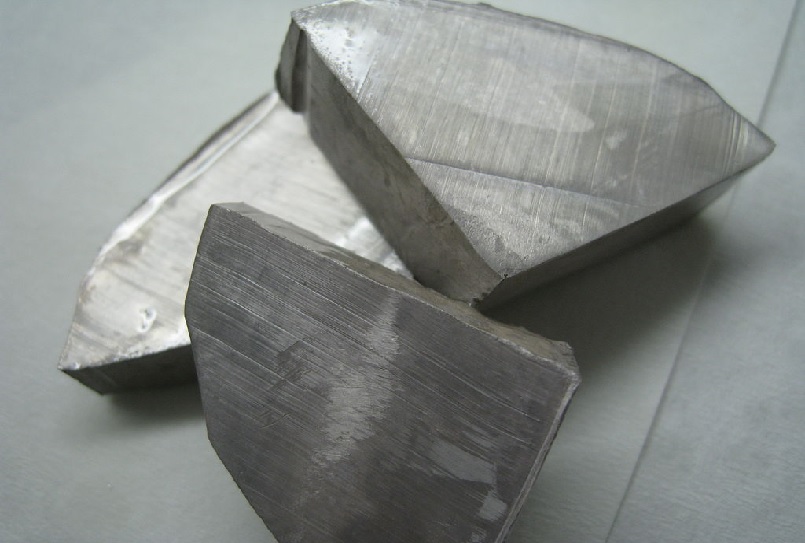
Sodium

Sodium

Sodium photo taken  from Wikipedia.

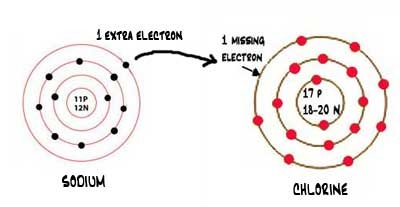
The first item of experiments is usually a dark silver colored chunk of metal called sodium they bring for you to learn the trade with. They usually put it on top of a dish full of water under heavy protection and you watch how the sodium runs around like a torpedo with fire and blows up; many lab fires were created by sodium. Sodium is an ion that is positively charged Na+, meaning it has one electron more than ideal on its outer atomic layer. In must get rid of it in order to become neutral. Chloride has one electron less on its outer layer and it wants one to become stable.

I link you here to a picture that I did not create but shows you what sodium and what chloride look like that create salt.

Sodium chloride - salt

Sodium chloride – salt

Thus one cannot eat sodium without blowing up… in fact it would catch fire from the moisture in your hands… I understand if people who never took chemistry class don’t know that but an M.D.??? Really?  Doesn’t know that salt is sodium chloride?

I also had some people tell me it is acidic; others that it is basic. OK people: it is neutral. When one + and one – meet as in Na+ (sodium) and Cl- (Chloride) they neutralize each other. Thus salt is neither acidic nor basic; it is neutral. If you get your stomach burning from salt, it is because you had acid in your stomach before the salt since salt is neutral, it cannot make it acidic.

So with this I just permanently wanted to note that

  1. salt is an amazingly important and highly valued mineral without which our body cannot survive and
  2. I hopefully explained what it is and that it is not acidic.

The one thing I did not mention is why everything we eat only notes sodium as the important ingredient. It is because in our bodies sodium and chloride separate into ions and sodium stays inside cells, holding onto water. Thus too much sodium (if you don’t drink enough water and eat enough potassium) can harm you and cause hypertension. The chloride part stays outside of the cell and its function is to create a voltage difference so the cells pumps, gates, and channels can operate.

Salt is very important for the human body so don’t forget your salt today!

Appreciate your comments!

Angela

Posted in Interesting reading, Migraine-Blog, Must Read, This & That, Thoughts | Tagged , , , , , , , , , , , , , , | 6 Comments