Salt and Your Heart; Do You Really Need to Lower Your Salt?

The latest fad of “heart healthy diet” made many people, who always had healthy diets, cut salt out of their diets–also many young children. The ones to whom the advertising campaign is aimed at, remain just as stubborn in eating whatever they want to eat and are not changing their habits. There is a question though: does salt intake directly connect to increased blood pressure? And if so how? And does reducing salt help or hurt our heart and brain or body in general. I expect you know my answer simply by how I formed the questions. I do not wish to attack those who believe low salt is heart healthy. Rather I would like to explain what heart health and diet in combination mean in terms of the human body and brain.

Since I am not a heart expert, I tell you a story of importance to guide you through my thought process. I provide my story, since I know that real well and it shocked my doctors quite a bit. Under no condition do I recommend that you drop everything and start eating salt or change your dietary habits; I merely would like to enlighten you, the reader, since if you are reading this, you have an opinion and curiosity already.

About 4 years ago I had a ton of migraines; I have had migraines for over 20 years. Otherwise I was very healthy in almost every way except for a late age asthma and the migraines. I was neither fat nor thin, had normal/low blood pressure of 110/70 to 117/78, borderline cholesterol. My family history on my mother’s side is full of hypertension and just about everyone died in or had at least one heart attack. So I thought my fate was sealed in spite of my healthy condition. But the migraines kept coming and I was referred to a migraine specialist who wanted to put me on a preventive medication, which would have been an off-label drug since it was initially created for depression. But I was not depressed plus I was told I would never be able to stop that drug in my life: it was a serotonin drug.

Being a scientist in the field of neuroscience, at that point I said “no thanks” and decided to look into this migraine business on my own–I had no salt in my mind at that time.

Of course if you look at research on migraines, nearly 100% starts with where the pain is rather than what may be the cause; perhaps because we have no easy access to see what is happening in the brain, unlike a broken arm. So my method was to look at the brain from within (in theory) based on molecular biology books I already had at home, to understand what a neuron’s requirements are for existing. Of course I learned all that in college but who pays attention? Right? We all know that the brain uses sugar for its energy but few people have asked how the neuron “opens it mouth” shall we say for simplicity to get those sugars for energy. What are the environmental requirements to the neuron to be able to energize itself? This is where I started.

To cut to the chase, I discovered a critical information that everyone in the field knows but it seems to go unnoticed or irrelevant by many. It is also complicated by the fact that not everyone has migraines given the same lack of good environment. So it is hard to say that my neurons cannot open their mouths because they don’t get enough salt at the same time as your neurons have no problem opening their mouths even though you don’t eat salt either. I now understand that migraine is genetic and a switch must turn on to activate a “migraine brain.” And the migraine brain is vastly different from the brain of a non-migraineur. The differences are greatly highlighted in my book that is sold everywhere; here I give you my publisher’s website to look inside or buy; it is available in paperback as well as digital.

Once it downed on me that the neurons in my head need to create their voltage in order to work and for that voltage they need salt, I had a life-changing moment. I hated salt all my life and I would not put it on or into nearly anything. I also drank water just as decoration and not specifically paying attention to why I did what I did. After this epiphany of salt need, I decided to give it a try. I told my doctor who nearly fainted because as you have all heard it “too much salt is bad for you.” He told me that my blood pressure will go up, it is not a good idea, etc. But if you ever had a migraine, you are ready eat rocks if people tell you they will work so I did not give a damn and started my salt increase even though I knew damned well that I have a genetic predisposition to heart problems and hypertension.

I started my morning with a pinch of salt every day with a glass of water and throughout the day I would ensure that I added extra salt to everything. For water drinking I purchased a water buzzing app on my cell phone that I set to buzz me every time I needed to drink water. Within the first months I was migraine free, by the second month migraine fog free, and after that completely migraine free.

I ate salt according to my migraine and even ate at the “very bad for your heart” M word junk food place because I knew it was high in salt. I also was told to check my blood pressure regularly and visited my doctor as well. For his and my biggest surprise, my blood pressure did not change at all; it is still around 110/70-117/78, yet on some days I eat 2-3 times the daily recommended salt while other days less.

So what is going on here? I was supposed to have an increased blood pressure–in fact I wanted to have a bit increased blood pressure since having low blood pressure can make one dizzy upon quick standing up and perhaps not so well nourished by blood through the 400 miles of blood vessels of the brain (Scientific American MIN, July/August 2014 “Out for Blood” by Elizabeth M. C. Hillman). But no matter how much salt I ate, my blood pressure did not change and my cholesterol actually dropped. I had not had as much as a cold for 3 years now, my skin got about 10 years younger, and I suddenly had a lot more energy. So where does it come from that too much salt (I mean eating 2-3 teaspoon of salt when 1 is the daily max is clearly too much) is bad for us?

I am not sure who first stated this “too much salt is bad for you” argument but it is sweeping the world in civilized countries like wildfire and the number of migraine cases are increasing exponentially as a result. So what is the connection and why did I not get hypertension in spite of the salt amount I ate?

The answer is very simple: in order for your brain (or heart or lung or any cell) to open their “mouths” to feed, they need to have salt in ionic form as sodium chloride, in which sodium is NA+ and chloride is Cl- where the +/- signs represent the polarity of the ion. Sodium is inside the cell and chloride outside and with the polarity differences they attract each other through the walls of the cell, thereby providing the opportunity to the cell walls to open their mouths (sodium-potassium pumps is the official word) to take in potassium and water and spit out used toxic water. Not having voltage meant cells could not open their pumps and not having enough salt meant also not having enough sodium in the cells. Sodium retains water and this is a key important property for the body. 

Since my migraines disappeared and many of my book-readers’ migraines are also gone, the question can now be addressed: how come my blood pressure did not go up (nor do my migraine book readers’ blood pressures since many contact me) and how come I am getting heart healthier with all this salt than I was without it before?! This is counter to all wisdom of today’s doctors, who will place people on sodium restricted diets rather than do the right thing: drink more water and eat more potassium if you have high blood pressure.

The reason why so many people have heart troubles as a result of too much salt is that they eat salt disproportionately to what their bodies need and they eat salt alone without enough water.  If you are the type of person who puts salt and pepper on every food you get before you even taste it, there is a good chance that you will end up with a heart problem, even if you do not eat junk food.

The key to eating salt and retain heart health is to eat exactly as much salt as what your body needs to be healthy. For each individual this level is different, and each day may be different for the same individual since the level of salt one needs is dependent on many external and internal (to the body) factors: exercise, temperature, stress, illness, etc. A couch potato in a 78F temperature room sitting all day will use up way less salt than the same person sitting with friends talking or exercising, however small exercise that is. Furthermore, salt alone is bad because salt will take water wherever it can find it and will hold onto it with its life! So it is not enough to just eat salt but you must drink a lot of water as well. If you eat as much salt as your body needs and you drink as much water also as your body needs (over 70% of our body is made of this salty water), your blood pressure will not change for the worst but in fact for the better if at all. The additional benefits: lower cholesterol, younger skin, less time on the toilet since salt retains water, so you don’t have to run every time you drink water, much more energy, and stronger immune system to fight simple illnesses like a cold.

Collective benefits suggest that it is well worth taking salt in correct amount relative to the needs of each individual under serious consideration!

So is too much salt bad for you? It depends: if you drink water correspondingly with the amount of salt and potassium, no, there is no such as too much salt. If you only salt everything and finish your meal with a beer or wine, yep, too much salt will get you!

Comments are welcomed.

Angela

Posted in Interesting reading, Migraine-Blog, Must Read, This & That, Thoughts | Tagged , , , , , , , , , , , , , , , , | 8 Comments

Off-Label Prescription Use Should Be Illegal!

I am a scientist and used to run experiments with drugs on volunteers. I had to go through application after application and the approval process for a single short experiment can take over a year. Why am I bringing this up? According to the Agency for Healthcare Research and Quality 1 out of 5 prescriptions today are written by the clinician for off-label use. Off-label use is using a drug for a condition without FDA approval. This makes it equivalent to research on humans with drugs without their consent.

The FDA says it is legal. Can it be legal? Should it be legal?

Clinical doctors do not practice scientific research; they treat sick people with medications created for the illnesses they have. So how is that possible that clinical doctors can prescribe a drug that was created for illness X to see if it will treat illness Y without the approval of the FDA; without rigorous research that drug created for illness X will also benefit illness Y; and without the patient’s written or even verbal consent!? 

I am not quite sure how the medical industry is getting away with this activity of using sick people as guinea pigs without their consent. I find it not only irresponsible and dangerous but downright clueless. Clinical doctors are not trained to do research thus when they prescribed Sumatriptan to adolescents off-label for migraine, after a year of doing so, the FDA came out with not permitting it for the following reasons

“• We did not agree trial SUMA3005 (acute adolescent efficacy study) demonstrated efficacy.
• We provided draft labeling recommendations that needed to be agreed to prior to approval of the supplement.
• We expressed concern that an insufficient number of subjects were exposed for 1 year in trial SUMA3006 (long term trial).
• We requested additional information on the nasal mucosa examinations performed in trial SUMA3006.
• We requested the sponsor provide a safety update for the NDA.” (page 5 of linked document)

Now this is a document from 2003 and since then this drug may or may not be approved for adolescents but that is not the point.

The critical point is that the drug was experimented with on adolescents for 1 whole year as off-label drug and then found to not meet the requirements. This is a huge oops when it comes to medicines in general, since if 1 out of every 5 prescription is for off-label use, than 20% of all drugs in the US are experimented on people without their consent, and without FDA approval.

I really would like to know why this is legal. I actually want to take it a step further and make it illegal! We the people are not guinea pigs or lab rats. We chose to have medications that are proven to treat our specific illnesses if such medications exist. I do not want to have one more doctor in my life tell me “oh but it seems to work for this other condition.” I have heard that before many times. No more.

I recommend you also tell your doctor NO for off-label prescription. It is better to have no medication than something that may make you sick in some other way on top of your already existing illness! If the doctor is not saying whether a drug is prescribed to you off-label or not, do yourself a favor and ask!

Amended after crucial finds. Did you know that you can report if you have an unlisted adverse side effect from a drug? It need not be off-label but any drug, both prescribed and over the counter. The link to consumer reporting is here. Such reporting has lead to a near exponential growth of additional side effects that were originally not listed on drugs at the time of FDA approval. You can see the growth through 2013 via this link and see how much your reporting matters!

Comments are welcomed!

Angela

Posted in Interesting reading, Migraine-Blog, Must Read, This & That, Thoughts | Tagged , , , , , , , , , , , , , , , , , , , , , , | 7 Comments

Iodine in Salt and Why You Need It!

In the previous article I posted on salt, I only mentioned salt and the fads of sea salt versus table salt, and whether “natural” is better than “table salt.” I also posted a link and a drawing created by ScienceforKids that gives a visual explanation of what it looks like on a chemical level and a picture of what sodium looks like from Wikipedia. But there is the famous iodine! It confuses people since many do not know what it does and what it is. To make it more complicated there is iodide, iodate, iodine, potassium iodate, etc. Salt manufacturers label their salt with whichever and what they put in all lead to iodine in the salt only the iodine is connected to the NaCl molecule in a different way to form the molecule iodized salt.

To make it easier on me, I am quoting here Wikipedia on what Iodized Salt does:

Iodised salt (also spelled iodized salt) is table salt mixed with a minute amount of various salts of the element iodine. The ingestion of iodide prevents iodine deficiency. Worldwide, iodine deficiency affects about two billion people and is the leading preventable cause of intellectual and developmental disabilities.[1][verification needed] Deficiency also causes thyroid gland problems, including “endemic goitre“. In many countries, iodine deficiency is a major public health problem that can be cheaply addressed by purposely adding small amounts of iodine to the sodium chloride salt.

Iodine is a micronutrient and dietary mineral that is naturally present in the food supply in some regions, especially near sea coasts, but is generally quite rare in the Earth’s crust, since iodine is a so-called “heavy” element (with the highest atomic mass of any element needed by mammals for life), and abundance of chemical elements generally declines with greater atomic mass. Where natural levels of iodine in the soil are low and the iodine is not taken up by vegetables, iodine added to salt provides the small but essential amount of iodide needed by humans.

So as you can see, iodized salt is mandatory. You can click on the links under each word and it will take you back to Wikipedia for further explanation of what is what and why. As for the various forms of iodine, I thought I help you see what is what easier if I collect the information here for you on one page.

Here is what potassium iodate is from Wikipedia:

Potassium iodate is sometimes used for iodination of table salt to prevent iodine deficiency. Because iodide can be oxidized to iodine by molecular oxygen under wet conditions, US companies add thiosulfates or other antioxidants to the potassium iodide. In other countries, potassium iodate is used as a source for dietary iodine. It is also an ingredient in some baby formula milk.

Here is iodine from Wikipedia:

Iodine is a chemical element with symbol I and atomic number 53. The name is from Greek ἰοειδήςioeidēs, meaning violet or purple, due to the color of elemental iodine vapor.[2]

Iodine and its compounds are primarily used in nutrition, and industrially in the production of acetic acid and certain polymers. Iodine’s relatively high atomic number, low toxicity, and ease of attachment to organic compounds have made it a part of many X-ray contrast materials in modern medicine. Iodine has only one stable isotope. A number of iodine radioisotopes are also used in medical applications.

Iodine is found on Earth mainly as the highly water-soluble iodide ion I, which concentrates it in oceans and brine pools. Like the other halogens, free iodine occurs mainly as a diatomic molecule I2, and then only momentarily after being oxidized from iodide by an oxidant like free oxygen. In the universe and on Earth, iodine’s high atomic number makes it a relatively rare element. However, its presence in ocean water has given it a role in biology. It is the heaviest essential element utilized widely by life in biological functions (only tungsten, employed in enzymes by a few species of bacteria, is heavier). Iodine’s rarity in many soils, due to initial low abundance as a crust-element, and also leaching of soluble iodide by rainwater, has led to many deficiency problems in land animals and inland human populations. Iodine deficiency affects about two billion people and is the leading preventable cause of intellectual disabilities.[3]

Iodine is required by higher animals for synthesizing thyroid hormones, which contain the element. Because of this function, radioisotopes of iodine are concentrated in the thyroid gland along with nonradioactive iodine. If inhaled, the radioisotope iodine-131, which has a high fission product yield, concentrates in the thyroid, but is easily remedied with non-radioactive potassium iodide treatment.

An image of iodine also from the same article in Wikipedia

Iodine

Iodine

Iodine is a necessary element in salt to protect the thyroid. It was also the first item that was gone from all the shelves in Japan after the earthquake and tsunami shaken nuclear plant, started leaked (and is still leaking) radiation. Iodine can help the thyroid sponge up radiation from the body. It can save your life.

Many countries (in fact most countries) do not mandate iodine in their salt, except for the US. This helped clear the “goiter belt” in the US where the soil naturally does not contain enough iodine and the plants the US population ate were deficient of iodine. Thus the US placed iodine into salt so that the masses can be properly protected.

This of course, now with the sea salt fad, is all going out the window since many sea salts come without iodine. In fact people even in the US proudly tell me they eat salt without iodine since they do not need it. This is a lovely misconception that will end in the goiter belt’s return by the end of the 21st Century, when the youth of today and their children all without sufficient iodine will end up with goiter and without enough thyroid hormone to start with.

It is time for the US population to wake up and discover that nature creates things that are important for our survival–we were made of them! If we drop them out of our lives, we will also drop out of life. It is that simple. So the next time you buy your salt, be it any name or brand or color of your preference, make sure it has iodine. Also make sure you don’t get too much iodine!

Grow the habit of using iodized salt for cooking and the rest of the salt you take in say for excessive sweating from heat or exercise, use salt without iodine. The iodine in the salt you cook with is enough iodine for your daily need!

Comments are welcome!

Angela

Posted in Interesting reading, Migraine-Blog, Must Read, This & That, Thoughts | Tagged , , , , , , , | 14 Comments

Food For Thought: The Roman Time Salary Was in Salt!

I just learned something that I think you will appreciate: the word salary comes from the Roman times from 200 BC to about 600 AD when soldiers got their salaries in salt–the word salary is derived from the word salt to soldiers. Salt was a rarer commodity than anything else and highly prized! Thus salt has been known to be a beneficial and a required mineral by humans for over 2000 years and today the heart healthy diets are trashing all that wisdom! Food for thought!

What happened with salt that it got such a bad name that today so many put it aside thinking it is not important? Salt did not change; it is still sodium chloride NaCl. I can tell you what happened: fads arrived!

Today we see new fads: Sea Salt!!! Has anyone ever thought any salt on earth is not sea salt? Really? Honestly? All salt on earth is sea salt! I cannot tell you how many times I get this question: should I get sea salt or regular? It doesn’t matter.. all are the same sea salts! Even Himalayan salt is sea salt as is table salt. Now there is an issue of pure versus “natural.” Some show colors, like Himalayan salt, which has orange, yellow, all kinds of colors–makes beautiful lamp. But in terms of eating that, you are eating metals! Yep! Natural sea salt is white. So if you are not eating white salt, you are eating salt that is not pure.

I looked at the various “sea salt” colors… gray, brown, etc. Celtic sea salt is gray. It has iron in it… do you need iron? Not if you are a man or a woman post menopause. Not sure what the brown stuff is all about and not sure I want to go there… but note: sea salt taken from anywhere “as is” contains dead bodies of animals and organic other things, perhaps going as far as fish dropping. I think you agree that “pure” is better than “natural” when in comes to salt. Table-salt has been purified to the max and all is left is sodium chloride, and guess what! That is all you need!

But the best (and scariest) story is yet to come.

A friend, an MD, and I were chatting the other day and she said: oh I eat Celtic salt so it is not sodium chloride!  I thought to myself what the heck? Salt that is not sodium chloride? So I looked up on the Internet and sure enough Celtic salt does not list Chloride on the ingredients! This MD believed that she was only eating sodium! Now how many of you have been to college chemistry class 101 lab?

Sodium

Sodium

Sodium photo taken  from Wikipedia.

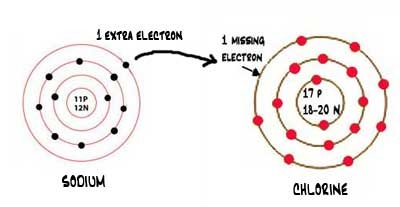
The first item of experiments is usually a dark silver colored chunk of metal called sodium they bring for you to learn the trade with. They usually put it on top of a dish full of water under heavy protection and you watch how the sodium runs around like a torpedo with fire and blows up; many lab fires were created by sodium. Sodium is an ion that is positively charged Na+, meaning it has one electron more than ideal on its outer atomic layer. In must get rid of it in order to become neutral. Chloride has one electron less on its outer layer and it wants one to become stable.

I link you here to a picture that I did not create but shows you what sodium and what chloride look like that create salt.

Sodium chloride - salt

Sodium chloride – salt

Thus one cannot eat sodium without blowing up… in fact it would catch fire from the moisture in your hands… I understand if people who never took chemistry class don’t know that but an M.D.??? Really?  Doesn’t know that salt is sodium chloride?

I also had some people tell me it is acidic; others that it is basic. OK people: it is neutral. When one + and one – meet as in Na+ (sodium) and Cl- (Chloride) they neutralize each other. Thus salt is neither acidic nor basic; it is neutral. If you get your stomach burning from salt, it is because you had acid in your stomach before the salt since salt is neutral, it cannot make it acidic.

So with this I just permanently wanted to note that

  1. salt is an amazingly important and highly valued mineral without which our body cannot survive and
  2. I hopefully explained what it is and that it is not acidic.

The one thing I did not mention is why everything we eat only notes sodium as the important ingredient. It is because in our bodies sodium and chloride separate into ions and sodium stays inside cells, holding onto water. Thus too much sodium (if you don’t drink enough water and eat enough potassium) can harm you and cause hypertension. The chloride part stays outside of the cell and its function is to create a voltage difference so the cells pumps, gates, and channels can operate.

Salt is very important for the human body so don’t forget your salt today!

Appreciate your comments!

Angela

Posted in Interesting reading, Migraine-Blog, Must Read, This & That, Thoughts | Tagged , , , , , , , , , , , , , , | 6 Comments

Oh My! We are Medicating Children for Migraines with What???

I have just received a panic message from a mother in one of my migraine groups where we discuss migraine treatments for adults based on my book, which treats and prevents migraines perfectly without any medicines, any supplements, or any herbs. It just requires the migraineurs to know how their brain works and why migraines are caused. In other words, I know what causes migraines. It is clear, makes sense, not even new only no one put it into a book in a form such that it makes sense until my book hit the shelves.

Unfortunately not everyone understands how the brain works–in fact most clinical doctors haven’t the faintest idea. I did not know that until I faced my migraine specialist who offered me a serotonin medication as preventative stating “it works for some people.” So let me say something here that needs to be said before I get to pediatric migraines and their care!

Doctors, please read and memorize: serotonin is NOT for migraines. It is not a pain killer. It was originally made for depression but even for depression, it only works for 30% of the depressed and there is good reason for that. While clinical practitioners prescribe “off label” medications to patients, they are running experiments on us without our consent! Now drug manufacturers state “your doctor may prescribe this medication for you for other uses” as a legal disclaimer that they are  not responsible for what the clinician may prescribe it for; but hey! That means experimenting! I do not want to be experimented on!

Clinicians: you are not research scientists. If you were, like I am, you would know the lengthy process researchers have to go through to get the permission of experimenting with even a sugar pill on volunteers! All kinds of ethics committee must approve the experiment and the scientist needs to take 2 days of courses to pass all required laws! And you as a clinical practitioners are doing what? Prescribing off label drugs without any permission!

This should be illegal (may actually be illegal!) and needs a lawsuit on its own! I am mad as hell!

So now lets talk about minors. Minors–that is teenagers under the age of 18–all belong to the care of pediatricians and they require medicines as per their age and not their weight. We now have giant, over 20 lbs, newborn babies.. are we going to start feeding them barbecued beef because they weigh as much as a 2-year old? Absolutely not! We will treat them as newborns because their age and hormonal development says they are newborns! We do not give them adult medications at age 5 if they weigh 120 lbs… Honestly! Children are children no matter how tall or fat! Being a child means that the internal organs are not developed! The brain has not yet developed! And we are giving them brain medication to increase or reduce neurotransmitters? Really? What will those neurons do when the children grow up? Up and die because they have never developed and never will. Are we crazy?

Children also do not yet have fully developed hearts and lungs and they are just starting their hormonal development in puberty. So when you have a 15-year old daughter or son and the clinicians give them Propranololin in adult dose of 10mg or larger, they are playing with the heart, lungs, brain, liver, and kidneys of a 15-year old! Oh My Gosh! How far do we have to go to get these clinicians to understand to STOP! Enough is enough!

Teenagers and children have weird diets these days: sugar with caffeine! Yep. The average child by age 4 ate as much sugar as a fully matured adult throughout his or her lifetime 100 years ago. And the kid is only 4! No wonder the kid is having migraines! The kid needs to get off sugar and not get medicines!

And all this “heart health” fad of low salt diet! Great for people who eat a ton of junk food full of salt but they are not the ones who listen! The ones who go on low or no salt are the health conscious ones and then they end up with not enough salt and migraines as a result. I had parents who gave no salt to their 2-4 year old kids!

Hello!!! The brain is developing! The heart is developing! Without salt cells do not function!

Let’s get one thing straight here: everyone was born in a water-sac filled with amniotic fluid–we spent our first 9 month in that for a reason. Amniotic fluid is not sugar, has no caffeine or soft drinks with artificial sweeteners. It is salty water, minerals, and micro-nutrients our bodies needed so we swam in it until we were born. The cord was cut but our need for salt and water and these other nutrients remained for life. Our bodies are over 70% made up of water and these nutrients! Wake up everyone! Drink over 70% of your food intake as water with these nutrients (list in the book above)! Your migraines will be gone, many of your ailments will be gone, you will have amazing energy!

Get going now! You will live a very short life if you live on sugar and caffeine! If you want life as it was meant to be, eat and drink for you life!

Comments are welcomed,

Angela

Posted in Interesting reading, Migraine-Blog, Must Read, This & That, Thoughts | Tagged , , , , , , , , , , , , , , , , , , , , , , , , , | Leave a comment

SSRI and Impotency… Hahahaha… I Knew More Bad Stuff Would Come to the Surface

You think I am joking, do you! I wrote a blog about SSRIs earlier explaining how bad they are in terms of what they do to the brain. This I did after one doctor told me that SSRIs do not increase serotonin in the brain (that doctor will be in serious trouble, rest assured!). For those who are not familiar with the acronym, SSRI stands for Selective Serotonin Reuptake Inhibitor. So let me first refresh your memories on what SSRIs do in general and how and then we will get to impotence. (I do wish someone would sue the heck out of companies making SSRIs and doctors who prescribe them since they have permanent damaging affects, do not work for 70% of the people prescribed to, and while they are supposed to only be prescribed for chronic (life long) depression, they now prescribe them for as little as being upset over a broken nail.)

If you think I sound bitchy and angry, you bet! I am! And I hope you will be too by the end of this blog!

So let me refresh the memories of those who have read my previous blog on SSRI or explain to new readers what SSRIs do and how. Here is a little drawing I created in an earlier post, recreated here for easier explanation:

Selective Serotonin Reuptake Inhibitors in action

Selective Serotonin Reuptake Inhibitors in action

On the above little sketch you see two neurons (brain cells) communicating via neurotransmitters, which in this case are serotonin. Those are the red little dots. What neurons do is one kick out neurotransmitters and the neuron next to them pick those up and as a game of passing on, like in electricity, the uptaken neurotransmitter in the receiving neuron kicks a neurotransmitter out through its “foot” and sends it to the next, etc. At one point a threshold is reached by enough neurons being activated and the brain sends a message to the body “lift left leg”. It sound silly but basically this is how the brain works.

Now note the little blue gates I drew. Those are called reuptake inhibitors. Their job is to monitor when there is already enough serotonin is in the brain in that region and tell the neuron to stop making more. This is like a bathtub overflow hole. If you forget to turn the faucet off, the hole will channel the extra water back into the water system and not flood your bathroom. If you plug that hole up and forget to turn the faucet off, the tub will overflow and your bathroom will be flooded. Thus the  hole has the function from preventing your bathroom from being flooded by too much water.

The reuptake inhibitors have the same job; they are the “holes” of the tub called “brain” that tell the neuron to turn the faucet off and stop making more serotonin. Serotonins are normally the plugs but here SSRIs took the plug over permanently (purple triangles). Thus when you take an SSRI, your neurons never know what they manufactured enough serotonin (there is no information about having enough) and they keep on making them until the cows come home or you die, whichever comes first. Thus if you take SSRIs, your brain is under a flow of serotonin out of control.

Serotonin has a lot of functions in the brain and in the body. In addition to mood regulation, depression, sleep, circadian rhythm, digestion, they also have functions associated with your blood flow. They can reduce blood flow also to your genitals. Yep, no blood to your genitals means impotence. No one really knew this until recently. I just read about it for the first time in the Scientific American MINDWhen Arousal is Agony; Sexual Dysfunction Can Emerge When Certain Nerves Start Misfiring. Are SSRIs Partially to Blame?” by Cat Bohannon, pages 51-57, July/August 2014. This is a membership requiring article or you can just purchase the monthly issue in any store.

I am not summarizing the article but want to point out how some serious side effects can become known completely innocently unlisted by the manufacturer since the drug was never ever meant to be used for cutting blood flow! Had it not been for the few who cannot stop their erections (both male and female), the secrets of SSRI in terms of its blood flow cutting would never ever have come to the surface.

Doctors today prescribe SSRIs for children as young as 4 I believe through as old as over 100 and have no idea that they reducing blood flow not only to sexual organs but obviously to all other parts of the body, including brain!

Why is that so important you may ask? Blood carries oxygen to all parts of the body. The brain alone has 400 miles of blood vessels (yes, miles and is described in great detail in the same magazine the very next article titled “Out for Blood” by Elizabeth M.C. Hillman pages 58-65) that carry critical oxygen to the brain to all parts. Reduce the blood flow by taking SSRI and not only is your sex drive gone but so is your brain. It is literally starved of oxygen, which may cause permanent brain damage.

And this coupled with the powerful truth that once you start SSRIs your brain will have a really hard time recovering when you stop it. In some cases it cannot even recover. Thus when you stop taking SSRIs you will be suffering the consequences of SSRI withdrawal, lack of serotonin, dead neurons in the brain from not enough oxygen, and an overactive libido–just to name a few. An amazing combination that many of us would pay all of our earnings to avoid!

So before you take any SSRIs in the future, think twice. There are hundreds of different SSRI drug names so it is impossible to list them all but here are a few common ones for your reference:

  • Celexa
  • Lexapro, Cipraflex
  • Paxil, Seroxat
  • Prozac
  • Luvox
  • Zoloft, Lustral
  • Normud, Zelmid
  • Upstene

Some SNRIs that do the same but are double hits of serotonin and norepinephrine

  • Pristiq
  • Cymbalta
  • Fetzima
  • Ixel, Savella
  • Elamol, Tofacine
  • Effexor

Another family that are antagonist meaning they excite the receptors AND are also inhibitors of the reuptake or are modulators:

  • Vibryd
  • Brintellix
  • Axiomin, Etonin
  • Desyrel

And finally NRIs that do not work with serotonin but with Norepinephrine the same way–with similar outcomes to SSRI:

  • Elavil, Endep
  • Evadene
  • Anafranil
  • Norprami, Pertofrane
  • Prothiaden
  • Adapin, Sinequan
  • Tofranil
  • Prondol
  • Feprapax, Gamanil, Lomont
  • Melixeran
  • Pamelor
  • Vivacil
  • Surmontil
  • Insidon
  • Stablon
  • Survector, Maneon–this also worked on dopamine receptors but has been taken off the market since

These are just some of the most common brand names–when you see more than one in a line it means that in other countries they may go by those other names. Generics exist by the gazillion so those are not listed. You need to watch out for your health!

Migraine and Fibromyalgia patients!

A special caution I want to add here for those who receive SSRIs for their migraines of fibromyalgia.  Many doctors today prescribe SSRIs as preventative for migraine patients without even checking their blood pressure. I am not nearly as familiar with fibromyalgia since I do not have that illness and thus was never prescribed anything for it but as I read from my migraine readers who also have fibromyalgia, SSRIs are also common in practice for that.

Please be aware that if your blood pressure is already low, that means your blood already has a hard time traversing the 400 miles of vessels in your brain. Add to that an SSRI and you are going to be in serious trouble.

I also read from many of my UK migraineurs that in the UK they prescribe beta blockers to lower the blood pressure regardless of what the blood pressure is–and for most migraineurs it is already low. If they also prescribe an SSRI, you potentially are in grave danger of dizziness, fainting, hemiplegic migraines, etc. I now understand the connection!

Please avoid taking any SSRIs if possible! If you have migraines, we already have a solution for that; please read my book. I am now working toward finding solutions to fibromyalgia but I am not there yet! However, cutting the blood supply to any part of your body cannot be a good thing under any condition so please do not start taking an SSRI!

Comments are welcome!

Angela

Posted in Interesting reading, Migraine-Blog, Must Read, This & That, Thoughts | Tagged , , , , , , , , , , , , , , , , , , , , , , | 1 Comment

Big Win over The Medical Industry Today!

New information (now two) on the bottom!

I know many of you are very frustrated with the medical industry in general. I have been–and still am as well–hence this blog. There have been many little victories and some I cannot discuss because I am under gag, but the one today I can discuss and can express my happiness in the open–albeit I still do not give names! I do not drink alcohol but if I did, today would be the day for a bottle of expensive bubbly…

In any case, here is what happened and why this has become the winning day of the month. If you read the post I wrote on the 18th of July, just a day short of one week ago today, about brand name versus generic drugs, and particularly the one I discussed called Singulair (Made by Merk), then you can relate to this happiness. Otherwise you may have to go back and read the previous blog post as well.

So here it goes: I have asthma and I fall into that 1% of all asthmatics who are helped by this drug Singulair, manufactured by Merk Pharmaceuticals. Singulair’s active ingredient is Montelukast Sodium. Some medical institutions, not looking at the chemical formula, came to the conclusion that Montelukast is the same as Montelukast Sodium–eat a pinch of salt with it they think. Not so.

I called Merk Pharmaceuticals, also took letter to the doctor who made the decision to deny the proper generic or brand name, and I also went after Member Services in my medical provider, my own pulmonary specialist, and contacted the NIH to update the database, which is currently wrong on their website.

I also called around and found that all other pharmacies around me carry Montelukast Sodium as generic and not Montelukast; only the medical organization I belong to carries Montelukast, which is not a generic equivalent to Singulair.

I fought with the medical institution for almost 2 weeks.

I am not sure if my fight alone or if Merk or Member Services came to help or my pulmonary doctor put his foot down, but someone did and I received the brand name drug at my usual copay! Not a generic equivalent, but the brand name!

This is a huge win but not only for me!

This shows you that you own your own health! It is your job to stand up for what you want, need, or believe! It is your doctors’ job to follow your guidelines, to explain to you what and why and how. It is your job to make sure you know your options and what you are getting!

Let this be a lesson for us all!

Go and get what you need! Dare to open your mouth and go after sources that can help you!

Feel free to comment!

Angela

UPDATE!

After receiving the brand name drug, I received an email from my pulmonary specialist stating that the medical institution followed my analysis and request and changed their generic from the incorrect Montelukast to the correct Montelukast Sodium! This now has turned into good news for all and a happy winning advocacy! I repeat here the most important factors that change now the life of many:

Go and get what you need! Dare to open your mouth and go after sources that can help you!

Hugs Everyone,

Angela

Posted in Interesting reading, Must Read, This & That, Thoughts | Tagged , , , , , , , , , | 6 Comments

Brand Name versus Generic Drugs. Are You in Danger of Clueless Doctors?

It seems to me that most everyone hates high drug prices (me too) so everyone heads toward generic the moment it is available. But we are facing problems with that. We all know that many of the generic drugs are manufactured in places without US standards and though the FDA and pharmaceuticals swear that they are safe and equivalent, there have been exceptions to that and lawsuits followed.

However, here I want to evaluate if doctors and the FDA understand chemical structure and if they are looking at that to see if the generic is a true equivalent to a brand name in active ingredients.

This blog is about the danger of your doctors not understanding the chemical structure of the medicines they prescribe, so cannot catch if there is a difference between a generic or a brand name.  They do not (cannot) compare if the chemicals will be able to do the same in the generic as in the brand name in your body. Surely we know that we can fool our bodies and eat rubber thinking it is sugar. If it is sweet and looks like sugar, we will think we eat sugar but we may still die at the end of the day from eating a chemically different food from what we thought we ate.

This is definitely true in the case of food–just look at the history of several artificial sweeteners. So what about generic drugs? Do they have the same chemical structure as the brand name? And most importantly should they? What is a generic versus a brand name? That is what I want to discuss and want to guide you through one particular drug that I bumped into and nearly got killed by.

The brand name of the drug in question here is Singulair and unless you fall into the 1% of asthmatics for whom this is a life saver, you probably have never heard of it. Think of it as an environmental protection against asthma. I have asthma and I happen to be in this 1% so the chemical structure is important to me and it should be important to my doctor. It is important to note that many more asthmatics take Singulair than they need to. To test if you need it, stop taking it for a couple of days. If your asthma does not change (provided your environment does not change) you are in the 99% who do not need this medicine.

The generic name of a drug represents the name of the key ingredient(s) in the drug–by law. So for example, Advil is Ibuprofen since that is the key ingredient in both. There are generics for many drugs but of course brand name drugs have patent block for 20 years so until then, companies who manufacture generics do what is called “backward engineering.” Backward engineering takes the drug, looks at the patent information that contains just enough information to know what the end product looks like. They then chemically untangle and try to rebuild to have similar behavior in the generic drug to the brand name with the same active ingredients–also by law.

NTI (narrow therapeutic index) drugs can be tricky because the blood concentrations you need to achieve a therapeutic dose and the concentrations that will cause harm are very close together. Small changes in concentrations can lead to ineffective or toxic responses. Medications for seizures, heart arrhythmias, thyroid hormone, warfarin (blood thinner), and lithium are all NTIs. (source)

Not being equal to a brand name is fine as long as the name of the generic reflects the difference. Most do. Take Singulair. The main ingredient in the brand name is Montelukast Sodium. Generic medications providing the same are all called Montelukast Sodium and they come dime a dozen. But someone up or down in the food chain of drugs decided that oh.. sodium is not important… and dropped it and came out with a generic called Montelukast.

Montelukast is not Montelukast Sodium, as the name depicts. In fact, the generic manufacturers honestly state that by showing even the chemical differences–mind you this is already against the law. The law clearly states that the active ingredients in a generic must match that of the brand name 100% and only the inactive ingredients can be different (source).

Here is the chemical name and the look of the chemical chain of Montelukast Sodium, i.e. Singulair:

Singulair - Montelukast Sodium

Singulair – Montelukast Sodium

As you can see on the top right it has Na+ at the end–Na+ is sodium ion that will ensure it will attach to the proper receptors in the body. It is positively charged so it seeks out a negatively charged ion, in this case you see COO there. This combination is important in the metabolism of the brand name drug–or generic drugs with the same chemical signature.

Now let us look at Montelukast, which is pretending to be generic for Singulair:

Montelukast

Montelukast

It is not listed but the molecular weight is 582 so way less than Montelukast Sodium that is 608.18.

Note how cleverly, wherever you see this chemical chain, it is always up-side-down – relative to how the Montelucast Sodium chemical chain is drawn. Why may that be? Could it be to deliberately take the eye off of the importance that instead of COONa+ we now have HO and O ? Plus many other changes!

To bring the point home easier, I transposed Montelukast’s chemical chain drawing into the same direction as Montelukast Sodium so you can see some of the differences better. It is not only the missing sodium. Here is what the two look like when they are side by side. Molenkulast Sodium (Singular) on top and Molenkulast on the bottom:

Montelukast Sodium versus Molenkulast

Montelukast Sodium versus Molenkulast

Oopsy! We have a big problem here! Not only is the sodium missing but also the chemical chain is broken in a different place in a different way and Molenkulast Sodium has H2C whereas Molenkulast has CH3 instead and an HO appears in that triangle in a different place. These have important indications in the human body! Perhaps the best way to put this is imitation crab versus the real crab: it may look like it and may even taste like it but the chemistry of the imitation crab is nothing like the chemistry of the real thing.

AMENDMENT on 8-26-2016: Since 2 doctors have commented below stating that the two molecules are identical (doctors Steve and Angela Grant), I would like to clarify in the article itself that the two molecules are completely different–my responses are written in the comments but to make it clearer, I add them here as well.

Dr. Steve suggested that the two molecules are the same because 1) the human body is always full of sodium so if the molecule needs a sodium it will pick it up and 2) as the molecule rotates in real life, taken in another view or angle the two are the same. So let me address his concerns since he is wrong on both accounts.

  1. Yes indeed, the body is always full of sodium. And as Dr. Steve correctly points out, in the body everything breaks down into ionic form and so he suggests–based on the molecule being able to pick up sodium from the body–that the sodium we have in the body is not already tied down by something else. That is chemically impossible since sodium (Na+) is an ion and as such, it will do everything possible to become a complete molecule and grab anything that has a negative ionic charge since sodium ion is positive (missing an electron). Exception to this are the ionic channels (all of our cells have many) in which case the function of the ions is to remain ionic and generate electricity taking advantage of the ionic charge differences. Sodium is unstable as ion and most certainly cannot await the arrival of a medicine. All sodium ions are already tied down in the body doing some tasks–or are to remain ions to conduct electricity. Most sodium is used as part of our electrolyte and as such it is used by our body to maintain hydration and to clear toxins out of the body.
  2. Furthermore, what Dr. Steve suggests assumes that a molecule–such as Montelukast–can pick up ions. A molecule is a stable form and it resists any changes to its structure. Thus as it disintegrates in the body into ionic components, it will perhaps pick up whatever else it can but at that point it is no longer Montalukast but its different ions, none of which necessarily will attract a sodium ion. In medicine, assumptions made are often dangerous guesses.
  3. Montelukast’s chemical formula is C35H36ClNO3S with molecular weight of 586.184 whereas Montelukast Sodium’s chemical formula is C35H35CINNaO3S with molecular weight of 608.18. As chemical equations, the rotation of the molecule no longer matters since it is a mathematical equation in which the left side of the equation must be the same as the right side.  So let’s put them side by side and you decide: C35H36ClNO3S  ?=? C35H35CINNaO3S  Are they the same molecules? Not even close. 

Dr. Angela Grant first suggested that since the body has “a lot Salt in the form of NaCl [sodium chloride]. I imagine Montelukast will pick up the Na+ regardless because of [its] strong affinity and our organs bathe in a pool rich with NaCl and other ionic compounds”.

  1. I provided answers to this in my response to Steve in point 1 above but this comment also assumes that NaCl remains NaCl in the body, in molecular form that is. NaCl is pure salt molecule that is stable and does not have the propensity to break up into ions unless it is forced to do so. The assumption that NaCl remains NaCl in our body ignores the metabolic chemical changes of anything that enters our body–though apparently this doctor was a chemistry major and is also a medical doctor. I wonder if NaCl stays as is, how on earth do we generate voltage that requires positive and negative ions on the two sides of all cellular membranes? Without NaCl breaking up into Na and Cl to generate action potential, we have no cellular voltage at all. Action potential is when Namoves into the cell as Cl remains on the outside of the membrane. Resting potential is when the positively charged potassium ions Kflow into the cells as Na+ leave. Without ionic movement there is no life. Thus making the assumption that molecules don’t break up into ions is not understanding biochemistry and human physiology.
  2. Dr. Angela Grant also took the ingredient list of Singulair and Montelukast: “Each 10-mg film-coated SINGULAIR tablet contains 10.4 mg montelukast sodium, which is equivalent to 10 mg of montelukast...”  lol… not sure on what planet is 10.4 mg of something equivalent to 10 mg of something but not on planet earth, as far as I can tell, that is an F- in math.
  3. However, she also states that we all are different and respond to medications differently and thus what may seriously affect my health may not affect yours. Totally true. However, when it comes to a medicine that is a standardized formula, there is no such allowance that a generic drug having a different active ingredient from the brand name is permissible because some people are different.

End of Amendment

Now you would think that a head doctor at a very famous and prestigious medical institution would check for such chemical differences before prescribing Montelukast instead of Montelukast Sodium to an asthmatic, whose ability to breathe may, in fact, be compromised by the generic drug!

Do you think they did? No. Why did they not check? Because of 3 reasons that I can think of:

  1. If you visit the Wikipedia and look for Singulair, you will get Montelukast and though I had a big fight with them, they refuse to see its significance since they say that on the FDA website the two, meaning Montelukast and Montelukast Sodium are the same–but that is actually not true.
  2. It is cheaper to produce Montelukast than Montelukast Sodium and thus medical facilities will pay less.
  3. I noted earlier that only 1% of the asthmatics benefit from the drug. Many get it who do not benefit. So for them it makes no difference if it is Montelukast or Montelukast Sodium since neither would work anyway. Thus there is no way to check, except in those rare cases, like mine, where it matters, if the generic as Montelukast works equivalently to the brand name that is Montelukast Sodium. This muddies the importance of getting the correct chemical formula!

Thus the answer is clear; those of us for whom the real stuff would work end up getting the fake stuff that will get us sick. This is not unique; it happens all the time to others as well. What makes it unique is that this time I was able to identify the difference and rest assured they will not get away with it without either changing to the real stuff or making the news as the bad guys. One of the two will happen! Their choice!

This is also a warning for you all out there who read this post! Our medical system has deteriorated to the point where we as patients must be better knowledgeable about our illnesses than our doctors are! It is time for us (you too!) to start taking a giant magnifying glass to all medications we take and compare ingredients and look at chemical charts. You don’t need to know what the chemical stuff means; you just need to see if they look alike!

I would love to hear your thoughts!

Angela

Amendment – July 22, 2014:

I would like to add to this article some important information. Today I called Merk, the pharmaceutical company that manufactures Singulair. They confirmed that indeed, Montelukast is not equivalent to Montelukast Sodium and the active ingredient in Singulair is indeed Montelukast Sodium.

I recommended they check the postings on Wikipedia on Montelukast and also on the NIH website (I linked here only one article but there are many  more) because these articles are incorrect and wrongly represent Merk’s great product Singulair, which is Montelukast Sodium. It also gets people like me sick, since Montelukast does not have the necessary ingredient of Montelukast Sodium–in other words, Montelukast Sodium is one molecule. It is not equivalent for me to take Montelukast and a pinch of salt. Nope.

I thought I update you since now the assault on all fronts of the wrong information is on and my medical company better provide me with the correct drug!

I was also given the brand name medicine by my medical provider, resolving my problem.

Angela

End of amendment.

Posted in Interesting reading, Must Read, This & That, Thoughts | Tagged , , , , , , , , , , , , , | 41 Comments

Salt, Government, Doctors and People!

Let there be people and make them salt free to have them happy heart! YES!! Beautiful and dead. Makeup anyone? This will be a fiery post so buckle your seat belt!

By some medical professionals in the media–who shall remain nameless since we all know whom we are talking about–salt has become the black sheep of our nation–as well as other nations since they copy us. Salt is said to be bad for us. Reduce salt! Eat salt substitutes! For healthy and happy heart stop eating salt!

Guess what? Without salt your heart will not work, your brain will not work, your lungs will not work. You actually will be dead. You may have a gorgeous heart when they open your cadaver and they can frame it! But not eating salt will kill you. Furthermore, you may have a perfectly healthy heart that you may destroy by not eating enough salt!

Remember when you were born? No? You have heard of the amniotic fluid filled sac that bursts as the baby is born right? Well it is not water. Nope. It is salt water and some other minerals. Have you tasted your blood lately? Hopefully not but if you will, it is salt water that is red with some other stuff in it. Our bodies are made up of 70% water it is said; no, our body is actually 70% salty water with other minerals that form electrolytes.

If you end up in the ER, the transparent liquid they pump into your blood via IV is not water; it is either saline (salt water) or electrolytes (salt, potassium, water, magnesium, and some other elements). So when I hear the statement on TV “salt is bad” for us, I would like to yell and tell everyone that

NO! It is too much salt that is bad for us!

What is too much salt? If you have developed hypertension (high blood pressure), that means you may have eaten too much salt relative to water and potassium (may have since it can also be genetic). You can prevent a non-genetic hypertension by eating balanced ratio of salt with water and potassium. You may even revert non-genetic hypertension by eating the right amount of salt with the right amount of water and the right amount of potassium!

Please! Enough of this no salt nonsense! We now have mothers who feed no salt to their developing children as young as age 3, who then end up with underdeveloped brain, migraine, or worse! Why do we need salt? Salt creates a voltage differential between inside and outside of the brain cells to allow the sodium-potassium pumps to work. No salt, not enough voltage, no pumping, no cell alive. Is that what we want?

So stop this nonsense of not eating salt! Eat salt! And if you already have migraines or want to know more why we need salt, read my book Fighting the Migraine Epidemic (digital) (paperback).

Contact me if you have any questions.

Angela

Posted in Interesting reading, Migraine-Blog, Must Read, This & That, Thoughts | Tagged , , , , , , , , , , , , , , | Leave a comment

We Know We Are Doing Bad Medicine… But…. Said the Doctor…

There is a summary write-up of a discussion between doctors on MedScape. This is not an article (or video since it contains the video of three doctors’ discussion in addition to the transcript) for public viewing; one must be a published scientific article author to be able to view the original. In case you do have an article in the NIH database and have access, the link is provided. I do have access so I summarize here what the discussion is about for those who do not have access and, as before, I need to ask you to sit down before you read it. Some parts of the article are shocking.

The debate title is “The Pros and Cons of Patient Satisfaction Measures” and it is a Primary Care debate between three doctors: Bradley P. Fox, M.D., William R. Sonnenberg, M.D., and  Charles P Vega M.D. The discussion is dated July 8, 2014.

Apparently Dr. Sonnenberg made the suggestion that “patient satisfaction” should be used “as guide for physician evaluations and payment.” He presented a paper in the Keynote Physician, which is a paper of small circulation so he thought nothing of the ensuing consequence. Then later he gave a lecture in San Diego on Brochiolitis (children’s lung infection) and suggested that doctors “need to pin downs diagnosis” in patients because otherwise “parents will be taking their children to emergency wards or urgent care centers, where they will be given the obligatory prescription for azithromycin (common antibiotic), which seems to make everyone happy.”

This created what you may call chaos in the conference as ER doctors ran after Dr. Sonnenberg after his talk telling him that “Look, we know that what we are doing is wrong, that this is bad medicine. But our performance is judged largely by 2 parameters. First, do we get the patient door to door in 45 minutes? Second, do we keep the patient satisfied?

Wow! WOW! and WOW!

They know that they are practicing bad medicine! They know and admit it! Plus they also admit that medicine is all about money because they need to get the patient out the door–in case you don’t know, there is a time limit set by each emergency room for what it considers to be acceptable to pass before they must admit the patient to the hospital. Thus getting patients to not be admitted is goal number one over and above patient health! Goal number two is to make sure patients leave with a smile, even if they were given the wrong treatment.

What happened to ethics? To the Hippocratic Oath that states “Do No Harm!”?

The discussion continues about how administrators are leading what doctors do. There is really nothing new about this since we all know and have always known that doctors can only do what the administrators, who are not doctors, let them do. This not only leads to bad medicine but also can have dangerous consequences, as our recent discovery of superbugs suggests. Superbugs do not respond to any known antibiotics. The reason for these superbugs is precisely the over-prescription of antibiotics for cases where it is not only not needed but may actually cause harm. If doctors are judged by patient satisfaction and they are not happy, according to what these three doctors are talking about, the patients did not receive antibiotic treatment!

Thus we have a multitude of problems here, not the least of which is patient education–or lack thereof.

The three doctors go on discussing how increased patient satisfaction is actually associated with higher patient mortality rates–which would be understandable based on the antibiotics argument but not on any other measure. They also discuss the importance of patient satisfaction for “patient adherence” meaning that we stick with our doctors.

It nearly seems to me that three used-car sales reps are talking here! Is this real?

They continue: “Right now, the effect of patient satisfaction on income is about 3% of a primary care physician’s salary and 2% of a specialist’s salary. This is not a major chunk of a physician’s salary, or anywhere close.”

This is a very interesting discussion. Pretty soon I will feel like a bag of peanuts for sale. How much of my health really maters to doctors?

The discussion continues: “Physicians are generally a very competitive lot, and if you look at a survey and see that you are in the lower 10% or 20% of a given metric, you will try to do things to increase it.” The discussion does not detail how far doctors are willing to go to achieve to be in higher than the lower 20% of a given metric and it is not clear what the “metric” in this sentence refers to but whatever I try to refer to in terms of what physicians are for, it sounds bad, except in one case, in which patient health is a metric.

Unfortunately the questions of metric with respect to patient health has not come up anywhere in this discussion.

But there is another angle to being watched and judged by administrators. Dr. Sonnenberg said

Once I was dinged for something I believe is distinctly unfair. Years ago, a patient had an x-ray in the emergency ward; I received the result 3 days later. I called the patient promptly when the x-ray showed up on my desk. The patient yelled and screamed and gave me a bad report, and I ended up getting certified for 1 year instead of 2 years. It did not matter that what I did was logical, proper, and the best anyone could have done. They did not care; they saw the and dinged me for it anyway.

Thus even when a doctor does the right thing, the administrators’ rules are above and beyond what a doctor may seem to be the right action–even if that is the right action for the patient.

Dr. Fox was the only one who suggested the kind of measurement that included the terms “real-time or medically sensitive approach” for being included in a metric of deciding the quality of a physician.  A “medically sensitive approach” is still not “did we get the person healthy” approach but better than “was the patient out the door in 45 minutes?” for sure.

But then here is a not-so-funny statement for you:

One humorous anecdote I heard was that to get rid of the outliers, make sure you put down an abuse diagnosis in the coding. If you put down an abuse diagnosis — alcohol or drug abuse — those statistics are automatically excluded by Press Ganey. I have heard that this is a way to game the system…. (Dr. Sonnenberg.)

So the system is being gamed in medicine. Again, nothing new, only a confirmation of what we all already knew only it is odd to hear it from the mouth of a doctor. Isn’t it?

I am ashamed that I read this discussion but glad that I did as well for it proves what we all know: medicine today is in shambles because of incompetent administrators who look only at profits. There is nothing wrong with looking for profits if appropriate care is provided. But getting profits based on how fast the patient is kicked out of the office is not a profit center for a physician!

I am looking forward to your thoughts!

Angela

Posted in Interesting reading, Must Read, This & That, Thoughts | Tagged , , , , , , , , , , , , , , , , , , | 6 Comments