Image painted by Angela A Stanton, Ph.D. (me) and is the 2nd edition book cover. Copyright Angela A. Stanton 2017.
I recently received an email from a chiropractor requesting information about migraine. Here I post my latest response to him. I am sharing so you can see some misconceptions about migraine.
I hope to clarify what migraine is and what it isn’t. Unfortunately misdiagnoses are rampant in headache disorders. It seems that any pain in the head is considered a migraine. Not only is this incorrect, but it can be dangerous! There are many headache type disorders that can lead to serious consequences and these are often labeled as migraine, causing delay in important treatments.
The chiropractor asked why I am not discussing conditions, such as cervicogenic headache and neuroinflammatory headaches under migraine:
Image courtesy Angela A Stanton, Ph.D. Book cover art, found on Amazon.
A story worth a thousand words, hugs, and tears.
Story of gratitude:
6 mo ago, I noticed my heart rate was very high at all times and trouble breathing. Resting at 90 (typically 60) jogging 190 (typically 140). I stopped exercising due to feeling I may have cardiac issues. Over the next month, I was shaky at all times, felt pain to touch my face especially ears, blue lips, trouble swallowing, saliva glands would not turn off (constantly drooling, jaw popping, dizzy, incredibly weak (could barely climb a flight of stairs, and the scarier symptoms: head shaking, eyes rolling back, gasping for air, confusion and trouble thinking and forming sentences. Had blood work done and ER visits, chest x-ray, ct scan, EKG. All normal. At its height, 7 days in a seizure like state not able to function. Called my mother to tell her I may not make it, wrote a will etc. She advised due to my hemiplegic migraines; this may be related. I knew nothing of Migraine protocol and in desperation consulted Terri and Angela here briefly, then long meeting with Angela. Within 3 minutes of salt under my tongue, my ears stopped hurting and jaw stopped popping, swallowed what tasted like blood for the next few min. Over the next 20 min, I was able to see better and breathe normally and walk steadily. My face swelling went down (one eye had been practically closed shut for weeks and finally evened out almost immediately, and I could swallow normally and seizure-like feeling went away drastically. Over the next 4 months, in continuing salted waters and cutting out certain things from my diet, I am symptom free today. I ran this morning with my heart rate back to just 140 and resting again at 60.
I felt compelled in sheer gratitude to share. This page saved my life. Truly. PCP told me It was anxiety neurologist gave no advise or info. If it were not for this Doctor and this website , I may be dead. Thank you.
Original painting by Angela A. Stanton PhD, book cover, 2017th edition. Available on Amazon.
What is Migraine?
I bet your answer is “headache” and some of you may also say “aura”. Many of you will say that it is a neurological disease and that it is a strong headache. Are any of you correct? A most recent article, published in the Frontiers in Nutrition, explained what migraine is, what causes it, how, who gets migraines, when, and why, eloquently. And I may say so since the author is me.
I summarize the article for you here in very short and add some information that was not part of the article.
I rarely share migraine success stories from my group on this blog, but this one is too good not to. So here it goes:
I just wanted to post an update to those who kindly responded to my question in regards to my recent trip to Florida and how to navigate things.
I decided to switch from carnivore back to PP [Protocol Proper, which is LCHF] about a week before the trip. It was an easy enough switch thankfully. I definitely feel a bit more bloated in the tummy area with reintroduction of plants but I’m still glad I made the switch.
I’m proud of myself for making a balanced meal and getting it through security and onto the plane lol That helped with my first day of travel.
I decided to just go ahead and measure every meal that I could at our Air B&B. Thankfully we mostly stayed at our rental for big family meals even when ordering food, because my nephew is 2 and needs to nap in the middle of the day and Brazilians don’t do big dinners anyways. It was just easier and more comfortable for everyone. This allowed me to use “some” of the take out food and supplement from the fridge to measure and build my meals or just use my food that I had already prepared.
And the couple times we did go out, of course it was to Brazilian BBQ steakhouses (you were right Angela 😆) which with so many Brazilians in the Miami area were popular. My in-laws were thrilled lol I didn’t bring my scale and just guesstimated and stayed migraine free.
Don’t think I’d ever opt for an all-inclusive trip going forward. I had way more control over my meals with a kitchen and also my picky daughter’s meals too.
But I have to say that for this trip (which was about 2 weeks long) to Florida…I was entirely migraine free compared to the same trip in 2020 the same time of year to the same area… Where I really suffered a lot of severe migraines when I was chronic and I was in bed a lot, leaving my poor husband to entertain our then 4 year old.
So I am sooooo thankful for that! What a difference and the first week of our vacation my daughter became very sick and one of the nights we were up for 3 hours in the middle of the night with her and even with such disrupted sleep I still didn’t get a migraine. Plus a few hours at the beach… No migraine.
I am sure you have heard by now that there is a new study out on TRE (time restricted eating) and that there is an association of increased cardiovascular disease risk (CVD). Right? If not yet: now you have!
Hold Your Horses!
Yep… just put your horses back in the stall and get a cup of coffee or tea or beer or whatever you drink when you are in pain… mental pain from stupidity! To offer a forerunner for you, here is what I wrote on Medscape as a message by healthcare providers, Since you may or may not have access to it, I copy-paste:
Yet one more absolute waste of data analysis and serious misinformation for the public. How do papers like this pass through the peer review process? Has everyone in research forgotten that association is not causation and that food questionnaires are inherently inaccurate and not useful at all? And, most importantly, hazard ratio of 1.91 (overall sample) does not meet the requirements of the Bradford Hill Criteria! In order to consider it to be a potential for even further investigation, the HR needs to be >2. And using the NHANES data generating very creative hypotheses about TRE where none existed. Might it be that people practicing TRE couldn’t eat because of medications or feeling sick?
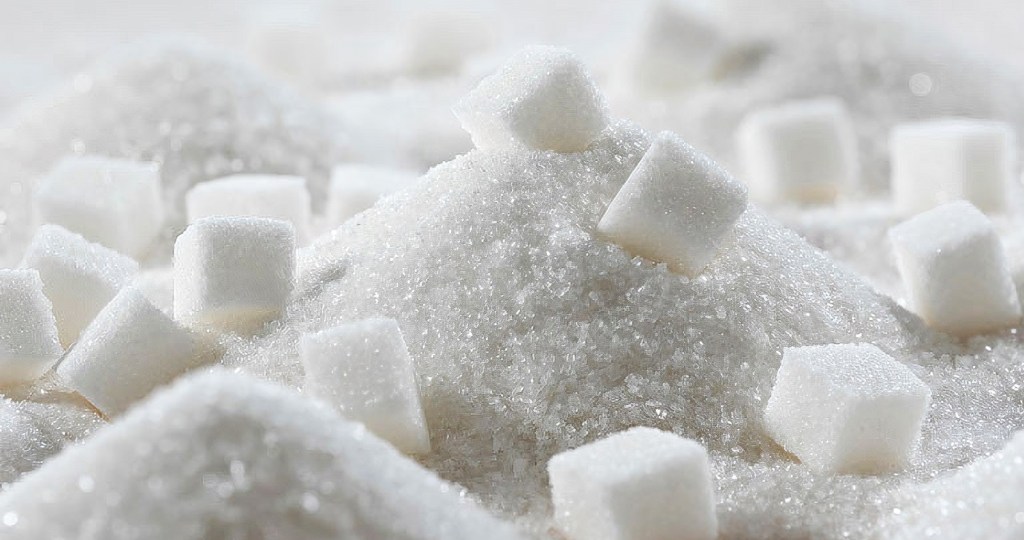
When we talk about sugar, what image do you get in your head? Most people think of table sugar. However, sugar comes in many forms and most people don’t know when they eat a ton of sugar. For example, if you eat a potato, it is full of sugar but because it is in starch form, you can’t taste the sweetness. But it is still sugar!
Some people also think that there is a difference between different forms of sugar, such as table sugar vs natural sugar, such as date sugar, or sugar in a fresh fruit, and most also have no idea that a slice of sourdough bread may has as much as 18 teaspoons of table sugar equivalent in starches that they can’t even taste as sugar. And this sugar I just listed is not added sugar. It is sugar within the food because a potato or a slice of bread or rice or beans, none sweet tasting, but they are all made of plants. Plants contain carbohydrates and carbohydrates are sugars!
What is your opinion?
Do you think there is a difference in sugar between the following items?
1 cup of cooked white rice (205 gr) —59 gr carbohydrates, 15 teaspoons of sugar
vs 15 teaspoons of sugar?
1 slice of sourdough bread (139 gr) — 72 gr carbohydrates, 18 teaspoons of sugar in starch
vs 18 teaspoons of table sugar?
Two cups vanilla ice cream (132 gr) — 62 gr carbohydrates, 15.5 teaspoons of sugar
vs 15.5 teaspoons of table sugar?
Two cups (16 oz) Minute Maid, lemon flavor — 58 gr carbohydrates, 14.5 teaspoons of sugar
vs 14.5 teaspoons of table sugar?
Two cups (16 oz) unsweetened orange juice (fresh & concentrate) — 57 gr carbs, 14.3 teaspoons of sugar
vs 14.3 teaspoons of table sugar?
4 Medjool dates (96 gr) — 72 gr carbohydrates, 18 teaspoons of sugar
vs 18 teaspoons of sugar?
I decided to add a comment that I posted also on Facebook:
A serving of banana, 136 grams without skin, has 31 gr total carbohydrates, of which 3.5 gr is fiber, so 27.5 gr net carbs, which is equal to nearly 7 teaspoons of sugar and it has no other nutrients, except for potassium. 136 gr banana has 487 mg potassium.
A California avocado, weighing 136 gr (without seed and skin) has 690 mg potassium and only 12 carb grams, most of which is fiber, so the net carbs that turn to sugar is 2 grams, or half a teaspoon.
So let me get this straight:
A nutritionist suggested that eating a banana is better in nutrition than, for example, an avocado of the same size, although the avocado has 1/4 of the sugar but nearly twice the potassium? And I didn’t even compare the banana to salmon or beef, both of which have more potassium or at least as much potassium, zero sugar, and a ton more nutrients!
If you think there is a difference between sugar vs sugar:
Please comment and explain: why?
Comments and questions are welcome, as always, and are moderated for appropriateness.
The testimonial from a mom, who has been in my migraine group since 2018 because her son had terrible migraines. The then teenager had abdominal migraines.
In my Facebook migraine group her son was placed on the carnivore diet with drinking salt with water (not just pure water), and has been doing great ever since. Now, he passed the biggest test he so far faced, the Marines’ Crucible.
It looks like a horribly tasking stressful time, but he passed and did so without a migraine!
Message to me from the mom:
My son that used to get terrible abdominal migraines just completed the Crucible this past Wednesday. I was nervous the migraines would come back during that part due to all the added stress, lack of sleep, only 2 meals, limited water, etc…but today is liberty Sunday and we received our first phone call since he left September 11 (bonus it was a FaceTime call!!) Not only is he officially a Marine, he has already received a meritorious promotion and he doesn’t graduate from boot camp for nearly two more weeks!!! To say I’m thrilled is a gross understatement. I still tell everyone who will listen about this group and the book. Life changing. Thanks so much for everything
–AW 11/26/2023
Congratulations to mother and son for their huge achievements! And happy lifetime ahead without migraines!
To see hundreds of more testimonials, visit my testimonials‘ page.
Comments are welcome, as always, and are monitored for appropriateness.
My three: Fitbit Charge 5, Oura Heritage, and Apple Watch 7
I recently compared 3 devices for sleep and exercise tracking: Apple Watch ($800+), Fitbit Charge 5 (now Charge 6) ($160+), and Oura Ring (300+). I have long been an Apple watch and Fitbit user–I have used both ever since they started making them over a decade ago. They each have their pros and cons. I was never happy with each alone, but combined they made a pretty good pair, mostly reliable, though on some days they still left me baffled.
Recently the question came up in my Facebook Migraine Group: which tracker is the best and why? I decided to invest in Oura, since I didn’t yet have that one, and wear all three devices for sleep as well as workout for several days at once, and see which is best and why.
Yep! Not sure how they discovered me and my protocol! Read this article in The Epoch Times about my migraine protocol, the Stanton Migraine Protocol(R). This newspaper is by subscription only, so here are some quotes from it:
The Migraine Enigma
“Migraines, typically marked by severe head pain, often manifest in other ways, including light and sound sensitivity, nausea, brain fog, and dizziness. As migraineurs and medical professionals attest, the triggers for these episodes are as varied as the symptoms—ranging from dietary factors to fatigue and anxiety—with the root cause still largely uncertain.”
A Saltier Perspective: Reevaluating Salt’s Role in Migraines
“Angela A. Stanton, a migraine and nutrition scientist, spearheaded a six-month study involving 650 migraineurs from a Facebook research group. The results were striking: Migraine frequency seemed to be heightened by diets that were high in carbohydrates and low in salt and water. Medications that block voltage-dependent calcium or sodium channels appeared to aggravate the condition.
Ms. Stanton found that by reducing carbohydrate intake and increasing salt, participants could prevent the glucose-induced electrolyte changes that often lead to migraines. Impressively, every participant who adopted these dietary changes was able to stop using migraine medications and remained free from the ailment.
The results mirrored Ms. Teasdale’s experience. After consuming salt in her water, her migraine symptoms subsided.
“I was taken aback when the pain started to dissipate. An hour later, it had completely vanished,” she told The Epoch Times. “Despite my initial skepticism given past failed remedies, this felt different. Eagerly, I awaited my next migraine to test the remedy once more—and yet again, it worked flawlessly.” Ms. Teasdale isn’t an outlier in her experience. Ms. Stanton has garnered a considerable following, with more than 15,000 members on her private Facebook group. Here, she offers a detailed protocol, drawing on her research and experiences, to help individuals combat their migraines using her specific dietary and hydration guidelines.
A notable discovery from Ms. Stanton’s research was that migraine sufferers excreted 50 percent more sodium in their urine than nonmigraineurs.
“Migraine-brain has different brain anatomy with more connections among the sensory neurons,” she said. “Their sensory neurons are more active, communicate more, and thus use more sodium.”
But why is this important? It all boils down to sodium’s role in brain activity.
“The implications of this finding mean that testing whether increased sodium helps prevent migraines by simply consuming more salt is a good idea. I found that adding salt to water—not food—helped tremendously,” Ms. Stanton said.
She further elaborated on the potential causes of this sodium excretion.
“When glucose enters the cells, sodium efflux from the cell follows,” she said. “A reduced carbohydrate diet can thus reduce sodium loss, possibly explaining the excess sodium in the urine when carbs are consumed.”
Ms. Stanton’s findings align with additional research on the topic. A 2016 study published in the journal Headache delved into a similar inquiry using data from the 1999–2004 National Health and Nutrition Examination Survey.
Analyzing data from 8,819 adults, researchers discovered that those with a history of severe headaches or migraines consumed less dietary sodium. The data indicate that as sodium intake rose, the likelihood of migraines dropped, underscoring a potential inverse relationship between salt consumption and migraines.”
Exploring the Sodium–Blood Pressure Link
“Ms. Stanton contended that while conventional wisdom warns against high salt intake, drastically cutting salt could inadvertently trigger the body’s renin-angiotensin-aldosterone system, causing blood volume to drop and blood pressure to rise. Conversely, she posited that increased salt intake might boost blood volume and potentially reduce blood pressure in individuals with healthy arteries, suggesting that blanket recommendations on salt reduction could be counterproductive for many.
Ms. Stanton isn’t alone in challenging conventional thinking on salt intake. In a recent interview with The Epoch Times, James DiNicolantonio, a doctor of pharmacy and a cardiovascular research scientist, echoed similar sentiments.
“Don’t blame the salt for what the processed food diet (refined sugar) did,” he said.”
A Simpler Approach for Migraineurs
“In a society often quick to medicate, utilizing something as simple and natural as salt to counter migraines seems revolutionary. When asked about introducing salt as a mainstream solution, Ms. Stanton was pragmatic, highlighting societal misconceptions.
“The problem with salt is that it’s seen as ‘evil,’ said to increase blood pressure, despite evidence to the contrary,” she said.
Yet the takeaway is clear. For migraine sufferers willing to try, a reduction in carbs and an increase in salt might be the path to relief… As Ms. Stanton candidly put it: ‘Just try it. Once it’s tried and it works, it must work. If they’re still interested after this, then I can explain how sodium is needed to create electricity in the brain and that migraineurs need more of it.'”
Comments are welcome, as always, and are subjected to scrutiny based on content.



 neurologist gave no advise or info. If it were not for this Doctor and this website , I may be dead. Thank you.