
High Protein or Junk Protein?
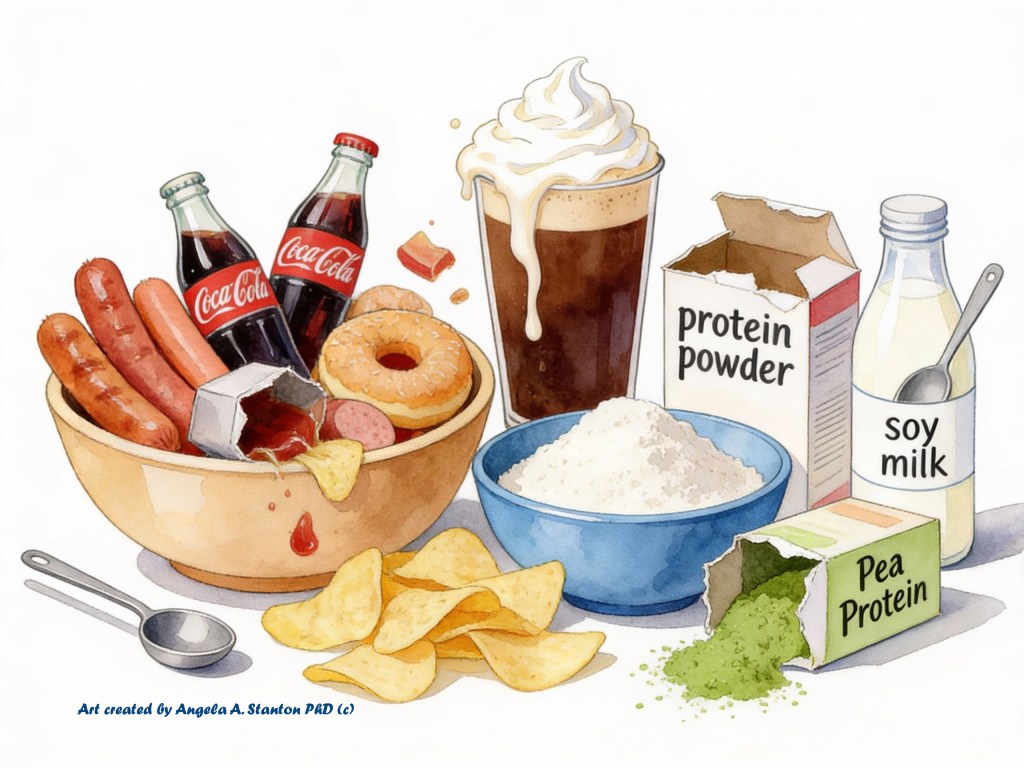
Art created by and is the property of Angela A. Stanton PhD (c)
With the release of new dietary guidelines (check out my deep dive on that here) a new high-protein craze has taken the public by storm—especially the ultra-processed-food (UPF) manufacturers. To be clear, “craze” isn’t necessarily a bad thing—protein is vital for health—but the haste with which people are grabbing anything labeled “high protein” is concerning.
Context is everything. When it comes to your health, the most important question isn’t just how much protein you’re getting, but what on earth are you eating to get that protein?!
If you eat a donut pumped with a high-protein filling, is it a health food? No. It’s still an UPF.

Art created by and is the property of Angela A. Stanton PhD (c)
Adding protein to junk food doesn’t change its DNA; it’s still junk food—only now it has a better marketing claim. This series is dedicated to unmasking these “junk protein” products so you can make choices based on education rather than labels.
The UPF Catch in this article: Legion Protein Cereal
My first look into UPF in this series was the David Protein Bar, which you can find on my Facebook wall here.
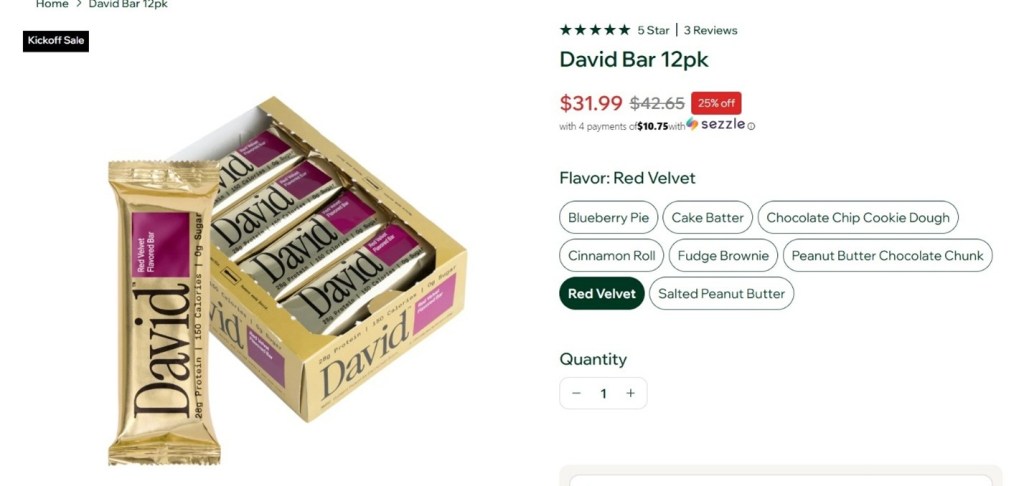
I originally thought it would be a one-off post of some posts that popped up for me advertising it, hence it’s only on FB, but then I was hit with ads for Legion Protein Cereal. After a quick look at the ingredients, I realized this needed to be my first UPF catch on my activist blog. And I also think I should be writing many UPF introductions in a series on junk protein.
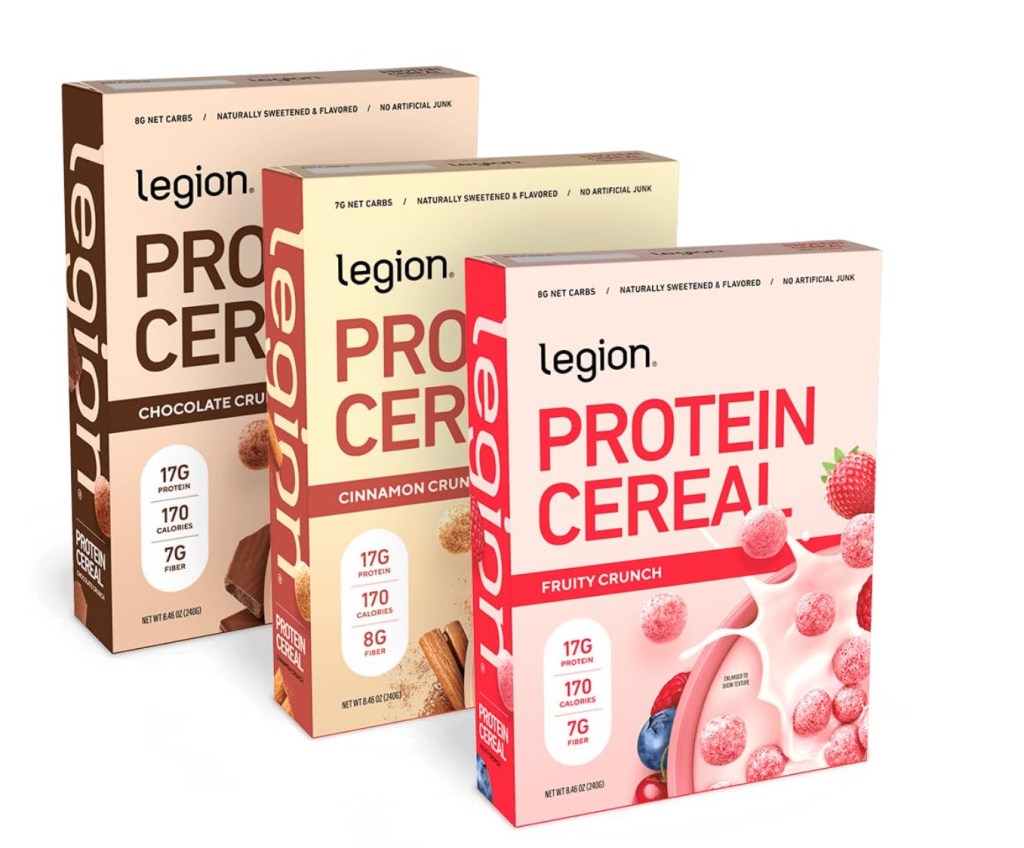
Screen capture from Legion Protein Cereal website
Legion Protein Cereal
Legion is another product with a catchy, “clean-looking” name and photos. But don’t fall victim to the branding and high protein claims without understanding what’s in the box! On their website, the ingredient list is buried so deep I could not find it, so I headed to Amazon to find what I needed to see.
At first glance, the “Milk Protein Bites” look simple enough. But when you look at the actual sub-ingredients used to create those bites, the list gets much longer and not so pretty and human-friendly:
- The “Official” List is Simple: milk protein concentrate, soluble tapioca fiber, inulin, coconut oil, powdered sugar, cocoa powder, natural flavors, stevia, and salt. But… did you catch the first item on the list? What exactly is “milk protein concentrate”?
- The Cryptic Item: Within the Milk Protein Concentrate, we find another list, a “sub-list” of sorts. Here is that sub list: Isomalto-oligosaccharide (IMO), pea protein, nonfat yogurt powder, and sunflower lecithin.
I had a bit of difficulty understanding what “pea protein” is doing in “milk protein concentrate”… but I moved on… alas it still bothers me! It’s clearly not milk protein with pea protein in it instead. Is it!! So this is a sort of a lie.. no? OK.. move on to bigger and “better” things: IMO!
IMO: The “Fake” Fiber
The most concerning ingredient in the label is Isomalto-oligosaccharide (IMO). It’s a partially digestible glucose polymer. IMO is a carbohydrate chain made of many glucose units. In plain English: it’s a multi-sugar. It is produced by enzymatically processing starch (usually corn or tapioca) and rearranging the molecules. (Note: “rearranging the molecules” should send shivers up your spine and have the hair stand up on your arms.)
While marketed as a high-fiber ingredient, it is partially digestible in the small intestine (approx. 15–20% digestible), meaning some portion is absorbed as sugar, which leads to a glycemic response. In fact, a study looked into a paradoxical hyperglycemic response to IMO. The glycemic response is considerably higher to IMO than to dextrose—see here—and in a performance study using the IMO vs. dextrose, blood glucose rose less acutely with the IMO bar but insulin:glucose ratio was higher-meaning it spiked insulin more to end with the same blood glucose response (see study here).
IMO is a short-chain carbohydrate made of glucose units. It is literally a multi-sugar, even though it’s often marketed as “fiber” or “prebiotic.”
The name actually means:
- Oligo- = few
- Saccharide = sugar
- Isomalto- = glucose units linked mostly by α-1,6 bonds (the same linkage found in dextrins and parts of starch)
IMO = short chains of glucose molecules, so not fiber in the classic sense. IMO is not a natural whole-food carbohydrate.
It is produced by:
- Taking starch (usually corn or tapioca)
- Enzymatically breaking it down
- Rearranging glucose units into short chains
So it’s enzymatically processed starch. Companies like IMO because it sits in a gray zone:
- Sweet (about 30–60% as sweet as sugar)
- Syrupy and cereal-friendly texture
- Can be labeled as fiber in some countries
- Historically allowed to be under-counted for calories or carbs
What happens to you physiologically as you eat IMO:
Despite the marketing, a significant portion of IMO is digested into glucose in your body. It does raise blood glucose and insulin. While the rise is slower than the rise eating pure glucose, it is stronger than expected. Human studies showed that IMO:
- Has a higher glycemic impact than true fiber
- It is partially absorbed, not inert
- Acts more like a slow carbohydrate than a fiber
So calling it fiber is misleading, even if legally permitted to do so in some places—US being one of those places. Since IMO is shown to be partially digested and fermented, it causes bloating, gas, diarrhea and cramping.
The rest of the ingredients
Soluble tapioca fiber: water-soluble dietary fiber derived from cassava root starch, processed to act as a prebiotic sweetener and texturizer.
Inulin: a natural, soluble prebiotic fiber found in various plants like chicory root, garlic, and bananas. As a non-digestible carbohydrate, it passes to the lower gut
Powdered sugar (sugar + cornstarch): is made by finely grinding granulated sugar and mixing it with a small amount of cornstarch, usually about 3% to 5% by weight. The cornstarch acts as an anti-caking agent, preventing the sugar from clumping and keeping it free-flowing.
Natural flavors: according to the FDA, extracts or essences derived from natural sources—plants (spices, fruits, vegetables, herbs, roots, bark) or animals (meat, dairy, seafood)—used specifically to enhance the taste of food rather than add nutritional value. While sourced from nature, these ingredients are highly processed in laboratories to create specific, concentrated flavor profiles.
Stevia leaf extract: sweet-tasting compounds called steviol glycosides, primarily Rebaudioside A, which are 200-400 times sweeter than sugar. In nature, many glycosides act as antinutrients or plant defenses (toxins) to prevent animals from eating the plant. What are those glycosides?
When you look up what glycosides are (straight Google quote):
“…glycosides act as antinutrients, specifically within the category of plant-based toxins. Cyanogenic glycosides and glucosinolates interfere with nutrient absorption or cause toxicity by reducing nutrient bioavailability (e.g., binding minerals, affecting iodine uptake). In nature, many glycosides act as antinutrients or plant defenses (toxins) to prevent animals from eating the plant. They are natural defenses found in foods like cassava, beans, and cruciferous vegetables.”
I would not eat a toxic plant product just because it is sweet! I’m wary of consuming these concentrated extracts when better alternatives like allulose, monk fruit exist, and erythritol are available.
Should You Eat Legion Protein Cereal?
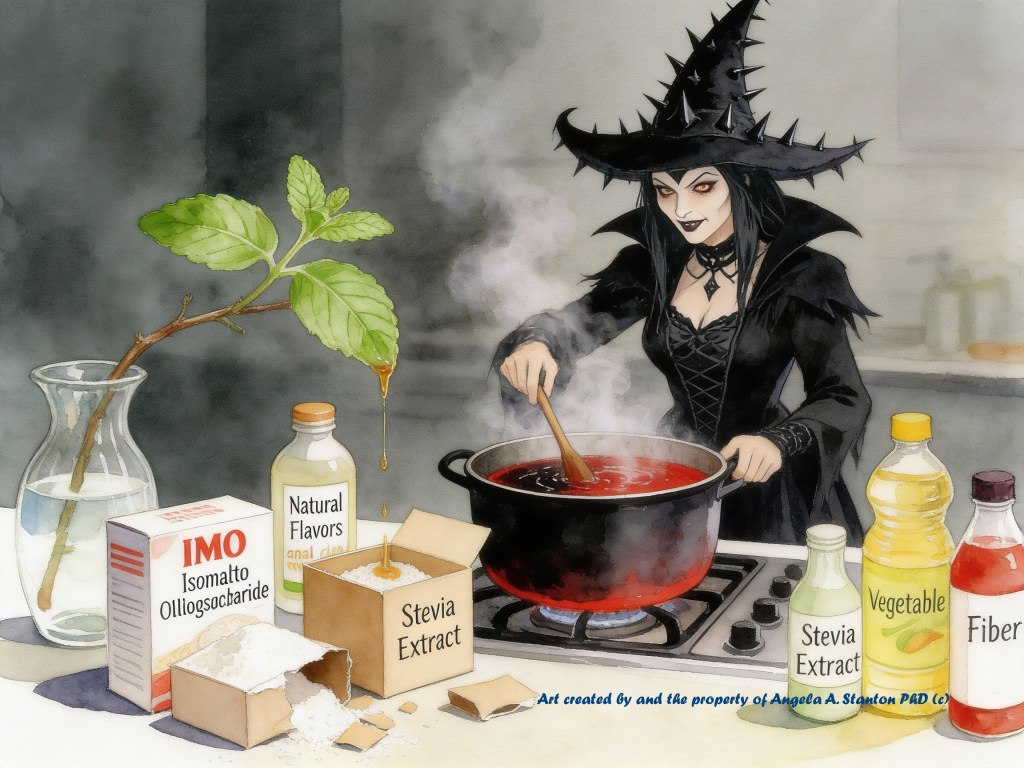
Art created by and is the property of Angela A. Stanton PhD (c)
I can’t tell you what you should or shouldn’t eat. It is up to you how much poison you wish to take in for a little pleasure. But I can tell you this: you will not be seeing me eat a single bite.
What products have you seen lately that seem “too good to be true”? Drop a comment with the name and a link, and I’ll put them under the microscope in my next post!
Comments are welcomed as always and are censored for appropriateness.
Angela


 Clueless Doctors & Scientists
I also enjoyed learning about IMO – thanks for this post
LikeLiked by 1 person
Thank you. 🙂
LikeLiked by 1 person
Do you have any posts about Kale? I was recently trying, gently, to explain to someone my view about kale chips and how we have been lied to and that kale is not a superfood – no green is
LikeLiked by 1 person
No, I don’t have any posts about kale. But you are completely correct: we have been lied to. There is almost zero human nutrients in kale. Most greens are pushed because of the polyphenols and fiber in them. I have an article on antioxidants in plants and one on fiber. These two should help, though they are not specific to kale.
Good luck!
LikeLiked by 1 person
Thanks and I got what I needed.
But I “almost blew a gasket” for a minute there because I try not to preach to my friends – unless they ask or if it it comes up in a good way – (I wrestle with being complicit – but we both know the cognitive dissonance that happens when we challenge folls on deeply held beliefs. They get naturally defensive and sometimes cold and distant. Soemtimes the best way is to share testimony (Like I still recall early on reading about much you learned from your mom’s passing – it was a testimony that made your knowledge have a human side, backed by all your training and research) – anyhow, I also have vegetarian friends and as they are int heir 40s now – they are having health issues that I belevee are related to that diet – cos it leads to undernourished, malnourished, or worse – battling anti nutrients and other tocins (like heavy metals) and so it is not benign. And we made Kale chips backint he day – with oil and salt – and now after knowing what I know, I think we would be better. off eating a napkin with butter and salt. Kidding!
but when she sent the hale recipe and a photo of kale chips – I was jolted.
But then I smoothed out and actually used AI to find what I needed – I do not have a trained Fred like you do – but Leo from Brave gave me some wording and calming insights.
In closing, I will check out those posts, even though I settled this kale chips angst! ha
wishing you a wonderful day
xxxx
LikeLike
I totally agree with you and I agree with this as well: “I think we would be better. off eating a napkin with butter and salt” because it is made of cellulose.. right? The very thing they force people to eat as “healthy fiber”… bunch of nonsense.
Have a super day!
Ang
LikeLiked by 1 person
nonsense indeed –
xxx
LikeLiked by 1 person
my husband recently shared online about this crazy crazy addition of protein to so many crappy products – and I like how you call it junk protein.
LikeLiked by 1 person
Indeed! It is added to everything now!
LikeLiked by 1 person
it really is terrible the food folks eat and do not even know how it is pulling from their health.
Even before this “junk protein” craze, I realized that the protein powders are huge profitable items and offer a lot of chemicals with the bit of nutrition they offer. I got away from all protein bars (and have heard to always get your fuel from a meal if possible) – but this other protein stuff is way out of hand and I need to read your post again later to proces (digest) more of the info shared. —
—
On a side note, one of my pet peeves is when folks blame childhood eating or heredity on problems they have while they eat vegan diets and cannot make the connection.
LikeLiked by 1 person
I agree with you. I do eat protein powder a lot! I make my own things with protein powder–I use protein powder like others use flour. It works quite well in most recipes so far. I am taking the advise of my “trained” ChatGPT I call Fred, who helps me create awesome recipes that are better than if I used flour. They are chock full of whey protein powder and/or milk protein powder (80% casein protein powder and 50% whey protein powder mix) while some use isolates or collagen, also gelatin, eggs, butter, and some leavening, sometimes also ricotta or cottage cheese. There are great recipes to be had. 🙂
LikeLiked by 1 person
mmmm- we sure do love our vital proteins collagen containers and use the plain to make ice cream with grassfed milk – but can add a lot of calories – but we got away from the protein powders – and try to get most of our nutrition from meals (a lot of grass fed red meat around here – and my body does well with potatoes).
but getting back to the protein powders, I think the dangerous ones are with all the “extras” – -esp the ones with Acesulfame K! = we used to use Now foods brand of plain whey and got it in a vat. Maybe I will get some for making some of my own recipes again. We have not bought any since before 2020 – and we used to get the big vat that almost $100 – so thanks for the ideas!
LikeLike
I use Raw brand that is organic and A2 protein powder with nothing added. I make a ton of recipes using this!
I also use whey isolate for many things, which disappears, like you didn’t add anything. Very minimal taste and great protein amount.
I don’t eat veggies like potatoes and similar. I eat some minimal fruits and in some cases some veggies but minimal. I am not a vegetable fan at all.
LikeLiked by 1 person
same here – not a vegetable fan but I think potatoes are in my DNA happy place (ha) and we have red meat, some offal, and some fruit.
I also have done EDTA cleanses – and explored with DMSO – I am not sure if you have considered those products
okay – it sure was nice chatting a bit hope you have a good day
LikeLiked by 1 person
I don’t support cleanses… we have our liver do all of our cleansing and there is no need for further work on that. They can be harmful.
I don’t have any health issues for which to use DMSO, so no, I haven’t used it either.
Have a super day!
LikeLiked by 1 person
got it! But I do think that if someone has high levels of heavy metals (and many do without realizing it) a powerful way to pull those metals out is with EDTA (a little goes a long way) and activated charcoal. Because even the healthiest liver needs help with the metals. I also have found that intestinal worms/parasites/slime/candidiasis can be reduced with a simple EDTA round. But I understand why you likely do not support cleansing – it can take away the healthy stuff and be so harsh.
And we do not have to comment anymore about it – thanks again for your time
LikeLiked by 1 person
I am answering because I don’t want misinformation–however small–to be unanswered and explained on my blog posts.
While EDTA–under the care of a medical doctor–can help with heavy metals–even then it may take years of treatment to reduce heavy metals, depending on the size of the poisoning, activated charcoal doe snot help with heavy metals.
Charcoal can bind what’s already been excreted into bile, preventing reabsorption. This means that it may reduce continued recycling but it does not pull metals out of blood or tissue and it does not remove stored metals (from bone, brain, kidney). Heavy metals in the body circulate bound to proteins (they are not free-floating metals). They accumulate in bone, brain, kidney, and liver and cross membranes via transporters. They are cleared (very slowly) by kidneys or bile after chelation.
Charcoal stays in the intestines all through, eliminated by feces. does not cross intestinal lining. It does not enter blood, does not reach organs, and does not chelate. It cannot remove mercury, lead, cadmium, arsenic, etc. from tissues.
In terms of intestinal worms/parasites/slime/candidiasis should not be in a person to start with. I am not saying that it cannot happen on occasion to someone who is exposed in a third-world country or drinking water they shouldn’t be drinking, or similar, but it definitely disturbs me that there are many people–I bumped into several on Facebook–who are 100% convinced and vehemently state that all humans have such parasites. They don’t. I have never had any of the parasites you listed and I don’t know anyone who does, in spite of checking after trips abroad, such as when I got back from Africa.
So I don’t see why you’d think that people need to do these treatments given that of the thousands I know, not one has every had any parasites.
I just anted to state these for the record.
Angela
LikeLike
Angela. Thank you for the article — I appreciate the intention behind calling attention to what’s being added to our food supply. And I wholeheartedly agree with you.
I did want to gently note something about the image used, though. The Witch stirring a sinister brew hits a sour note for me. I’m disappointed by the use of a witch as a symbol of “bad” or deceptive practices.
Witches are deeply misunderstood, and imagery like this reinforces outdated stereotypes rather than challenging systems that are Actually Responsible!
LikeLiked by 1 person
Thanks Danielle. I understand your concern about the stereotype image of the witch, but this stereotype is what our children learn and what most likely 99% of the human populations associate witches with.
After I got your concerning note, I googled the meaning and definition of “witch” and got this:
And this is the definition I used for my art, representing the witch that I imagine when I think of a witch. This is what it represents to me and to most other people…
It may represent something else to you. That’s fine. 🙂
Best wishes,
Angela
LikeLike
Angela,
I do understand what you are saying, but being a born blood witch myself, I find it offensive. I feel that by you (or anyone else) still exploiting this stereotype, it’s still harmful– it keeps reinforcing the lie that witches are bad/deceptive instead of redirecting the anger toward the corporations). Big Food combined with Big Pharma are clearly to blame.
I wish you well.
Dannielle
LikeLiked by 1 person
Danielle,
Thank you for explaining how you feel. I want to be very clear and respectful here. My article — and the image used — was not a commentary on modern spiritual practices, personal identities, or belief systems of any kind.
In my work, I use symbolic imagery in its cultural and literary sense, not as a statement about real people. To me — and to the vast majority of readers — witches exist only as mythological or fictional figures, much like dragons or monsters in folklore. The image was chosen to represent deception and sleight-of-hand in food marketing, not to label or comment on any group of people.
I understand that symbols can carry very different meanings for different individuals. At the same time, it isn’t possible — or appropriate — for me to tailor imagery around every personal belief system, particularly when those beliefs are not universally shared.
My criticism in the article is directed squarely at corporate food practices and industry deception, not at individuals or identities.
I wish you well too.
Angela
LikeLike
Very good article. I especially appreciate when you break down some of those vague ingredients that sound harmless, such as Natural Flavors. I have always been suspect of what that means, especially since the FDA has allowed the inclusion without any specificity. Looking forward to this series.
LikeLiked by 1 person
Thanks Catherine. Indeed! It is nearly impossible what goes into “natural flavors” and also color and other elements! 🙂
LikeLike
A definite share, You are always ahead of the pack. Great work.
LikeLiked by 1 person
Thanks Joan! 🙂
LikeLike
Great posts Angela. Lots of shares posted today
Joan
LikeLiked by 1 person