
I just returned from a wonderful 2-week trip to Africa. I was an invited speaker to present on the topic of migraine in a conference, the World Nutrition Summit 2025, in Cape Town, South Africa. After the conference, my husband and I flew to Zimbabwe and Botswana for an additional week of the most amazing experience. I am sharing some pictures and videos for you to enjoy at the end of this article—here just one, my favorite time with two cheetahs—they are trained, not sedated.

Picture of me with two cheetahs. It was an amazing experience walking and caressing these amazing creatures!
Beauty and the Beast
When we arrived in Zimbabwe, the world changed from a quite familiar civilized world of Cape Town, to something very strange. In a lovely (5*) hotel, which had no TV though had WIFI, in a room without internal walls with a double shower without curtains, we woke in the morning to monkeys jumping on the roof from a couple of trees in front of our balcony (these were 1-story attached “huts”). It was quite surreal. The following day I discovered that on the other side of the electric fence, a stone throw from my glass sliding door, wild animals—elephants, zebras, lions, warthogs, cheetahs, mongooses, ostriches, giraffes, etc.,—could be expected to pop up anywhere, at any time. It was the most amazing and exhilarating experience. It isn’t like we were “in nature” but somehow nature was “in” our room.
But with such beauty and wildness come some crazy hazards. I got sick 2-3 days before the last day of our trip, and our over 26-hour flight journey back home was a nightmare. My symptoms were odd: rashes on my neck that were spreading that didn’t itch or hurt but were “hard” to the touch, fever, diarrhea, cough, laryngitis, and a headache. I was functional but not well. The rashes were the most concerning since that was not part of any simple cold or flu. I also couldn’t find any initial tick bite leftover, eschar, and so I was wondering what else it could be.
After 2 days of traveling home—from Zimbabwe to Cape Town to Washington DC to Los Angeles—I showered and immediately went to the emergency. There they took a ton of blood, urine, stool, X-ray, EKG, etc., and sent the collections for “exotic infections” evaluation. They gave me Ciprofloxacin (Cipro) and Doxycycline to get well and sent me home. The next day I got a cough attack that caused bronchial spasm, preventing me from breathing, so back in the ER I was nebulized 3 times with Albuterol, given magnesium sulfate and prednisone intravenously, and sent home with a prescription for prednisone. All is well now as I have healed. I took the last Cipro this morning. Because Cipro (and other “floxa” (floxacin, or fluoroquinolone)) medications have such a bad reputation—with good reason—I decided to write down what I did to avoid being Floxed.
My hope is that if you ever have no choice but must take a fluoroquinolone medication, you will remember how to protect yourself.
Being Floxed
You may not know what it means to be floxed, so let me explain. I lost 3 acquaintances to being floxed—and by “lost” , understand suicide. Being floxed is probably the worst possible “disease” humans have ever invented. And I call it a human invention because it is caused very specifically by drugs that are fluoroquinolones, which are:
- Ciprofloxacin (Cipro, Proquin, Cetraxal)
- Delafloxacin (Baxdela)
- Gemifloxacin (Factive)
- Levofloxacin (Levaquin)
- Moxifloxacin (Avelox, Vigamox)
- Norfloxacin (Noroxin)
- Ofloxacin (Ocuflox, Floxin)
- Sparfloxacin (Zagam)
- Temafloxacin (Zagam)
The term “floxed” comes from the middle part of the generic name of each of these drugs: floxa. “Floxed” is a term used by people who experience severe adverse reactions to fluoroquinolones. It describes serious and long-lasting side effects, such as joint pain, tissue tear, nerve damage, and other issues. The drug can paralyze mitochondria in cells. Recall that mitochondria is an organelle that had been at one time bacterium that has gained a symbiotic role with most life forms—including humans. It is the mitochondria that generate all the ATP (energy) you use for your heart to beat, your lungs to breathe, your muscles to work, and your brain to think. Everything you do is dependent on the ATP generated by mitochondria.
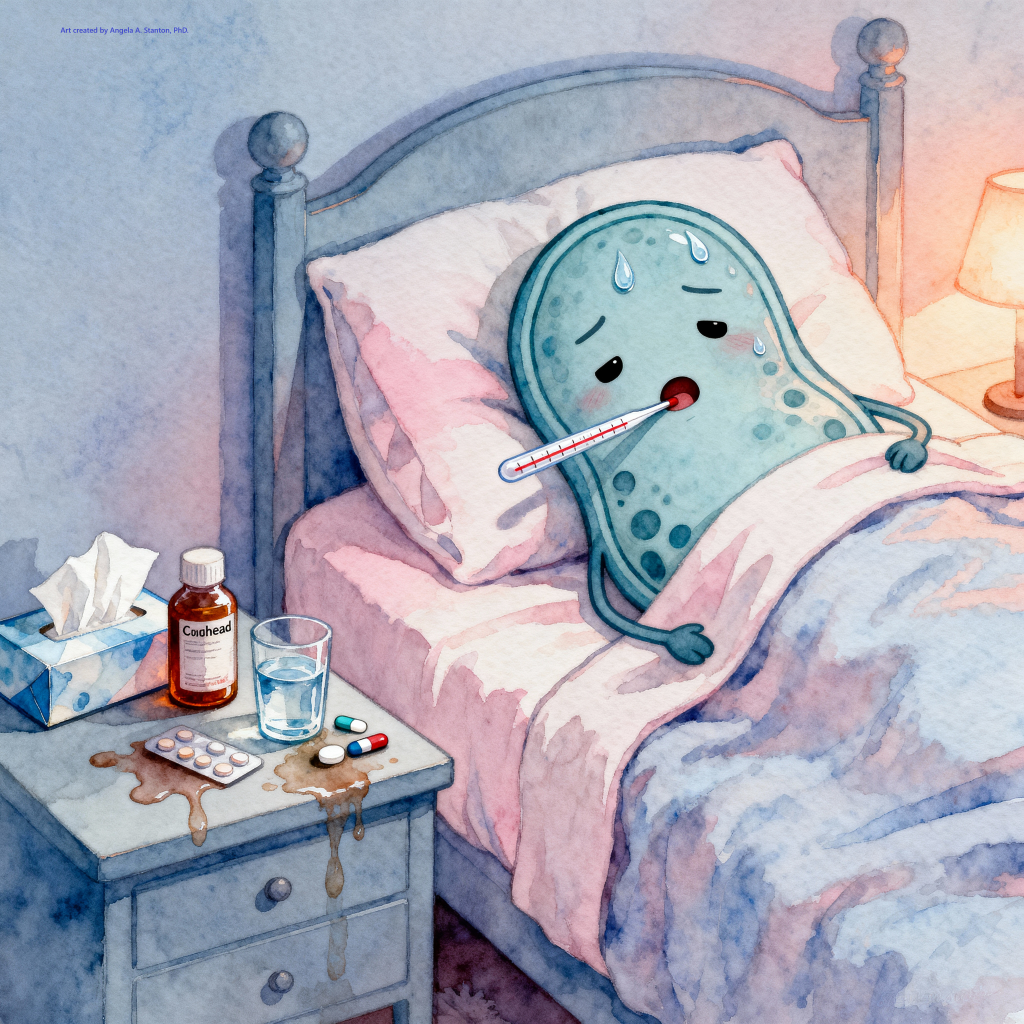
The above art is created by and is the property of Angela A. Stanton PhD
When/if something causes systemic damage to mitochondria in the body, and ATP is not generated or is greatly reduced, the damage can be permanent. Most of the people who I knew and lost to being floxed had their muscles and nerves affected. Their adverse reactions manifested as tendon rupture, neuropathy, chronic fatigue, dysautonomia, and various cognitive symptoms. Their lives became absolute misery and they could not do as much as leave home to go food shopping or to cook a meal.
I had a run-in with Cipro about 30 years ago when my Achilles tendon tore a bit from taking it. I experienced one of the most well-understood side effects! My concern was heightened by this, since I was clearly sensitive to fluoroquinolones, yet I had no choice but to take Cipro…
As you can imagine, the need to take this very strong and dangerous class of antibiotics often overshadows what may become the consequence of taking it. Preventing damage is of the utmost importance. It is because of this that here I will share what I did to prevent being floxed given that I had to take 10 days of Cipro, the leading “floxa” drug, with a previous bad experience!
Preventing Floxing: A Mitochondrial Protection Strategy
The bad reactions to fluroquinolones stem from oxidative, mitochondrial, and connective-tissue damage, triggered by the quinolone structure’s high affinity for magnesium, iron, and mitochondrial DNA gyrase, as well as its disturbance of the biofilm via ROS, with which the bacteria adhere to cells, causing inflammation (see a good summary here). With informed precaution and targeted mitochondrial support, the risk and severity of such toxicity can be significantly reduced—perhaps eliminated.
How Fluoroquinolones Damage Cells
- Mitochondrial inhibition
Fluoroquinolones target bacterial DNA gyrase and topoisomerase IV — enzymes that have mitochondrial analogues. The mitochondria can thus suffer partial inhibition of DNA replication and energy production, leading to cellular oxidative stress. - Magnesium chelation
The drugs strongly bind magnesium and other divalent cations, depleting intracellular stores and destabilizing ATP-dependent processes — particularly in tendon and nerve tissues. - Reactive Oxygen Species (ROS) generation
Mitochondrial inhibition and metal chelation cause massive ROS release. The result is lipid peroxidation, collagen cross-linking, and connective-tissue degeneration. - Biofilm disruption
Fluoroquinolones dissolve microbial biofilms, releasing bacterial LPS fragments and triggering systemic inflammation in susceptible individuals.
My Prevention and Mitigation Protocol
The primary goal is to reduce oxidative stress on the mitochondria without stopping the generation of reactive oxygen species (ROS), which the immune system uses to destroy pathogens by generating oxygen bursts (read more here). Furthermore, it is essential to support mitochondrial resilience and protect collagen-rich tissues throughout treatment and for several days after the last dose of medicine. The following is a list of instructions of what to do and what not to do while taking any of the quinolone medications:
- Stop all pro-oxidants and avoid nutrient interactions
- Stop taking creatine, CoQ10, DHA, and iron supplements during treatment. These all increase oxidative turnover and electron flux through the respiratory chain.
- Stop taking calcium, magnesium, or zinc supplements within 3–4 hours of a dose — they bind the antibiotic and prevent absorption, and also heighten chelation stress if taken concurrently. This also implies that you need to stop all dairy since dairy contains calcium and interrupts the absorption of the medicine.
- While most people are focused on reducing ROS by mega dosing maximum number of antioxidants (glutathione, vitamin E or C) or “pro-oxidants” (plant-form antioxidants that initiate hormetic action to boost antioxidants, see here), it is important to stop taking all antioxidants and prooxidants because your immune system needs the reactive oxygen species as a “bomb” (see oxygen burst). ROS causes damage to whatever it “touches” so blowing oxygen bubbles on bacteria/virus will destroy that bacteria/virus… and we want to do that! So don’t get rid of your ROS!! You need some ROS when you are sick!
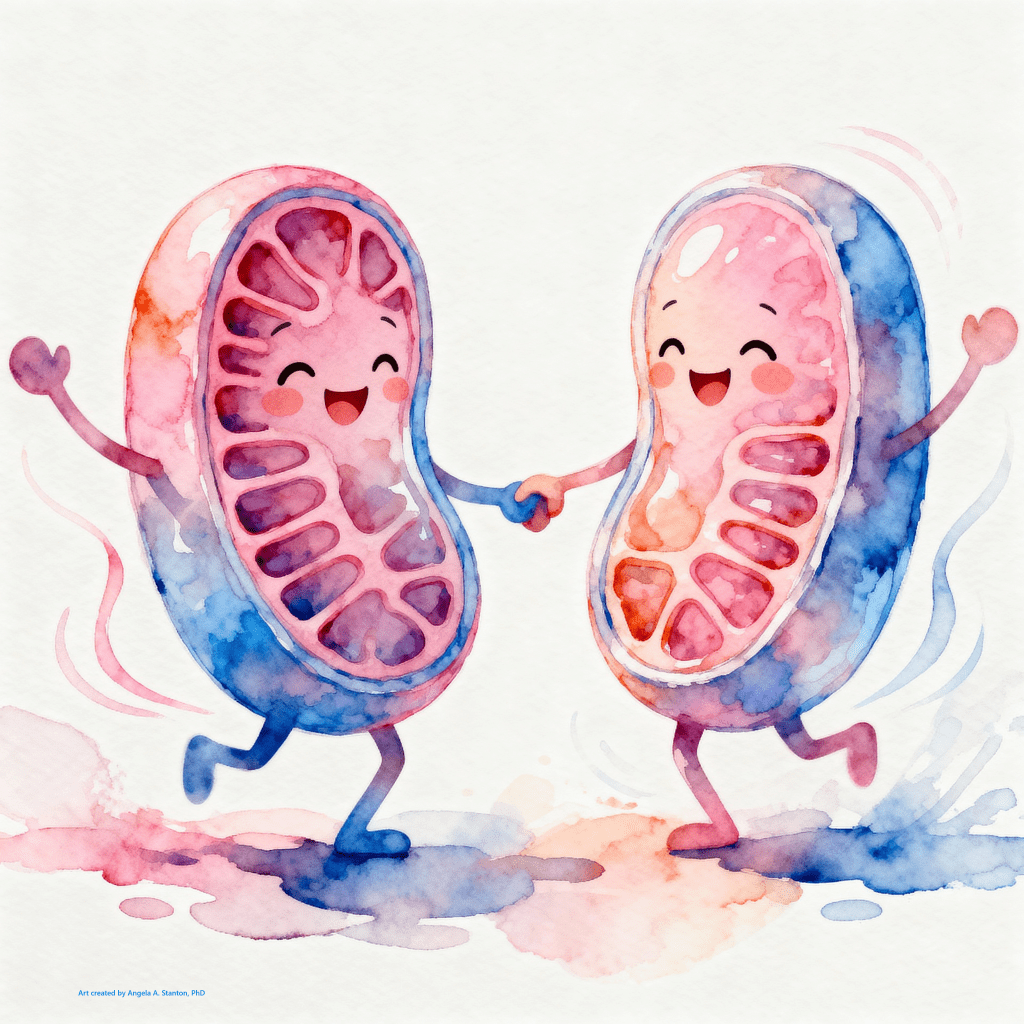
The above art is created by and is the property of Angela A. Stanton, PhD.
2. Stop All Physical Activity
- One of the most difficult parts of having to take Cipro or other fluoroquinolones is that you must stop your life. Since it is your mitochondria that generates all of your energy, increasing your energy need by exercise during an assault on the mitochondria is a bad idea.
- While it really wasn’t pleasant at all, I pretty much stayed lying in bed or seated in my computer chair or kitchen table to eat all through the 10 days of my Cipro.
3. Stop Going to the Sun!
- This is the hardest, by far! Being locked up, while watching the beautiful cool and sunny days pass by without me putting my nose out the door. I only left twice for food shopping, totally bundled up—protected from the sun.
- Why protected from the sun? Because the sun activates mitochondria. It is very well known how mitochondria “respond” to sunlight and becomes very active. Getting the mitochondria active while taking fluoroquinolones is the last thing you want to do.
- There is a warning on fluoroquinolones to avoid the sun because of “sun sensitivity” in that you may burn easier… but that’s not even near your biggest problem… just avoid the sun!
4. Stop Red Light, Sauna, Ice Bath, or Other Hormetic Therapies!
- Each of these activities activates your mitochondria to a high level. While under normal circumstances such hormetic actions are awesome and you get lots of benefits from them, while taking a fluroquinolone you really don’t want to activate your mitochondria.
Get ready for 10 days of the most boring life you have ever had! But it will keep your mitochondria as healthy as possible.
5. Support (Not Overwhelm) Antioxidant Defense
During treatment with quinolones, add the following supplements to your daily routine:
- Vitamin C – 1000–2000 mg in 500 mg divided doses. Recycles glutathione and reduces quinolone radicals (I use this).
- N-Acetylcysteine (NAC) – 600 mg twice daily (about an hour after fluoroquinolone); precursor to glutathione and mitigates mitochondrial ROS (I use this).
- Selenium – 100 µg daily; essential for glutathione peroxidase and thioredoxin reductase enzymes. (Check serum selenium levels… if you are sufficient, don’t add.) I didn’t add selenium. Alternatively you can eat 3 Brazil nuts a day and get the excess selenium your body needs (I didn’t take this but if I needed to, this is the one I would).
- R-lipoic acid – 100 mg daily; enhances mitochondrial antioxidant capacity (I use this).
- Proper Hydration (saltwater, 300-600 mg sodium per each 8 oz cup of water) – maintain cellular electrochemical balance; sodium loss amplifies ROS load (I use this).
These compounds neutralize the redox burst caused by mitochondrial gyrase inhibition and minimize connective-tissue oxidation.
6. Preserve mitochondrial integrity
- Magnesium – 200–400 mg/day taken 3–4 h apart from the drug to avoid chelation (I use this).
- Riboflavin-5-phosphate (B2) – 25–50 mg/day supports flavoproteins in oxidative phosphorylation (I use this).
- Fat-soluble Thiamine (TTFD B1) – promotes pyruvate entry into mitochondria, helping to sustain ATP production under oxidative load (I use this).
Together, these cofactors stabilize the mitochondrial NADH–FADH₂ balance, critical for energy recovery after quinolone exposure.
7. Protect tendons and collagen
- Collagen peptides – 5–10 g/day (ideally with vitamin C) rebuild extracellular matrix (I use this).
- Don’t take corticosteroids – they synergistically increase tendon toxicity when combined with fluoroquinolones. (This unfortunately I had no choice with and had to take prednisone because of my breathing difficulties—so I was extra careful even with morning stretching!)
8. Post-treatment detox and recovery (days 3+ past treatment)
As the drug clears (≈24 h after final dose), the oxidative load still persists at the tissue level.
At this point, you can start reintroducing mitochondrial activators:
- Creatine monohydrate or creatine HCl – start at half dose on day 2 post last fluoroquinolone, full dose by day 3. Creatine monohydrate works the best for me and I use this but my hubby prefers creatine HCL and uses this.
- CoQ10/Ubiquinol – 100–200 mg/day to restore mitochondrial electron transport (I use this).
- DHA + EPA (high DHA ≥900 mg) – resumes membrane repair and neuronal function (I use this).
- Magnesium, B1, B2, salt, and hydration – continue daily as baseline—as noted earlier—neuroprotective support.
Optional Add-Ons for Recovery:
- Urolithin A (Mitopure) – promotes mitophagy and damaged mitochondrial turnover (I used this but it did nothing that I could detect so stopped it—it is very expensive).
- NAD+ works in synergy with Urolithin A (I use this)
- NAC pulse (5 days on, 2 days off) – sustains glutathione cycling without overreduction.
Final Thoughts
Fluoroquinolone toxicity is fundamentally a mitochondrial redox injury aggravated by metal chelation and collagen oxidation.
By preemptively protecting mitochondrial cofactors, maintaining antioxidants, spacing mineral intake, and supporting recovery after therapy, it’s possible to complete an antibiotic course safely — even for those with heightened mitochondrial sensitivity, such as me.
You can’t fully “flox-proof” the body, but you can make it extraordinarily resilient.
Comments are welcomed, as always, and are censored for appropriateness,
Angela








 Clueless Doctors & Scientists
any thoughts on mitoq?
LikeLike
Hi Nick,
MitoQ is a mitochondria-targeted antioxidant that reduces mitochondrial oxidative damage, but it does not improve ATP production or fix upstream metabolic problems. It can be useful after energy metabolism is stable, but used prematurely it can blunt adaptive signaling or worsen fatigue. It is not a core supplement; it is a situational tool. So it depends on what you need it for and why.
Best,
Angela
LikeLike
Hello Dr,
thanks for the response. I will be taking levaquin for a long time due to an infection and would like to protect my good mitochondria by taking mitoq. Then follow your plan in the hopes of not having too much side effects.
Thanks,
Nick
LikeLike
Hi Nick,
I would not recommend taking MitoQ while you are actively taking a fluoroquinolone such as Levaquin. Fluoroquinolones are known to directly stress and injure mitochondria as part of their toxicity profile, and MitoQ is a compound that is actively driven into mitochondria and accumulates there.
When mitochondria are already destabilized by a fluoroquinolone, forcing a redox-active compound into them can paradoxically increase oxidative stress and worsen mitochondrial injury, rather than protect against it. In addition, and very importantly, strong antioxidants taken during antibiotic therapy can interfere with bacterial killing and potentially prolong exposure to the drug.
If MitoQ is considered at all, it is safer to wait until after the fluoroquinolone has been stopped and acute symptoms have stabilized, and even then it should be introduced cautiously and at low doses, with close attention to how the body responds. During treatment, the most protective approach is to avoid mitochondrial stimulants, avoid aggressive antioxidant stacking, avoid intense exercise or fasting, and focus instead on adequate calories, protein, hydration, and gentle activity. This is what I detailed in my article here… you basically need to stop “life” and just rest for as long as you are on the floxacin drug.
Trying to pharmacologically “shield” mitochondria during fluoroquinolone exposure often backfires; recovery strategies are better applied after the drug is out of the system.
Best of luck to you! Please keep me posted!
Angela
LikeLike
Thank you for writing this article! I am bookmarking this in case I ever need to take this class of antibiotics. Super helpful!
LikeLike
Thanks Michela. 🙂
LikeLike